Get all your news in one place.
100's of premium titles.
One app.
Start reading
The Independent UK
The Independent UK
National
Andrea Rodriguez

Water shortages worsen across Cuba as oil supplies dwindle

APTOPIX Cuba Water - (Copyright 2026 The Associated Press. All right reserved)

Nearly 3 million Cubans experience water shortages every day because of a severe oil shortage that government officials blame on a U.S. energy blockade, authorities said late Wednesday during a roundtable discussion regarding the impact of the ongoing blockade.

The island’s water system is operating with only 37% of the required fuel as Cuba faces its worse energy crisis.
The water system is one of the sectors most affected because it is one of the country’s largest energy consumers, said Antonio Rodríguez, president of the state-run National Institute of Water Resources.

Details of the forum focused on the intermittent water supply affecting an overall population of nearly 10 million people were published Thursday by the official website Cubadebate.

Rodríguez said that not only does water pumping consume electricity, but all of the agency’s essential activities require fuel, from unclogging pipes and cleaning septic tanks to repairing leaks. Chemical supplies are also needed, and their import is currently paralyzed.

According to Rodríguez, the agency once purchased parts and other supplies worth some $100 million annually, but in the last year, purchases totaled only about $10 million given a total suspension of credit. Many suppliers are placing contracts on hold as they assess when it might be advantageous to deliver supplies to Cuba or what obstacles might arise in processing bank payments, not to mention the limitations on shipping services, he said.

Complicating the problem is aging infrastructure and oversaturated pumping stations, especially in large cities like Havana, Santiago de Cuba and Matanzas, Rodríguez said. Many high-rise buildings and apartments also require electricity to power the pumps that lift water to the elevated tanks.

The water crisis is not new, but it has worsened in recent months.

Since January, the U.S. government tightened sanctions it had already imposed on Cuba as it pressures the island to change its political model. U.S. President Donald Trump also threatened in late January to impose tariffs on any countries that sell or provide oil to Cuba, which produces only 40% of the fuel it needs.

The population, already having endured five years of economic crisis, inflation and shortages, is now struggling with daily power outages that last up to 20 hours.

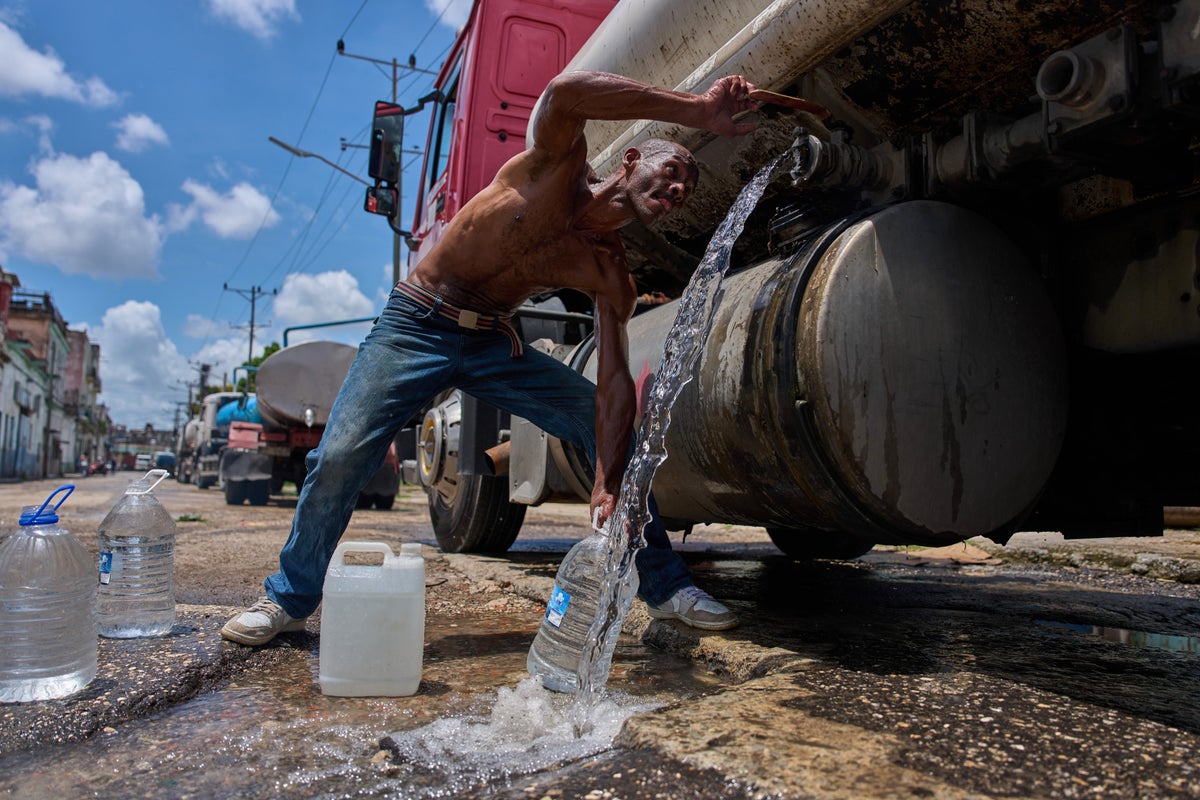
Many neighborhoods in Havana receive water deliveries by tanker trucks, but they remain inconsistent.

“It’s been five days since the water came in,” Magaly Ribial, a 60-year-old teacher, said Thursday as she collected water for her home from a tanker truck parked near her house in Old Havana.

Meanwhile, 95-year-old Dayse Izquierdo struggles to carry water and obtains whatever her neighbors bring her when the tanker truck, which Cubans call a “pipa,” arrives.

Some residents even said they walk from other parts of the city when they hear that water trucks are arriving in a specific neighborhood.

“The water situation is widespread,” said 55-year-old Carlos Molina. “I come from another municipality to collect water because there is none there.”

Rodríguez noted that only a small portion of the agency’s operations depend on solar panels and other alternatives.

Authorities are developing an accelerated solar energy program, but experts note that such technologies require costly investments.

___

Associated Press videographer Ariel Fernández in Havana contributed.

___

Follow AP’s Latin America coverage at https://apnews.com/hub/latin-america

Sign up to read this article
Read news from 100's of titles, curated specifically for you.
Already a member? Sign in here
Related Stories
Top stories on inkl right now
One subscription that gives you access to news from hundreds of sites
Already a member? Sign in here
Our Picks
Fourteen days free
Download the app
One app. One membership.
100+ trusted global sources.