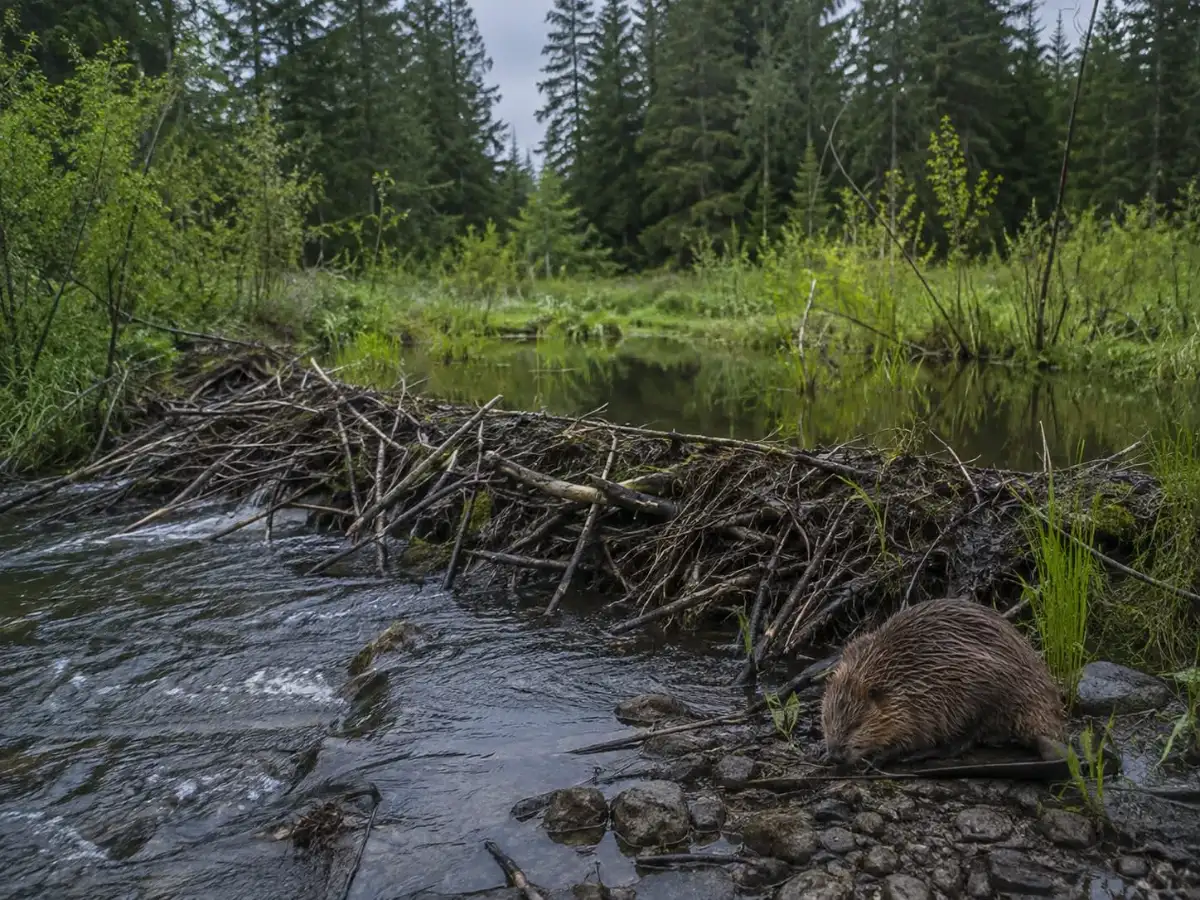
A wildlife biologist is loading a very large and ferocious rodent in a crate and driving it up a logging road where it gets dumped into a half-dry creek and is released from the crate. This is not some kind of stunt; it is a government policy. From Washington through Utah all the way to California, the wildlife departments are now actively trapping beavers, either tranquilizing them or placing radio tags on them and transporting them to streams that need restoration.
The purpose is very straightforward: allow the beavers to do the restorative work that 100 years of trapping, agricultural work, and road construction have destroyed. As stated in a 2014 BioScience article titled “Using Beaver Dams to Restore Incised Stream Ecosystems,” by Pollock et al., beavers and their dams help to slow the flow of water and retain sediments, thus reversing the type of stream erosion that engineers have been attempting for decades and with millions of dollars to prevent using concrete and rebar. It seems like beavers happily carry out the restoration work for free.