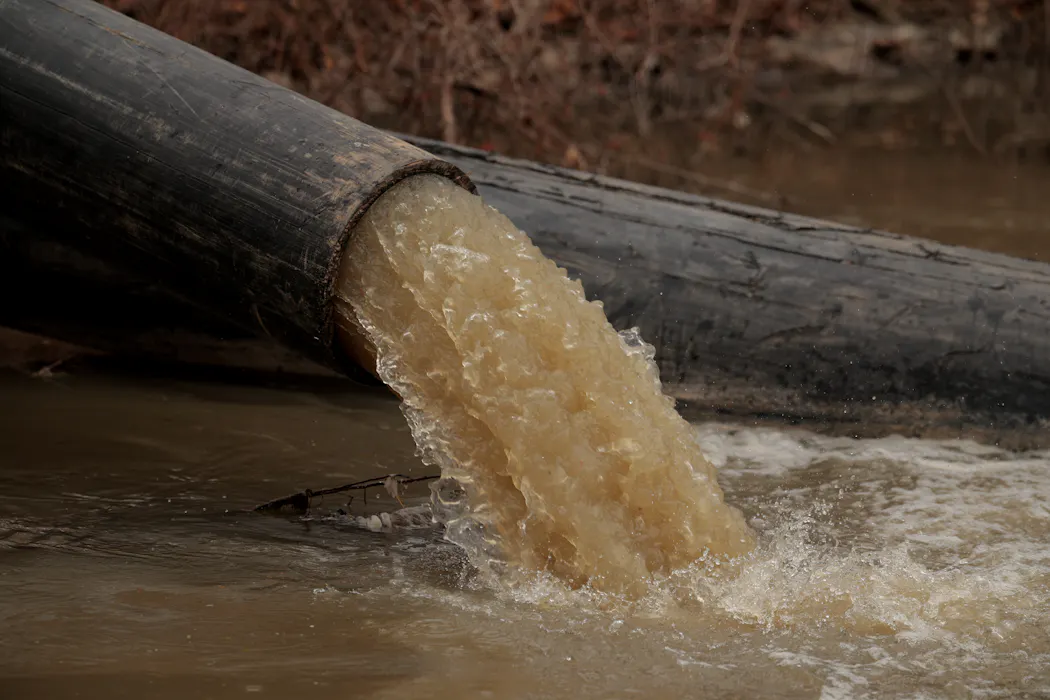
When 240 million gallons of raw sewage spilled into the Potomac River in Washington, D.C., starting in mid-January 2026 and running though mid-March, it was estimated to be the largest sewage spill in U.S. history. But it wasn’t the first, nor will it be the last.
In fact, around the nation, sewage spills are contaminating waterways and communities with unsettling frequency. Sewer systems are designed to be invisible. If toilets flush, most people forget they exist. This invisibility has contributed to chronic underinvestment. Pipes, pump stations and treatment facilities around the country were built in the mid-20th century and are now at or beyond their designed lifespan.

Between December 2019 and February 2020, a series of sewer main breaks in the city of Fort Lauderdale, Florida, led to the release of approximately 219 million gallons of raw sewage into environmentally sensitive waterways. In 2021, the Los Angeles Hyperion Water Reclamation Facility spilled 12.5 million gallons of untreated wastewater into Santa Monica Bay. These events were the results of various aspects of underinvestment, including deferred maintenance and upkeep, delayed replacement and capacities too low for current needs.
The D.C. spill dumped the equivalent of three days’ worth of sewage from 800,000 average U.S. homes, enough to fill 360 Olympic-size swimming pools with raw waste.
As an environmental planning scholar and former senior adviser for the White House Council on Environmental Quality during the implementation of the Bipartisan Infrastructure Law of 2021, I have seen how serious these events can be. But any tallying of sewage spills must also include floods, disasters and heavy rainfalls that have caused backups and overflows of various sizes in cities across the country.
What causes sewer overflows?
Sewer pipes overflow when pipes crack or collapse, or when the flow is blocked and waste backs up into the streets, local waterways or even homes, spreading bacteria and other contamination wherever the water reaches.
The U.S. Environmental Protection Agency estimates that there are between 23,000 and 75,000 sewer overflows into the environment each year in the U.S., which does not count backups into homes and other buildings.
There are often local reports from government or nonprofit agencies, which indicate that, for instance, in Houston in 2022 and 2023 more than 1,200 sewage overflows spilled over 800,000 gallons of sewage each year. And in San Francisco, the Public Utilities Commission discharges about 1.2 billion gallons of combined stormwater runoff and sewage into San Francisco Bay each year.
But there is no nationwide reporting system, so some number of overflows are unreported. And some leaks may even go unnoticed: Many sewer systems don’t have automated leak detection systems, and many waterways don’t have continuous water quality monitoring.
There are two main categories of sewage spills.
In dry weather, the problem is usually structural. Sewage pipes can collapse or crack open because of tree roots breaking into sewer lines. Mechanical failures at pumping stations meant to keep the sewage moving also can cause backups. And spills also happen when pipes are blocked by a buildup of material – such as fats, oils, grease or so-called flushable wipes, which are not safe to flush.
In wet weather, the problem typically has to do with the amount of water flowing into the system. When rainwater enters the sewage system, or groundwater enters a cracked pipe, it can overload the line and either burst a pipe or cause a backup.
Some of the larger sewage spills in recent years have come in wet weather, especially as more extreme rainstorms become more common.
A systemic challenge
Wastewater spills rarely result from a single failure, though. There are many factors. Some involve deferred maintenance on aging systems and overlapping government jurisdictions. Environmental conditions also play a role, including more frequent and intense storms and sea-level rise. On top of that come population growth and development that often outpaces capacity of the existing systems.
I have seen how treating sewage releases as isolated incidents in need of a short-term fix misses an opportunity to strengthen the system for the long term. Response, containment, emergency repair, and remediation of spill sites and the larger system are essential. Fixing a pipe just addresses a symptom, however; I believe preventing future failures requires a strategic approach to systemwide rehabilitation.
Many sewage systems in the U.S. are not regularly surveyed or have not been surveyed completely since their construction decades ago. Without knowing the condition and actual capacity of the pipes and pump stations, it is impossible to identify areas where spills are most likely to occur, or to determine how to prevent those problems.
Assessments conducted solely by utility agencies rarely inspire public confidence. Research I have been part of has found that third-party audits or collaborations with universities and nongovernment organizations, with findings published in full, can build public trust and identify where attention is most needed.
A complicating factor is that there are often overlapping political jurisdictions with different levels of responsibility for sewer systems.
The District of Columbia’s Potomac Interceptor, the pipe that spilled so much sewage over 55 days in early 2026, is primarily operated by DC Water, a public agency independent of the district’s municipal government. But it also carries about 60 million gallons of wastewater daily from areas near Dulles Airport in Virginia and portions of Montgomery County, Maryland, to its D.C. treatment plant, which discharges treated water into the Potomac River. Local and state authorities in those areas all play roles in response, monitoring and maintenance of the system in their regions.
Each entity has its own planning, budget and priorities. The complexity can create inconsistent standards, unequal investment and gaps in emergency planning.
More storms and collapses are coming
Changing environmental conditions are a present reality. Across the Eastern Seaboard, Southeast and Midwest, heavy downpours are more intense and unpredictable. Past designs for sewage systems are not big enough to handle the amount of water involved in the most extreme storms.
Preventive investment in repairs and upgrades may lack glamour, but I believe it is far less costly and disruptive than emergency repairs.
Moreover, infrastructure failures disproportionately affect those least able to absorb the impacts. My work has found that people who live in neighborhoods whose public services are neglected in other ways are also more likely to have neglected sewer systems, including basement backups and service disruptions, often with little official attention.
The spill into the Potomac has contaminated the region of the nation’s capital; its health reflects public priorities. Fixing a sewer line and containing contamination is necessary, but I believe it can be the beginning, not the end, of a broader conversation about planning, funding and governing 21st-century infrastructure in the district and across the nation.
Marccus D. Hendricks receives funding from the JPB Environmental Health Fellowship Program at the T.H. Chan School of Public Health of Harvard University; Award ID 03055-00001, the State of Maryland through the University of Maryland Grand Challenges Program, and the National Institute On Minority Health And Health Disparities of the National Institutes of Health under Award Number DP2MD019355.
This article was originally published on The Conversation. Read the original article.