With French warships deployed from the Mediterranean to the Strait of Hormuz, former French general Dominique Trinquand speaks to RFI about what's at stake for France, Europe and the risk of conflict escalation in the Middle East.
France has deployed a large part of its naval forces to the Middle East as the war triggered by Israeli-US strikes on Iran enters its third week, with Paris seeking to protect European interests, reassure allies and prevent the conflict from spreading further across the region.
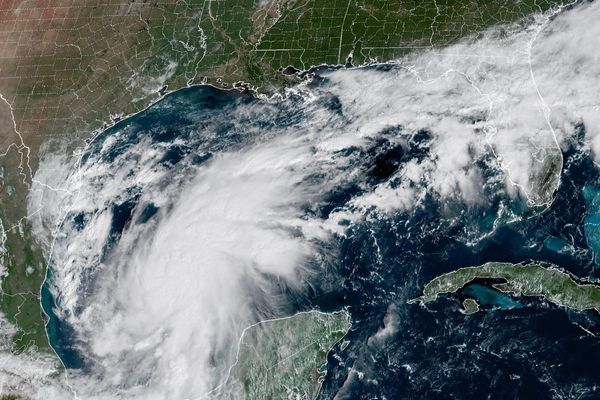
President Emmanuel Macron has described the mobilisation as "unprecedented", with French assets now operating across the eastern Mediterranean, the Red Sea and the Strait of Hormuz, one of the world's most vital maritime chokepoints for global energy supplies.
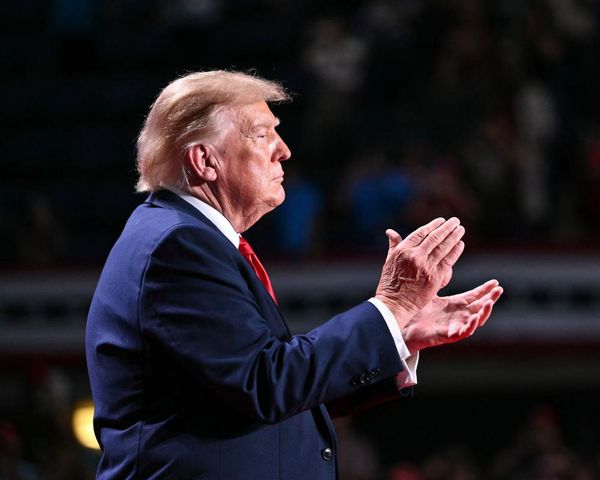
The deployment comes as US President Donald Trump calls on allies to help secure shipping through the Strait of Hormuz, warning NATO members of a “very bad” future future if they fail to assist Washington in safeguarding the passage.
Speaking to RFI, former French general Dominique Trinquand said the scale of the French deployment illustrated just how seriously Paris views the crisis.
"Forty percent of the naval capability of France is currently on operations," he said. "Of the 23 main ships, 19 are on operations, so it is really a major involvement of France in this operation."

France holds back warships as Trump urges allies to secure Strait of Hormuz
Show of force
Much of the French military focus is currently centred on the Mediterranean following attacks linked to the wider conflict.
"The focus is on the Mediterranean because Cyprus was attacked," Trinquand explained. "Cyprus is not a NATO member but an EU member, so France, with Italy, Greece and Spain, is showing that we are defending the south of Europe."
France is also reinforcing its defence commitments to Gulf allies such as Bahrain, Kuwait and the United Arab Emirates, where it maintains a major military base in Abu Dhabi. Paris has doubled the number of fighter jets stationed there by sending six Rafale aircraft to bolster the emirate's air defences.
At the same time, French forces are strengthening maritime security further south near Djibouti, where another French base supports operations in the Red Sea.
France has also deployed its flagship aircraft carrier, the Charles de Gaulle, to the Mediterranean after it was recalled from a NATO exercise in the North Sea.

For Trinquand, the carrier’s presence is intended primarily as a signal of deterrence rather than a step toward direct military intervention.
“Clearly it’s a strategic deterrence,” he said. “This aircraft carrier was in the North Sea participating in a NATO exercise, but as soon as Cyprus was attacked it was decided to send the aircraft carrier to the Mediterranean.”
The move, he added, demonstrates Europe’s ability to defend its southern flank.
“With the aircraft carrier you also have frigates and submarines, so it’s a major deployment. It shows that Europe is able to defend its south border.”
'If the Strait of Hormuz were to remain closed, we would face a major crisis'
Diplomacy versus escalation
Alongside the military build-up, Macron has also sought to keep diplomatic channels open. The French president spoke last week with Iranian President Masoud Pezeshkian, urging Tehran to halt attacks in the region and restore freedom of navigation through the Strait of Hormuz.
Trinquand, however, remained sceptical about the prospects for diplomatic progress in the current climate.
"You always need to try diplomacy," he said. "But I am not sure that in this case it will be a success, because the Iranian government is weak outside even if it is strong inside Iran, and so it tries to establish chaos."
"The Strait of Hormuz is of strategic importance to them, and I do not think that they will negotiate on that."
The conflict has already had direct consequences for French forces in the region. A French warrant officer was killed and several soldiers wounded last week in drone attack on a base in Iraqi Kurdistan, where French troops were serving as instructors.
According to Trinquand, the attack illustrates the broader instability spreading across the region.
"It just shows the chaos created by Iran," he said, adding that Tehran has long relied on proxy forces and irregular warfare beyond its borders.
France treads 'a fine line between defensive and offensive’ in Middle East
At the same time, the conflict is raising concerns about Europe's security as missile strikes and drone attacks affect countries across the Mediterranean and Gulf regions.
Trinquand cautioned, however, against assuming the crisis has already escalated into a direct confrontation between Iran and Europe.
"There is a threat," he said, noting that Turkey, despite being struck by missiles, has avoided invoking NATO's collective defence mechanisms.
"I am not sure that we are already in a fight between Europe, NATO and Iran."
Looking ahead, the former general said the coming weeks will be crucial as the military campaign unfolds.
"The plan was to strike for between four and five weeks in order to degrade all Iranian capabilities," he said, warning against expecting quick results.
"War is not a video game. It is planning, it is professional soldiers doing their job."
With the Strait of Hormuz remaining a critical flashpoint and US forces moving additional assets into the region, Trinquand believes the situation remains highly fluid.
He also pointed to the possibility of internal unrest, noting that minority groups such as Kurds, Balochs and Azeris could play a role if instability deepens.
"We have two more weeks of waiting for results from inside Iran," he said.