
Get all your news in one place.
100's of premium titles.
One app.
Start reading
Livingetc
Livingetc
Ellen Morris

Wait, the Specific Angle and Height of Your Wall Light Makes a Massive Difference to the Mood of Your Bedroom? A Sleep Expert Explains Why

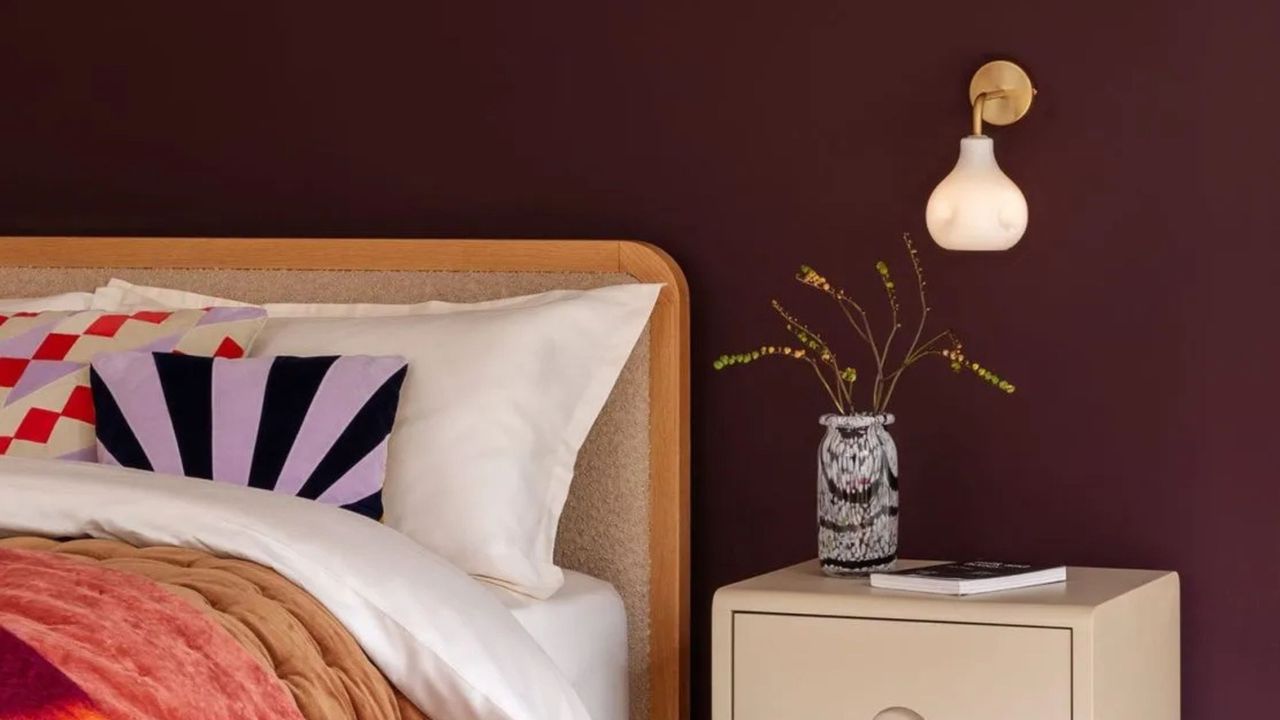
Heal's wall sconce in bedroom with burgundy walls, fleece headboard, white sheets, colorful cushions, cream bedside table with colorful vase and book.

Considering you turn them off when you sleep, not many of us would consider the impact lighting can have on a bedroom. Of course, there's the look — ugly lights become a focal point for all the wrong reasons — but there's also the feel. According to sleep expert Dave Gibson, the wrong choice of lighting in the evening can actually suppress the hormones you need to fall asleep. Eeek!

“If you were to ask most people what item in the bedroom they would change to improve their sleep, they would probably mention their mattress, blackout blinds, or perhaps even to stop using their mobile phone in bed," he shares. But the answer, he says, is much simpler: your lighting.

And, as it turns out, not all lighting is equal. The specific height and angle of wall sconces make them more suitable for bedrooms. "Light from wall lights strikes the retina at a more horizontal angle and provides less stimulation to the receptors," Dave explains. "In effect, this mimics the lighting conditions of a setting sun." Here are four other reasons to switch out your bedroom lighting for sconces — stat!

1. The Angle of Wall Sconces is Conducive to Sleep

"Wall lights positioned at or below eye level reduce stimulation of the circadian photoreceptors," explains Dave, which helps get you ready for sleep. (Image credit: Heal's)

“Warm lighting brings a softness to a room that cooler lighting just cannot achieve — it flatters materials, enriches colors, and reduces contrast, allowing the space to feel layered, cozy, and inviting," explains interior expert Claire Anstey, a lighting buyer for Heal's.

But maybe you already knew the difference between warm light and cool light. Well, it turns out, the direction your light is coming from matters just as much, particularly in bedrooms.

Overhead lighting is, sleep expert Dave Gibson says, one of the worst choices for nighttime lighting. “The light it emits shines directly into the bottom of the retina," he explains. "This is where the majority of the blue light-sensitive receptor cells are located," which makes your brain think it's daytime.

However, even at the same brightness level, the angle of "wall lights tends to create softer pools of light and shadow that psychologically feel closer to natural dusk conditions,” says Dave. Your nervous system recognizes the difference, even if your conscious brain doesn't.

2. You Can Control the Height of Wall Sconces

"Lighting that sits lower or to the side of the visual field is generally less stimulating to the circadian system," says Dave. (Image credit: Heal's)

Another big tick for sconces is that you can control how high they sit on the wall.

"I would always recommend positioning bedside wall lighting around 20-30cm above your bedside table, roughly at eye level when seated in bed," says Claire Anstey. "This positioning makes the lighting perfect for bedtime reading, avoids glare, and also makes the fixtures feel intentionally anchored to the furniture below."

That said, too close to furniture or in high-traffic areas are two places to avoid hanging wall sconces, so it's worth considering placement as well as height.

3. Wall Sconces Can Stimulate a Sunset

"Warm lighting is reminiscent of candlelight or light from a fire and most importantly the color and spectrum of the setting sun," says Dave. (Image credit: Heal's)

An amber evening glow from your wall light is gorgeous, but it’s also tricking your body into thinking it's time for sleep. "For most of human history, the gradual dimming of the setting sun naturally triggered melatonin release and the desire for sleep," explains Dave.

So, as part of your wind-down routine, two hours before sleep, swap overhead lights for warm wall sconces or lamps. One hour before, dim them further. Once in bed, use only the softest setting if you're reading and make sure to leave your phone face down, says Dave.

"Even switching to softer lighting for the final 30–60 minutes before sleep is significantly better than no change at all," he adds. But the real power is in consistency. "Repeating the same lighting transition each evening becomes a strong conditioning cue that sleep is approaching."

What's more, smart bulbs like the Philips Hue Smart Bulb (available at Amazon) can even be set to timers, dimmed via voice control, and motion-activated, to make your wind-down routine hands-free.

4. Wall Sconces Can Be So Architectural

Heal's has seen a 70% increase in sales of wall sconces in the last three years. (Image credit: Heal's)

Science aside, it's hard to argue with the fact that wall sconces just look good. They come in so many different shapes and sizes, and can be so architectural, becoming focal points in the space.

Plus, wall sconces take up less space beside your bed, and there are plenty of styles that don't even require hardwiring, meaning they can be renter-friendly, too (or perfect for anyone who doesn't want to damage their walls).


When it comes to wall sconces, there's often more than meets the eye. Just take this wall shelf/sconce from Habitat, for instance.

For more design ideas just like this, sign up for the Livingetc newsletter.

Sign up to read this article
Read news from 100's of titles, curated specifically for you.
Already a member? Sign in here
Related Stories
Top stories on inkl right now
One subscription that gives you access to news from hundreds of sites
Already a member? Sign in here
Our Picks
Fourteen days free
Download the app
One app. One membership.
100+ trusted global sources.