
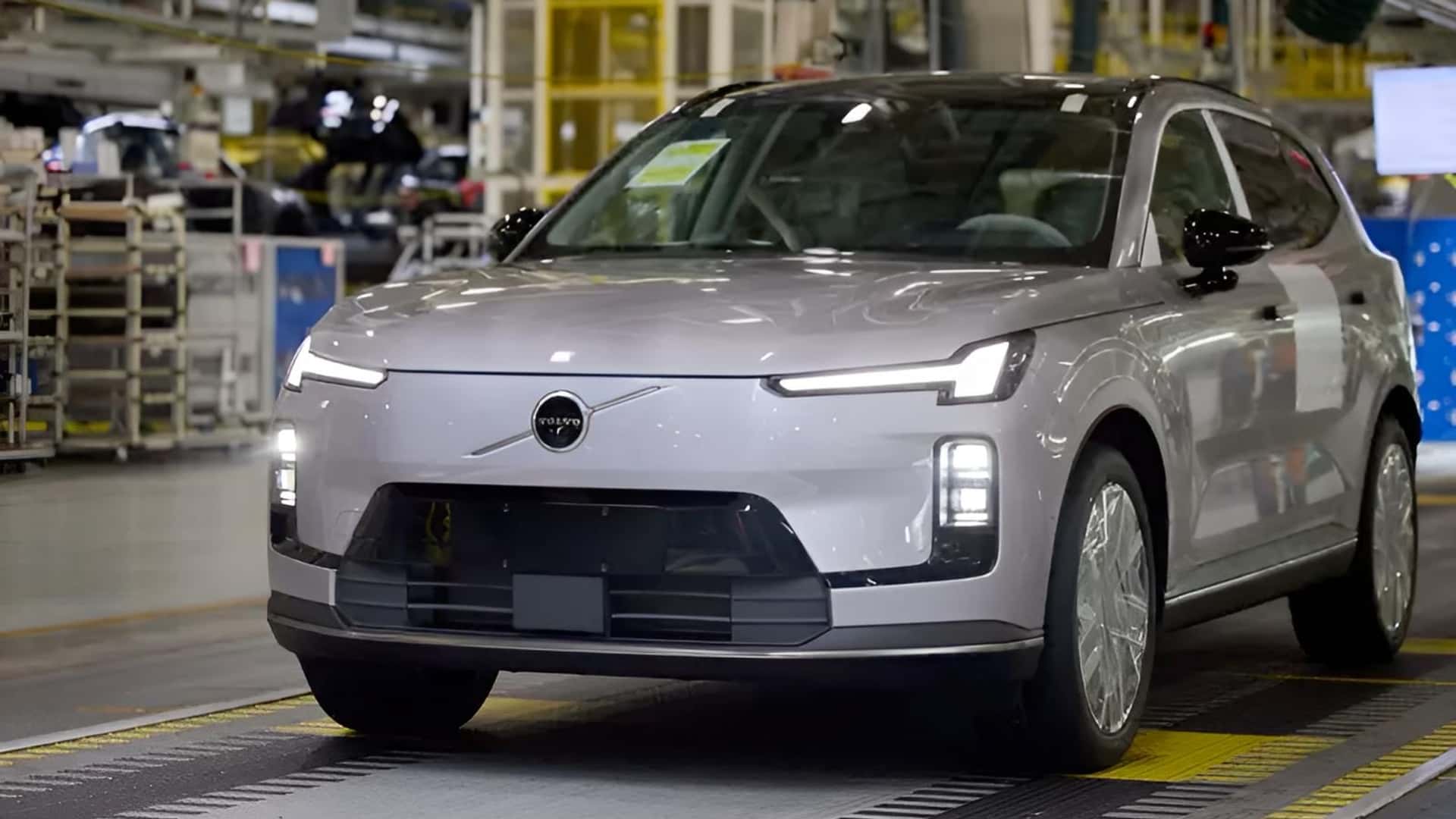
- Volvo is going on a new-car launching spree, with 13 new models planned by the end of the decade.
- Seven new models are planned for Europe and the United States, with another six developed specifically for China.
- With a selection of new EVs and third-generation hybrids, Volvo wants to double its market share.
Volvo is kicking off the largest product push in its 99-year history, with 13 new models scheduled to debut until the end of 2030. The Swedish car company, owned by China’s Geely, is planning to launch six new cars in the United States and Europe, and an additional six models developed for China.

The effort comes after the automaker has seen sales decline in the first half of this year. During the first quarter, Volvo’s global sales went down 11% compared to the same period last year, followed by a 5.6% dip in the second quarter.
The lineup revamp, which has just four years to complete, will include new electric cars, as well as third-generation hybrids. According to Volvo, if everything goes to plan, its market share should double, while its margin for earnings before interest and taxes (EBIT) should go over 8%, up from 3.5% in 2025.
Cars bound for the U.S. and Europe will use the company’s HuginCore computing platform and be based on the SPA2 and SPA3 architectures, which have so far been used for electric cars exclusively. SPA2 underpins the EX90 SUV and ES90 sedan, while SPA3 is used for the new EX60 crossover.
In other words, it’s expected that all of Volvo’s Western-spec cars will be EVs, with an Automotive News report claiming that the Swedish car manufacturer is considering bringing an electric sedan and wagon to the U.S. as early as 2028. According to the report, the cars would likely carry the S60 and V70 badges. Additionally, a new crossover called the EX50 could join the lineup, too.
Meanwhile, the six cars aimed at the Chinese market will ride on platforms developed by Geely and use a dedicated technology stack for China. Volvo and Geely will also share parts and supply chains to keep costs down.
“Our showrooms will look very different in 2030,” said Hakan Samuelsson, president and CEO of Volvo Cars. “This is our strongest product pipeline ever, tailored to regional needs, and emphasises our ambition to be the leading premium car brand.”
As part of the product offensive, the company will also change the way it sells cars, with transparent pricing, streamlined offers, and special fast-delivery versions. And because the SPA2 and SPA3 architectures are software-defined, regular over-the-air software updates are also part of the equation.