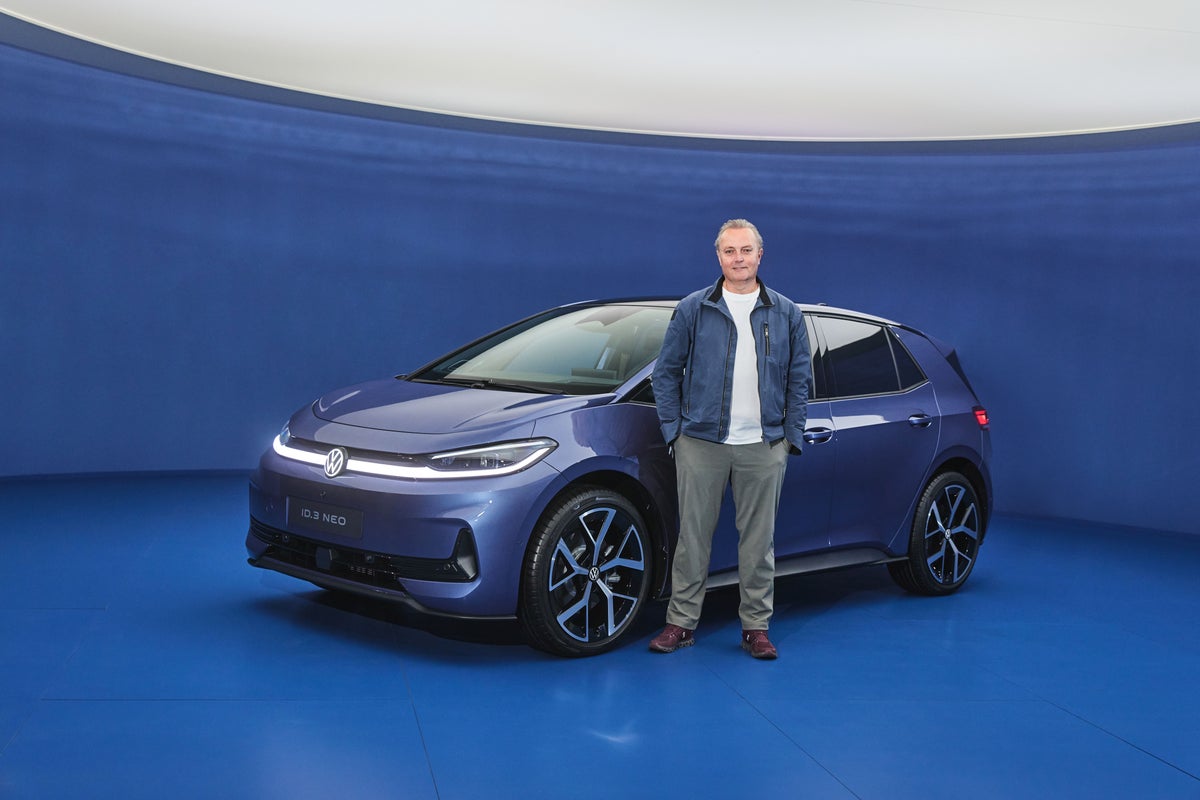
Volkswagen has given its electric ID.3 a significant rethink, introducing a heavily updated version with a new name – ID.3 Neo – as it looks to build on the success of one of Europe’s most popular electric hatchbacks.
The ID.3 has been a key player for Volkswagen in the shift to electric, with around 78,000 buyers across Europe in 2025 alone, and this latest version is being pitched as more than just a mid-life refresh. Instead, Volkswagen is framing it as a clear step forward, with changes that span design, technology, interior quality and efficiency.

From the outside, the updates are immediately noticeable. The front end has been redesigned with slimmer LED headlights and a cleaner, more horizontal layout that gives the car a smile, according to design boss Andreas Mindt – something coming to all new Volkswagens. There’s a whole new lighting signature, including a light bar linking the headlights and, depending on specification, an illuminated Volkswagen badge.

It’s a more subtle evolution along the sides, but even here there are changes. Volkswagen has ditched some of the contrasting black trim elements that defined the original ID.3, instead opting for more body-coloured surfaces. The result is a slightly more mature and cohesive look, with the roofline and rear end appearing longer and more streamlined than before.
The rear also gets a tidier finish, with the boot lid now painted in body colour rather than black, bringing the car visually closer to Volkswagen’s more traditional hatchbacks. It’s all part of what the brand calls its “Pure Positive” design language, which will also influence future electric models.
Inside is where Volkswagen says the ID.3 Neo takes its biggest leap. While this is technically still an evolution of the existing car, the interior has been comprehensively reworked, with a new dashboard layout, improved materials and a much stronger focus on usability.

The first thing you notice is the cleaner, more horizontal design, along with softer-touch materials that aim to lift the cabin to a higher quality level. Volkswagen says it has listened closely to customer feedback, particularly around controls and ease of use, and that’s reflected in the move away from touch-sensitive controls, and towards more intuitive switchgear. That means the return of physical buttons.
Yes, Volkswagen has addressed one of the key criticisms of earlier ID models by reintroducing buttons in key areas. Climate control functions now sit on a dedicated control strip, while a proper rotary volume knob makes a welcome return. The silly touch-sensitive pads on the steering wheel have also been replaced by buttons. It’s a move that should make everyday use a little more straightforward.
The digital side of things has also been upgraded. A larger 10.25-inch driver display now sits behind the steering wheel, offering clearer graphics and multiple layout options, including a retro-inspired view that echoes the dials of the original Golf. Alongside it is a new, larger infotainment screen running Volkswagen’s latest ‘Innovision’ system, complete with an integrated app store for downloading additional features and services. It, too, gets an optional retro interface, with a tape player showing the music playing and a 70s-style TV screen for the navigation display.
There’s more technology on board, too. A new digital key allows access to the car via a smartphone or smartwatch, while connected services are bundled into a VW Connect package that’s included for up to ten years from first delivery. That covers features such as navigation, remote functions via an app and voice control.
On the road, the ID.3 Neo introduces a new generation of driver assistance systems. The headline addition is Connected Travel Assist, which can now react to traffic lights. If the system detects a red light, it can automatically bring the car to a stop, adding another layer to the semi-autonomous driving experience. One-pedal driving is also now standard, allowing drivers to slow the car just by lifting off the accelerator.

Under the skin, the changes continue. The ID.3 Neo moves onto Volkswagen’s updated MEB+ platform and introduces a new electric motor. The focus here is on efficiency, with Volkswagen saying the new motor reduces energy consumption compared with the previous unit, helping to extend range without necessarily increasing battery size.
That means buyers will be able to choose from the same three battery sizes – 50kWh, 58kWh and 79kWh – paired with power outputs of 168bhp, 188bhp and 228bhp respectively. The entry-level version is expected to offer a range of up to 259 miles, rising to around 307 miles for the mid-size battery and up to 391 miles for the largest pack.
Charging performance has also been improved. The smaller batteries support DC rapid charging at up to 105kW, while the largest battery can charge at up to 183kW. Volkswagen says a 10 to 80 per cent charge should take around 26 to 29 minutes, depending on the version.
Practicality remains a key part of the ID.3’s appeal. The Neo continues as a five-seat hatchback with a 385-litre boot, expanding to 1,267 litres with the rear seats folded – that’s not especially large, but will be big enough for most families most of the time

There’s also an optional towbar-mounted bike carrier, capable of handling loads of up to 75kg, which ties in with the car’s new vehicle-to-load function. That allows the ID.3 Neo to power external devices, from e-bikes to camping equipment, via an adapter connected to the charging port.
Volkswagen is also expanding the list of available options, with features such as a panoramic roof, augmented reality head-up display, 360-degree camera system and a premium Harman Kardon sound system all on offer. Massage seats, memory functions and upgraded ambient lighting are also available higher up the range.
The line-up itself has been simplified, with three trim levels – Trend, Life and Style – replacing the previous Pure, Pro and Pro S versions. All models come with a strong level of standard equipment, including adaptive cruise control, lane assist and a suite of safety systems, while higher trims add larger wheels, upgraded interior finishes and more advanced lighting technology.
Volkswagen will open the order books for the ID.3 Neo in April, with the first customer deliveries expected from July. It’s a key update for a car that has already proved popular, and one that gives plenty of clues to a host of new all-electric Volkswagens to come.
BMW, Mercedes and Audi face a new challenger – and it’s not Chinese
New Lepas L6 SUV arrives with 700-mile hybrid range and full EV
EVs are part of our high-tech future. Who says? Kids.
New Cupra Raval arrives as a £23k electric supermini with big-car attitude
New Lepas L6 SUV arrives with 700-mile hybrid range and full EV
Teens get their first taste of driving electric cars – this is what happened