
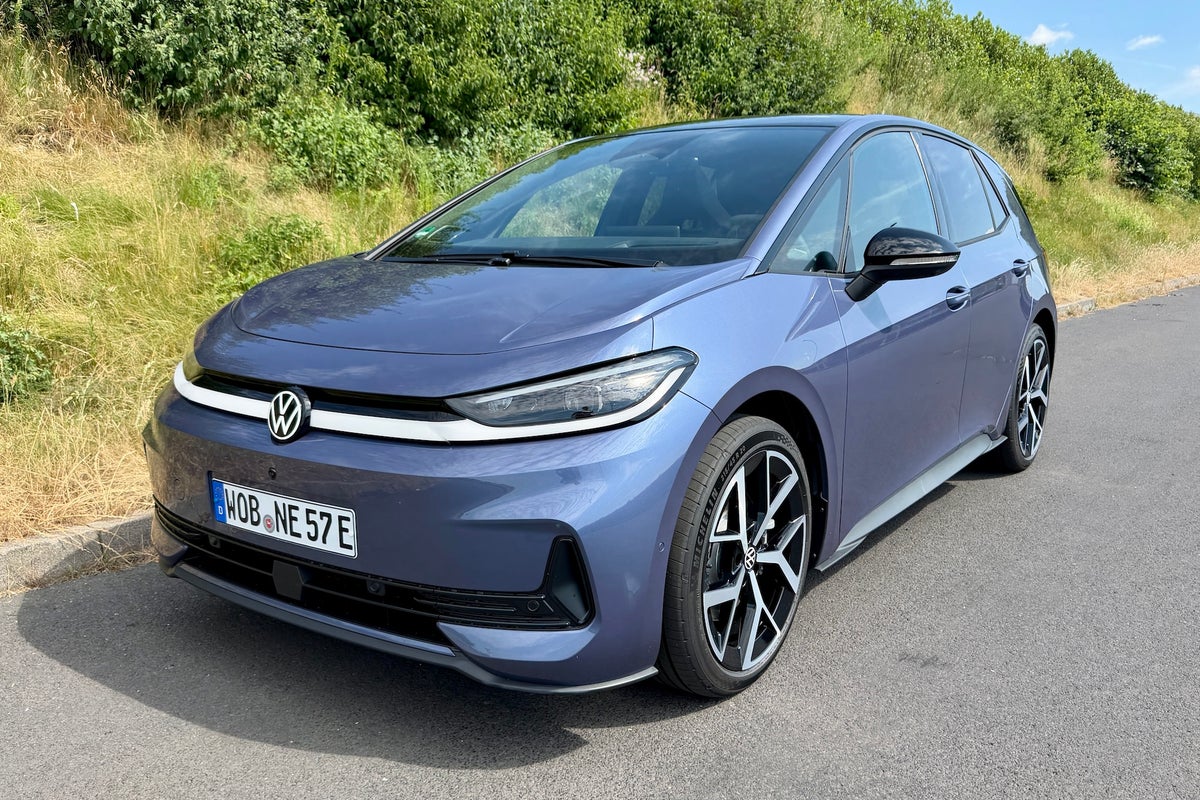
The Volkswagen ID.3 has always had the right basic ingredients. It’s sensibly sized, roomy inside, properly built as an EV from the ground up and easy enough to drive. There was never really anything fundamentally wrong with the way it drove and the way it looked. The problem was that it arrived carrying a huge amount of expectation and then spent its early life making some very avoidable mistakes.
Most of those mistakes were inside. The original ID.3 had one of the world’s worst touchscreen interfaces, too many fiddly controls, too many touch-sensitive surfaces and too much cabin trim that did not feel as if it belonged in a Volkswagen. The ID.3 was meant to be the electric equivalent of the Golf: the family hatchback that people bought because it was solid, sensible, well thought through and generally hard to fault. The ID.3 just didn’t feel very Golf-like at all.












