The rollout of the EU’s entry-exit system has prompted a wave of responses from Independent readers, sharing their first-hand experiences of the reality of post-Brexit travel.
With full implementation due by 9 April, many British travellers say the new digital border regime is already adding time and confusion to journeys.
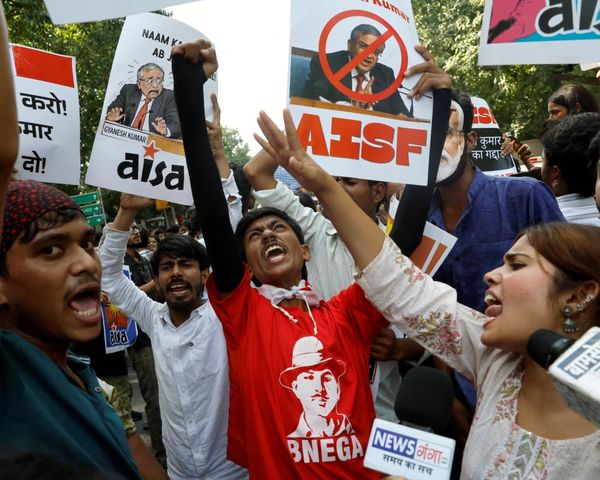
Readers described queues at airports, problems with biometric machines and repeated fingerprinting – even after initial registration.
Some also highlighted inconsistent implementation of the fingerprinting and facial recognition system, with certain travellers waved through, while others faced lengthy identity checks.
Others broadened the discussion to the wider consequences of Brexit: the 90-day rule, passport stamping, dual nationality complications and the cost of UK and EU travel authorisations.
Overall, the comments painted a picture of adjustment, irritation and resignation as Britons navigate life as “third-country nationals”.
Here’s what you had to say:
Hundreds of machines – but only seconds with a human inspector
Returning to Madrid last week, we were confronted with hundreds of machines which asked irrelevant questions – ie, are you a permanent resident? Yes. Give the date you will be leaving (???). Then we were waved along to a fresh batch of machines which asked similar questions but still did not allow one to pass. Finally, there were long lines for a human inspector, which took only a few seconds to process. Total time – 35 minutes.
As opposed to immigration at Vnukova (Moscow) in January – two minutes being fingerprinted (very thorough: fingers, thumbs, palms) and photographed. She glanced at previous entry stamps: “Welcome back.”
I thought the idea was to speed through
I have entered and left a number of EU countries and have had four fingerprints and a face photo taken every single time. Yet every time I return I’m still doing both fingers and face. I thought once registered the idea was to speed through with only one biometric?
Fingerprint scanning issues
Entering Tenerife a few weeks ago, after queuing for nearly an hour to begin the biometric process (only a third of the available machines seemed to be working), I found that a deformed finger rejected the fingerprint scanning step, so I was sent over to the EU queue to see a real person. The border officer didn’t make any comment about me not being an EU citizen and waved me through. Way to go.
Subsequent entries were much quicker
I’ve travelled to Italy several times in the past three months – to Bergamo and Trieste. Luckily I travel from Dublin but don’t have an Irish passport, unlike the bulk of other passengers on the flights. On my first arrival shortly after the introduction of the new system it was a bit of a slow process. However, subsequent entries were much quicker – as I’d already been registered on the system I used the eGates and then had my passport stamped.
However, I’d be very apprehensive about arriving at some of the big holiday airports such as Faro or the Canaries from Easter onwards.
Avoiding Schengen
I used to fly between the UK and the EU with a change at a Schengen airport, as it suited my origin/destination better than a direct option.
Since Brexit I’ve avoided this to sidestep the extra border controls at the second airport.
Presumably with this new system it’s even worse – is it even practical anymore, and how much time should one allow?
I think I will stick with direct flights and take local transport at each end.
Trust
The UK already runs the ETA visa waiver system. It’s much similar to the coming Schengen ETIAS or the US ESTA systems.
The UK ETA pre-registration cost me €19.06 this past October.
It was, however, not checked much when I arrived and my EU passport was not stamped at all.
Just a look at my passport and at me – followed by a “Welcome, Sir.”
I asked, what about checking the computer, but the friendly border guard just answered, “I trust you.”
Electronic gates
Just came back from Italy and used their electronic gates without fingerprints, both ways, no problem.
Had to stop at the counter to get the entry/exit stamp, courtesy of Boris & Co – Brexit gang.
Nothing more than 5–10 minutes’ extra delay
Maybe we’ve been lucky – we’ve been backwards and forwards several times in the last six months to Tenerife and not encountered anything more than 5–10 minutes’ extra delay.
Never returning to Britain
I have Spanish citizenship and two surnames, so my name doesn’t match my expired UK passport. I could renounce my UK citizenship officially for £482, order a new UK passport for around £143 (and risk losing my Spanish citizenship if I used it), or order a Certificate of Entitlement to the Right of Abode to put in my Spanish passport for £589. Or save myself hundreds of euros and protect my Spanish citizenship by never returning to Britain.
It would have been far simpler to pay £17 for an ETA and use my perfectly valid Spanish passport, but there’s no hope of common sense from the UK Government these days.
Some of the comments have been edited for this article for brevity and clarity.
Want to share your views? Simply register your details below. Once registered, you can comment on the day’s top stories for a chance to be featured. Alternatively, click ‘log in’ or ‘register’ in the top right corner to sign in or sign up.
Make sure you adhere to our community guidelines, which can be found here. For a full guide on how to comment, click here.
EU entry-exit system: ‘Just run that past me again …’
How to plan a cheap family holiday – from someone who’s been on 50
These are the UK dual citizen passport rules you need to know
Controversial Heathrow expansion plan to include £1.3bn car park
Mexico: What are your travel rights if you are there or are booked to go?
Texas cruise ship sets new boozy world record, passengers buy thousands of margaritas