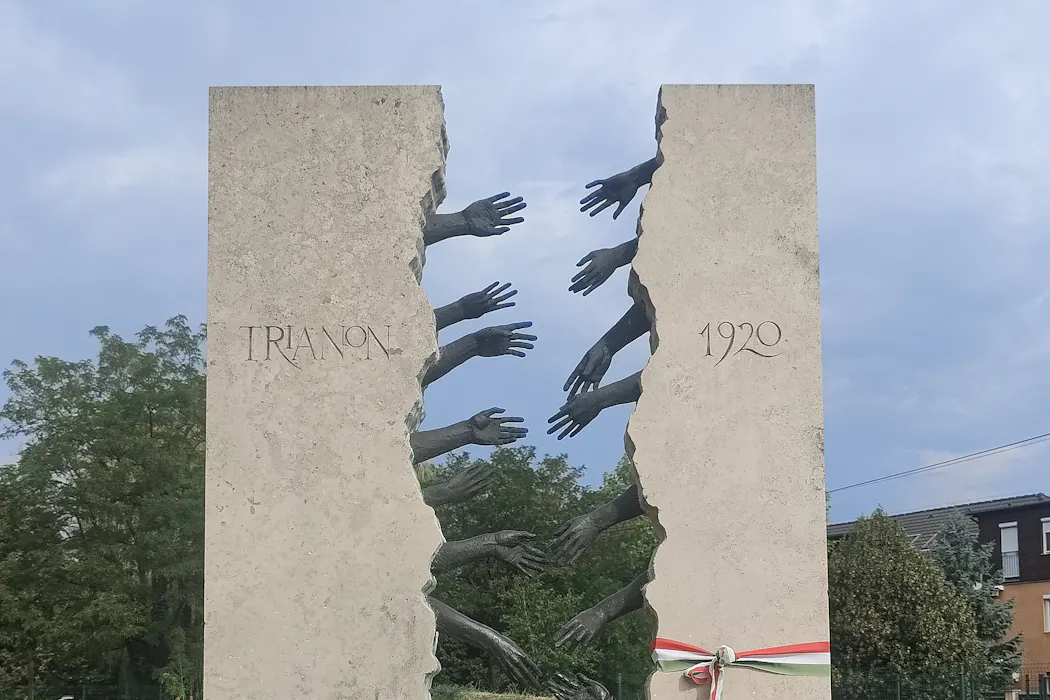
When newly elected Hungarian Prime Minister Péter Magyar delivered a June 4 address to mark Hungary’s Day of National Unity, he did so facing a long stone trench known as the Monument of National Unity. The memorial pays homage to the Treaty of Trianon in 1920, which formally ended Hungary’s involvement in World War I but also resulted in the nation losing about two-thirds of its territory, economy and population.
The monument is provocative in several ways. Its walls are covered with the Hungarianized names of more than 12,000 towns and cities that were once part of “Greater Hungary.” That’s the colloquial name for Hungary’s territory before World War I, when it was still a part of the Austro-Hungarian Empire. The monument incorporates thousands of places now in Slovakia, Romania, Serbia, Ukraine, Croatia, Slovenia, Austria and Poland. The names are intermixed rather than grouped geographically, suggesting the indivisibility of Greater Hungary despite modern borders.