Australia and Vietnam are pledging to bolster trade and investment ties, as the nations bid to shore up security of energy and food-supply chains.
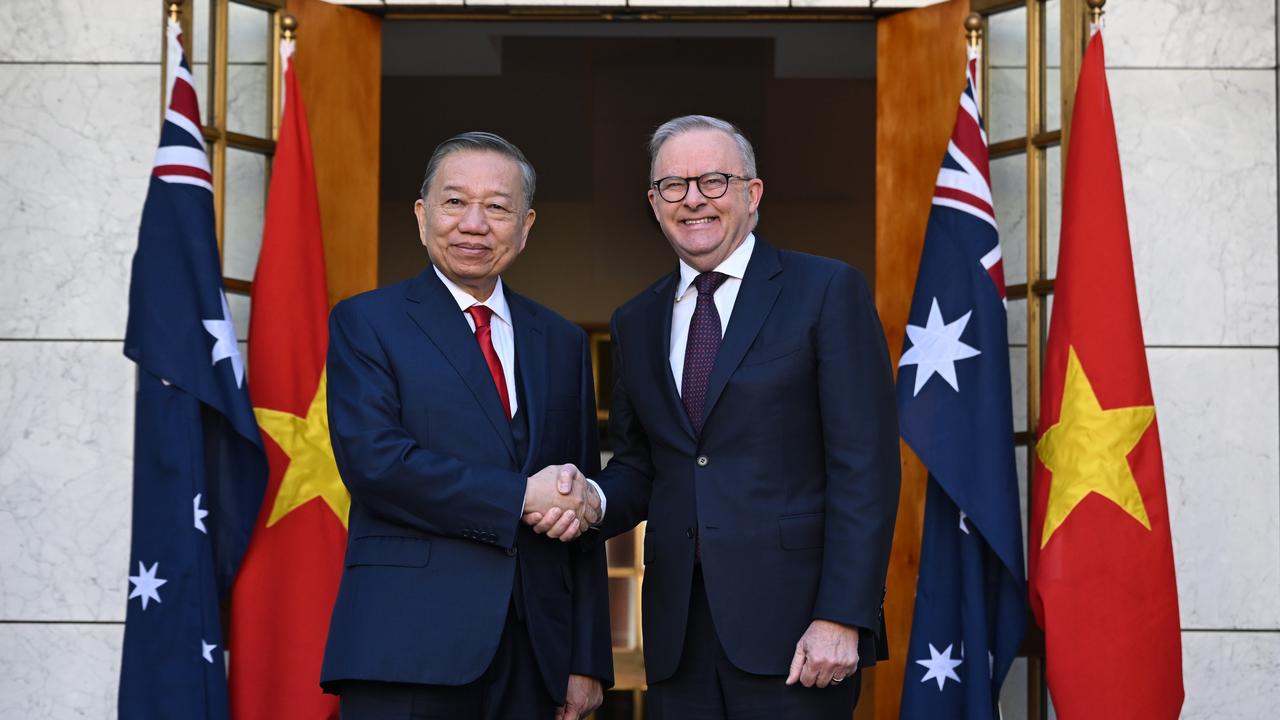
Prime Minister Anthony Albanese met with Vietnamese President To Lam at Parliament House in Canberra, announcing their nations were committed to supporting supply chains for critical minerals, semiconductors, and clean energy.
They recognised the importance in allowing the flow of essential goods between the two countries, such as grid infrastructure, agricultural and agri-food essentials, according to their joint statement on Tuesday.
The leaders also reaffirmed their intention to further strengthen defence and security engagement following Vietnam's participation in Exercise Kakadu military drills in 2024 and 2026.
Mr Albanese said resilient supply chains mattered more than ever.
"Whether it's food, energy, or critical goods, both our countries have an interest in keeping trade open and reliable," he said.
"That is good for our economies, good for our security, and good for our region."
As part of the agreements reached, Melbourne's RMIT University will significantly expand in Vietnam, with plans for a new Hanoi campus and Saigon South campus redevelopment.
The president arrived in Sydney on Sunday night for his first visit to Australia as both leader of Vietnam and the national Communist Party.
This dual role of party and national leader is unusual and has been labelled a significant concentration of political authority by experts like Anne Vo, a senior lecturer of Vietnamese culture and politics at the University of Wollongong.
The visit was crucial as Vietnam was both a nation within China's sphere of influence and an ally to the United States, she said.
"For years, Australia and Vietnam have talked about the enormous potential in the relationship," Dr Vo said.
"The question now is whether they start converting that potential into capital, companies, projects and long-term economic integration."
Dr Vo said Vietnam has been considered "promising, but not urgent" by Australian business in the past but could offer economic security.
Huong Le Thu, a deputy director at the International Crisis Group, said the visit provided a chance to "exchange notes" as both nations faced international pressures from close allies.
"They need to be flexible and of course safeguard their national interests and red lines, but cooperate where they must," Dr Le Thu told AAP.
"Whether either countries have a kind of recipe to deal with current turbulences or challenges yet to come is yet to be shown."
Vietnam has one of the fastest-growing economies in Southeast Asia with Australia making efforts for half a century to secure a stronger relationship.
The countries signed a Comprehensive Strategic Partnership in 2024.