Get all your news in one place.
100's of premium titles.
One app.
Start reading
Latin Times
Latin Times
Politics
Mateo Moreno

Venezuela Joins the G20's Oil Talks in Houston: What's Really Driving the Invitation

US Secretary Interior Doug Burgum speaks during a press conference in the framework of the G20 Ministerial meeting on Energy Abundance, in Houston, Texas, on September 14, 2026. The discussions are slated to run through September 16 in Houston, in the oil-rich US state of Texas. The meetings gather delegations from the world's largest economies -- including China, India, Japan and Germany -- with major oil producers set to attend, such as Canada and Saudi Arabia. (Credit: Photo by RONALDO SCHEMIDT / AFP via Getty Images)

  • Venezuela is sitting in on this week's G20 energy ministerial in Houston (Sept. 14-16), even though it isn't a G20 member, weeks after Washington signed a 100-year deal covering 17 of its oil fields.

  • Diesel hit a fresh all-time U.S. high of $6.27 a gallon on Sept. 15, according to AAA, up from roughly $5.90 just a week earlier, as Middle East shipping disruptions squeeze fuel markets.
  • A Russian delegation is also in Houston for the talks, a move that has unsettled some of Washington's European allies still pushing to isolate Moscow over Ukraine.

Venezuelan officials are working the halls of a G20 gathering in Houston this week, an odd position for a country that doesn't belong to the bloc. Their presence at the G20 Ministerial Meeting on Energy Abundance, running September 14 through 16, comes barely two weeks after Washington and Caracas finalized a sprawling agreement handing a private operator control of a large slice of the country's crude reserves. It's the first time Venezuelan representatives have shown up at G20 energy talks at all.
VENEZUELA-COLOMBIA-DIPLOMACY-POLITICS
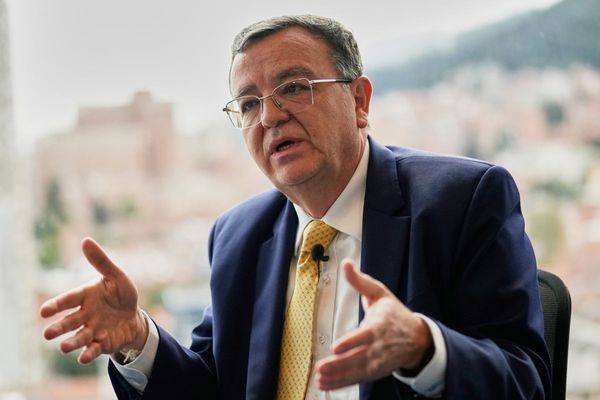
Venezuela's Minister of Hydrocarbons Paula Henao gestures after a meeting with interim President Delcy Rodriguez and the Colombian government delegation at the Miraflores Presidential Palace in Caracas on March 13, 2026. Photo by Juan BARRETO / AFP via Getty Images

Why Washington Pulled Up a Chair for Caracas

U.S. Interior Secretary Doug Burgum, co-chairing the meeting alongside Energy Secretary Chris Wright, confirmed that every G20 economy sent a delegation, and that Venezuela was invited too, according to reporting from World Oil's coverage of the ministerial. Venezuelan officials can't sit in on the closed-door sessions reserved for full G20 members, but they're taking meetings on the sidelines, according to reporting confirmed by U.S. officials. Hydrocarbons Minister Paula Henao is leading the delegation, joined by Jovanny Martínez, an executive at state oil company PDVSA who oversees exploration and production. It isn't Henao's first Houston trip of 2026 — EFE's wire reporting, carried by Swissinfo, counts this as at least her third visit this year alone as her ministry chases foreign capital.

Burgum framed the invitation as part of a much bigger shift. Speaking about the administration's broader energy strategy, he put it plainly: "the center of geopolitics around energy has moved" toward the Western Hemisphere — a line he's used to describe pulling Venezuela's crude closer to Gulf Coast refineries and further from Middle East supply routes.

Inside the Deal That Opened the Door

The invitation traces back to an oil agreement President Trump first announced on August 28, with the fine print released by the White House a few days later. Under the terms, a private firm called North American Blue Energy Partners (NABEP) picked up rights to 17 Venezuelan oil fields holding an estimated 65 billion barrels — and, notably, those rights run for 100 years, a term that has drawn as much attention as the barrel count itself.

The Pentagon's Office of Strategic Capital picked up a 35% stake in NABEP's parent company, but not through a conventional purchase. Officials structured it using so-called penny warrants, financial instruments that let the government convert its position into equity later for a token price — often just a single cent — rather than paying for shares up front. The State Department, meanwhile, locked in the right to buy a fifth of the venture's future output at production cost, with first refusal on the remaining 80%.

NABEP's controlling owner, Venezuelan businessman Alejandro Betancourt, has drawn scrutiny from regulators on both sides of the Atlantic over past business dealings, though he has never been charged. His company has nonetheless committed up to $100 billion toward rebuilding Venezuela's oil infrastructure, with Betancourt saying the arrangement would "unleash that potential to the great benefit of both Venezuelans and Americans."

Skepticism about how quickly any of this turns into extra barrels runs deep. Rapidan Energy's Bob McNally has warned that political turnover on either side of the deal could unravel it, a caution echoed by other former U.S. energy officials who, per Associated Press reporting carried by NPR member station OPB, say future administrations in Washington or Caracas could challenge the arrangement outright.

The Numbers Behind Venezuela's Pitch

Venezuela's leverage in this conversation comes down to sheer volume. The country sits on roughly 303 billion barrels of proven reserves, about 17% of the global total and more than any other nation, according to Energy Institute data — even though output limped along at under a million barrels a day for most of 2024 after two decades of underinvestment. That picture has shifted faster than many forecasters expected: by June, Washington's chargé d'affaires in Caracas said Venezuelan oil exports had climbed to 1.25 million barrels a day, the highest level in seven years.

From a Military Raid to a Seat at the Table

None of this would be happening without the political rupture that preceded it. A U.S. military operation in early January removed Nicolás Maduro from power; he and his wife, Cilia Flores, were flown to New York and indicted on narco-trafficking charges they deny, with the case still pending trial. His longtime vice president, Delcy Rodríguez, was sworn in as acting president days later and has functioned as Washington's primary point of contact in Caracas ever since — even though both she and Maduro maintain he remains Venezuela's only legitimate leader.

Venezuela's interim President Delcy Rodriguez (C), US Energy Secretary Chris Wright (L), and Venezuela's Minister of Petroleum and Hydrocarbons Paula Henao (R) attend the signing of an oil agreement at the Miraflores Presidential Palace in Caracas on September 2, 2026. (Credit: Photo by Juan BARRETO / AFP via Getty Images)

What the Deal Could Mean for Houston's Own Venezuelan Community

Houston's ties to Venezuelan oil go back decades, built on cross-border industry recruitment that has drawn engineers and executives to the city for generations. Older Migration Policy Institute figures, cited by Voice of America, put the metro area's Venezuelan population at roughly 33,000 as of 2017 — triple what it had been in 2010 — and described Houston as the country's second-largest Venezuelan hub after South Florida. More recent estimates complicate that picture: a Migration Policy Institute analysis reported by the Houston Landing puts the figure closer to 54,000, while a separate count citing the Census Bureau ranks Houston third nationally, behind both Miami and Orlando, with total Venezuelan residency across Texas estimated between 80,000 and 120,000. Whichever figure holds, any real expansion in U.S.-Venezuela oil trade is likely to ripple through those same neighborhoods, from engineering firms to family-owned restaurants that have grown up alongside the community.

Diesel Prices, the Middle East and Russia's Presence

The ministerial is unfolding against a rough backdrop for fuel markets. Warfare in the Middle East has snarled shipping through the Strait of Hormuz, and the fallout has hit diesel especially hard: AAA's national average hit a fresh all-time record of $6.27 a gallon on September 15, up sharply from about $5.90 just a week before and well past the previous record of $5.82 set in June 2022. The climb has been unusually steep — diesel was still under $5.90 nationally as recently as the first week of September, meaning the jump past $6 happened only in the last several days.

Adding another layer of friction, a Russian delegation — drawn from that country's energy, foreign affairs and natural resources ministries — is also attending the Houston talks, a move that has unsettled some European officials still pushing to keep Moscow diplomatically isolated over its war in Ukraine. The three-day gathering otherwise draws heavyweight economies including Germany, Japan, India and China alongside major producers such as Saudi Arabia and Canada, underscoring how central the meeting has become to the global energy conversation as it wraps up Wednesday.

Sign up to read this article
Read news from 100's of titles, curated specifically for you.
Already a member? Sign in here
Related Stories
Top stories on inkl right now
One subscription that gives you access to news from hundreds of sites
Already a member? Sign in here
Our Picks
Fourteen days free
Download the app
One app. One membership.
100+ trusted global sources.