Get all your news in one place.
100’s of premium titles.
One app.
Start reading
Space
Space
Science
Mike Wall

Vast raises $500 million to keep developing 'Haven' private space stations

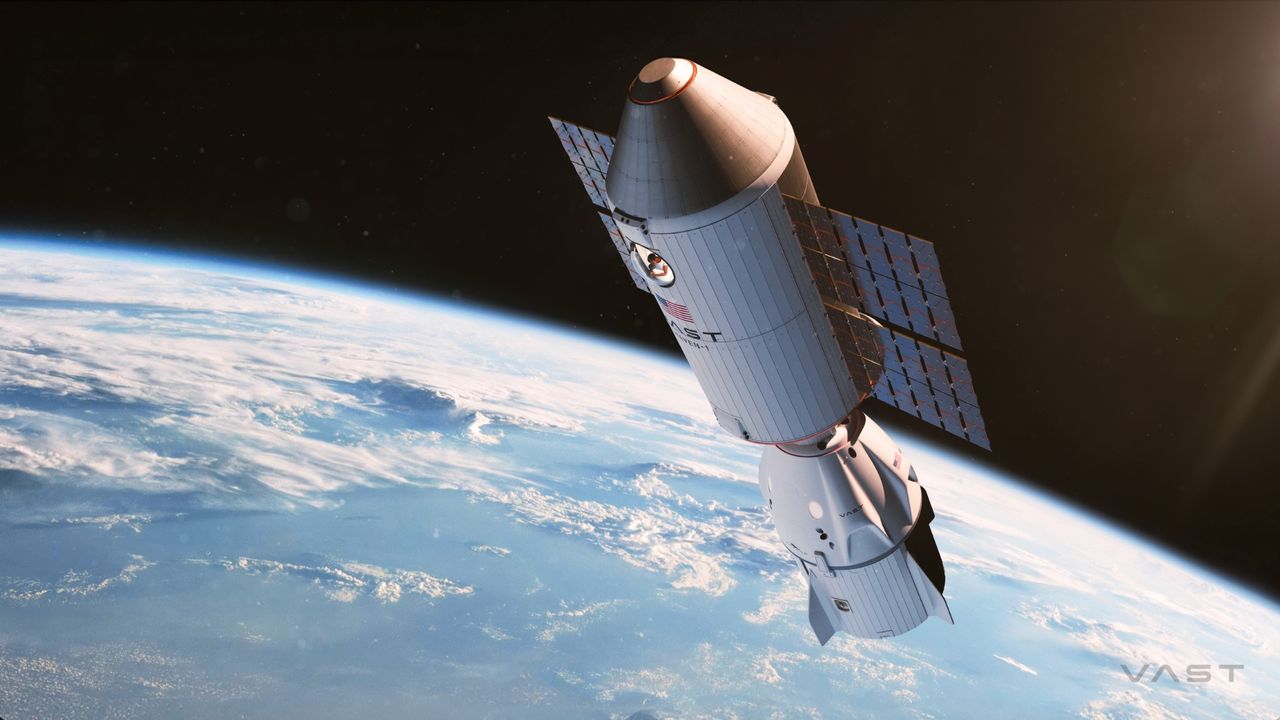
Artist's illustration of Vast's Haven-1 space station in orbit, with a SpaceX Dragon capsule docked to it.

Vast wants to extend humanity's footprint into the final frontier, and it now has a lot more money to funnel toward that goal.

The California startup, which is developing a line of private space stations called "Haven," announced today (March 5) that it has raised $500 million in new funding.

"This investment underscores the market's strong conviction in both our strategy and our engineering," VAST CEO Max Haot said in a statement. "The low Earth orbit economy is at a pivotal inflection point, poised for rapid growth. Vast's Haven stations are engineered to deliver safe, cost-effective access to microgravity research and in-space manufacturing, empowering government and commercial partners to unlock the full commercial promise of this next era for space."

The financing consists of $300 million in "Series A" equity and $200 million in debt, according to Vast. (Series A funding is the round that follows initial "seed capital.")

"The funds will be used to expand facilities, grow the team, and advance the company's proposed successor to the ISS, Haven-2, designed to ensure continuous human presence in low Earth orbit for the United States and its allies," Vast wrote in the statement.

Balerion Space Ventures led the financing round, with participation from IQT, Qatar Investment Authority, Mitsui & Co. Ltd, MUFG, Nikon Corporation, Stellar Ventures, Space Capital, Earthrise Ventures, and Jed McCaleb, Vast's founder and first investor, according to the statement. A.C. Charania, current Balerion advisor and former NASA chief technologist, will join the Vast board as part of the transaction.

"Vast was founded with a long-term vision of billions of people living and thriving in space. Achieving a goal of this magnitude requires deliberate stepping stones, and our strategy of building, testing and iterating with real hardware is delivering results," McCaleb said in the same statement.

"It is exciting to welcome additional investors who recognize Vast's long-term potential and share our belief in making this vision a reality," he added.

The International Space Station is scheduled to retire at the end of 2030. Vast plans to launch the first Haven-2 module in 2028 and add another module roughly every six months thereafter until 2032.

The company, which was founded in 2021, will get some practice before then: It plans to launch the single-module Haven-1 pathfinder station next year atop a SpaceX Falcon 9 rocket. And NASA recently selected Vast to operate the sixth private astronaut flight to the ISS, which will launch no earlier than summer 2027 and employ SpaceX hardware (a Falcon 9 and a Dragon crew capsule).

Vast has already tested some of Haven-1's key technologies on the uncrewed, 1,100-pound (500-kilogram) Haven-Demo spacecraft, which launched to low Earth orbit this past November.

Vast isn't the only company working to get a private space station up and running in Earth orbit.

For example, Houston-based Axiom Space plans to launch a handful of modules to the ISS beginning in 2027; these modules will then detach and become a free-flying private outpost. Jeff Bezos' Blue Origin and Sierra Space are developing an outpost called Orbital Reef, and a consortium that includes NanoRacks and Voyager Space are working on a different one known as Starlab.

Sign up to read this article
Read news from 100’s of titles, curated specifically for you.
Already a member? Sign in here
Related Stories
Top stories on inkl right now
One subscription that gives you access to news from hundreds of sites
Already a member? Sign in here
Our Picks
Fourteen days free
Download the app
One app. One membership.
100+ trusted global sources.