Twenty-Two Floors Going Down
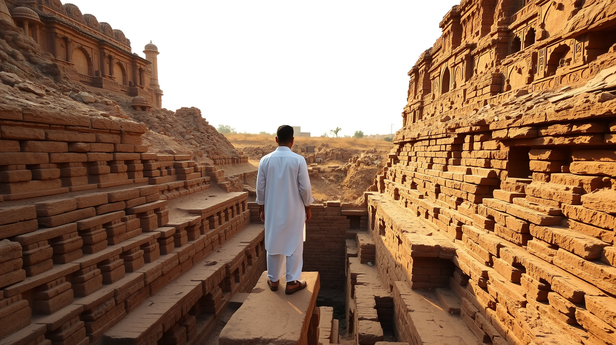
Most heritage towns in India give you one era. Hampi is Vijayanagara. Fatehpur Sikri is Mughal. Vadnagar is something stranger: a single town in northern Gujarat where archaeologists have identified twenty-two distinct layers of human settlement, stacked one on top of the other like sediment, going back roughly 2,500 years to the late Vedic period. The town did not fall and get rebuilt. People simply kept living there, generation after generation, each civilisation pressing down the one before it. When the Archaeological Survey of India began systematic excavations here in 2016, they found that Vadnagar may be the longest continuously inhabited settlement ever scientifically documented in the subcontinent. That is not a tourism board claim. It comes from peer-reviewed findings published in the journal PLOS ONE in 2021, which placed the earliest occupation layers at around 800 BCE.