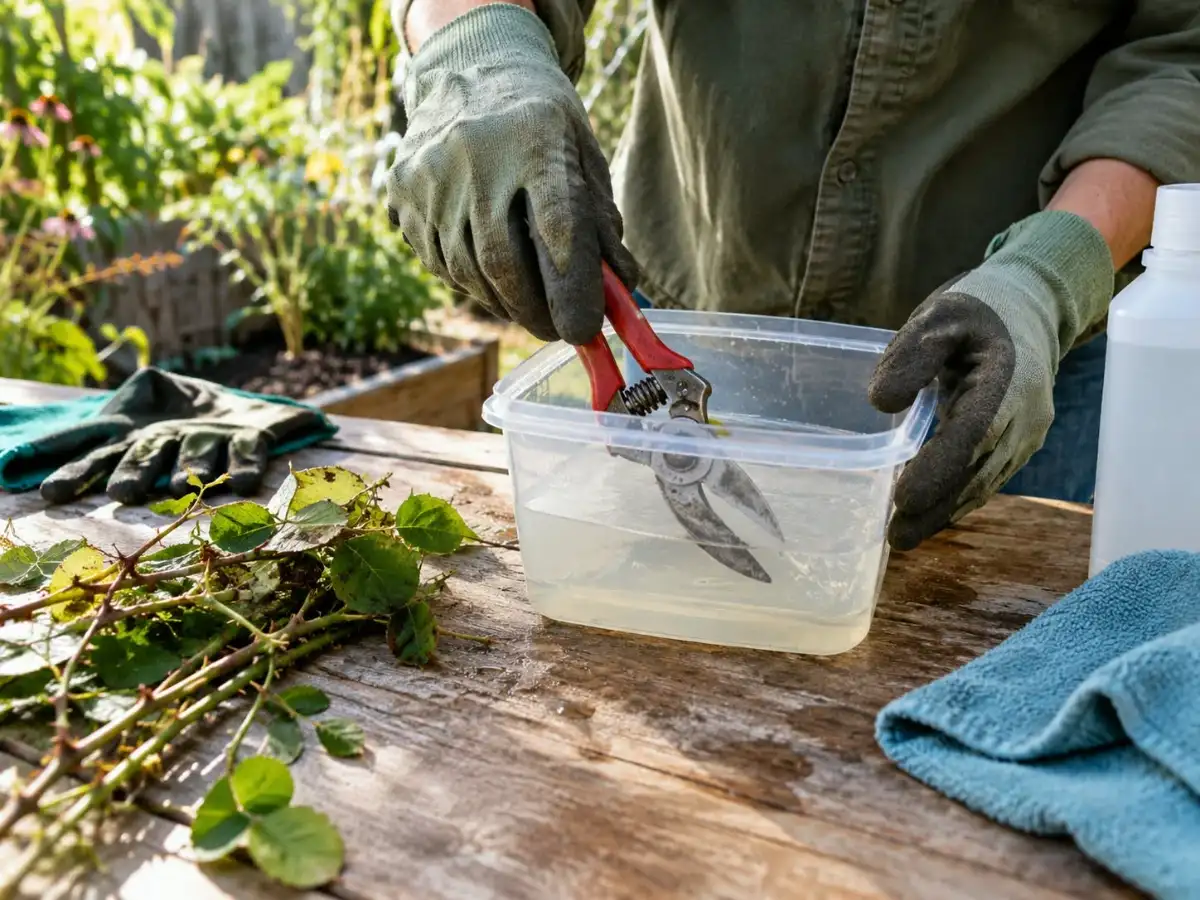
Gardening tool hygiene is often oversimplified in casual advice, and pruning shears are a common example. Soiled blades don't just look bad, they can become a vector that spreads plant disease from one specimen to another. According to an Iowa State University article on how to sanitize pruners and other garden tools, soiled pruning shears aren't merely an example of poor hygiene; it is the tool through which gardeners unintentionally infect plants with various diseases. Moreover, bleach water is not the universal solution that most people think it to be.
The bleach ratio, and its limits

You can find a version of the same disinfecting instructions on the internet by searching "how to clean pruning shears." It involves soaking your shears in a 1:9 mixture of household bleach and water. The ratio itself is accurate, but the guidance is often repeated without its operating conditions. The Iowa State University article notes that a 10% bleach solution is to be freshly mixed, used within two hours of preparation, and allowed to sit on the blades for 10 minutes or more to be effective before rinsing with clean water to prevent damage to the blades. The latter is a point that a lot of people tend to overlook when they're gardening as a hobby.
Why extension scientists have been pushing back for years
Gardening was not a new idea to the plant pathologists. The advice on using a bleach solution has been echoed on thousands of websites, including those at universities, with little regard for whether or not it is the best solution available, Washington State University horticulturist Linda Chalker-Scott said in an article. Her review of the research points to a documented trade-off: while bleach is an effective disinfectant, repeated exposure corrodes metal blades over time, and the resulting pits can themselves harbor the pathogens the treatment is meant to remove.