Get all your news in one place.
100's of premium titles.
One app.
Start reading
The Times of India
The Times of India
World
TOI World Desk

US students win $25,000 after creating a biodegradable coffee pod

A chemistry class assignment about household rubbish took two American high-school students into a problem that usually sits well outside the school curriculum. Aditya Herekar, from Edison, New Jersey, and Karan Verma, from Frisco, Texas, began looking at what happens to a coffee capsule after it has been used. Their work eventually led to a new pod material, a patent application and a published research paper. The pair developed Naturista, a coffee capsule made from pullulan, a food-grade polysaccharide that can dissolve or biodegrade instead of leaving behind a conventional plastic shell. Their project also reached the Mott Million Dollar Challenge, where the students won $25,000 for their work.

Get breaking news anytime, anywhere. Download the TOI app now!
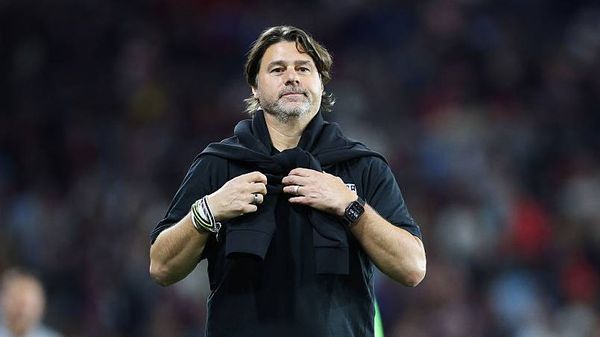
How the founders turn a school waste project into a coffee pod idea

As reported in Naturista, the idea began with a chemistry assignment focused on household waste. Coffee pods quickly became the subject because their construction presented a particularly awkward disposal problem. Conventional capsules can contain several bonded layers, including plastic and aluminium. The materials are designed to keep coffee protected during storage and brewing, but that combination also makes the used capsule difficult to process through ordinary household recycling. For Herekar and Verma, the question became less about how consumers should dispose of the pods and more about whether the pod itself needed to be made differently.

They were also familiar with the product from their own homes. The project was not based solely on something they had read about in a textbook. It became an attempt to rethink an everyday object they were already using.

How 200 prototypes helped turn a school project into materials research

The early development work took place using equipment and materials they could obtain themselves. They ordered biopolymers, made moulds and cast films, then tested the resulting structures with coffee and hot water. Many of the early versions failed. Some did not retain their shape, while others could not withstand the conditions needed for brewing.

The pair eventually arrived at a pullulan-based formulation that behaved differently. After roughly 200 prototypes, they produced a version that could maintain its structure through a complete extraction before breaking down when required.

Pullulan became the material behind Naturista

Pullulan is a polysaccharide produced by microorganisms and has applications in food and pharmaceutical products. Herekar and Verma were interested in its ability to form films while also being water soluble and biodegradable. The concept was relatively simple, even if making it work was not. A coffee capsule needs to survive a short period of heat, water and pressure. Once the coffee has been brewed, however, there is little reason for the shell to remain intact.

The students looked towards bioabsorbable materials used in medicine for inspiration. Those materials are designed to provide structural support for a particular period before breaking down, removing the need for a later procedure to take them out.

They applied a similar principle to packaging. Instead of making a coffee pod that could survive for years, they wanted one that would last only as long as the brewing process required.

University experts helped turn the early prototypes into a product

The kitchen experiments eventually reached the point where specialist knowledge was needed. The founders began working with university professors with expertise spanning materials science, food science and shelf-life considerations. That assistance helped move Naturista beyond the prototype stage. The work expanded into questions that a kitchen experiment could not answer on its own, including how the material could perform consistently and what would be required to turn the concept into a commercially viable product.

The project has since included a patent application and a published paper, giving the two students a body of work that extends beyond the original classroom assignment.

Two versions are being developed

Naturista's concept is not limited to one type of coffee capsule. The machine version is designed around the dimensions of a conventional single-serve pod. The intention is that consumers could use it with an existing machine rather than buying a new brewing system. The pullulan shell is intended to withstand the brewing cycle before being disposed of through home composting. Instead of entering a coffee machine, the pod is placed directly into hot water. Its shell dissolves and releases the coffee, leaving no conventional capsule behind.

The two designs approach the same packaging problem differently. One is intended to fit into an established brewing routine, while the other removes the need for a machine altogether.

The students say the problem is bigger than disposal

Naturista's own research into coffee capsules points to the scale of the market. The company cites an industry estimate of more than 80 billion coffee pods being produced annually, with conventional capsules commonly combining plastic and aluminium.

The founders also point to research published in 2025 that detected microplastic particles in samples of hot retail coffee. As reported by Naturista, the study tested 155 samples, with polypropylene among the polymers identified. That finding is part of the wider discussion around plastic contact with food and drinks, although it does not by itself establish that conventional coffee pods are responsible for all of the particles detected.

The students' proposed alternative is therefore based on changing the material rather than asking consumers to alter what they do with the used capsule.

Two students brought different interests to Naturista

Aditya Herekar, a high-school student in Edison, New Jersey, developed an interest in sustainability and materials science while balancing school journalism, DECA and student council. He also co-founded Invest2Empower with Karan Verma, a student-led financial literacy initiative, and has volunteered as an English tutor.

Verma, a high-school student in Frisco, Texas, shares Herekar’s interest in entrepreneurship through DECA, BPA and Invest2Empower. He has also volunteered at a local chef academy and served on a congressional youth advisory council. Their different interests came together through Naturista and its focus on rethinking disposable coffee packaging.

The $25,000 prize put Naturista in the spotlight

The pair presented their work at the Mott Million Dollar Challenge, a competition that brought their prototype before judges outside the school environment. Their Naturista project ultimately won $25,000. For the students, the prize provided recognition for a project that had started with experiments on household waste and gradually developed into a more serious research and commercialisation effort.

Sign up to read this article
Read news from 100's of titles, curated specifically for you.
Already a member? Sign in here
Related Stories
Top stories on inkl right now
One subscription that gives you access to news from hundreds of sites
Already a member? Sign in here
Our Picks
Fourteen days free
Download the app
One app. One membership.
100+ trusted global sources.