Get all your news in one place.
100's of premium titles.
One app.
Start reading
The Economic Times
The Economic Times
Anupam Nagar

US Stock Market: Fed’s inflation fight puts Kevin Warsh’s credibility to the test

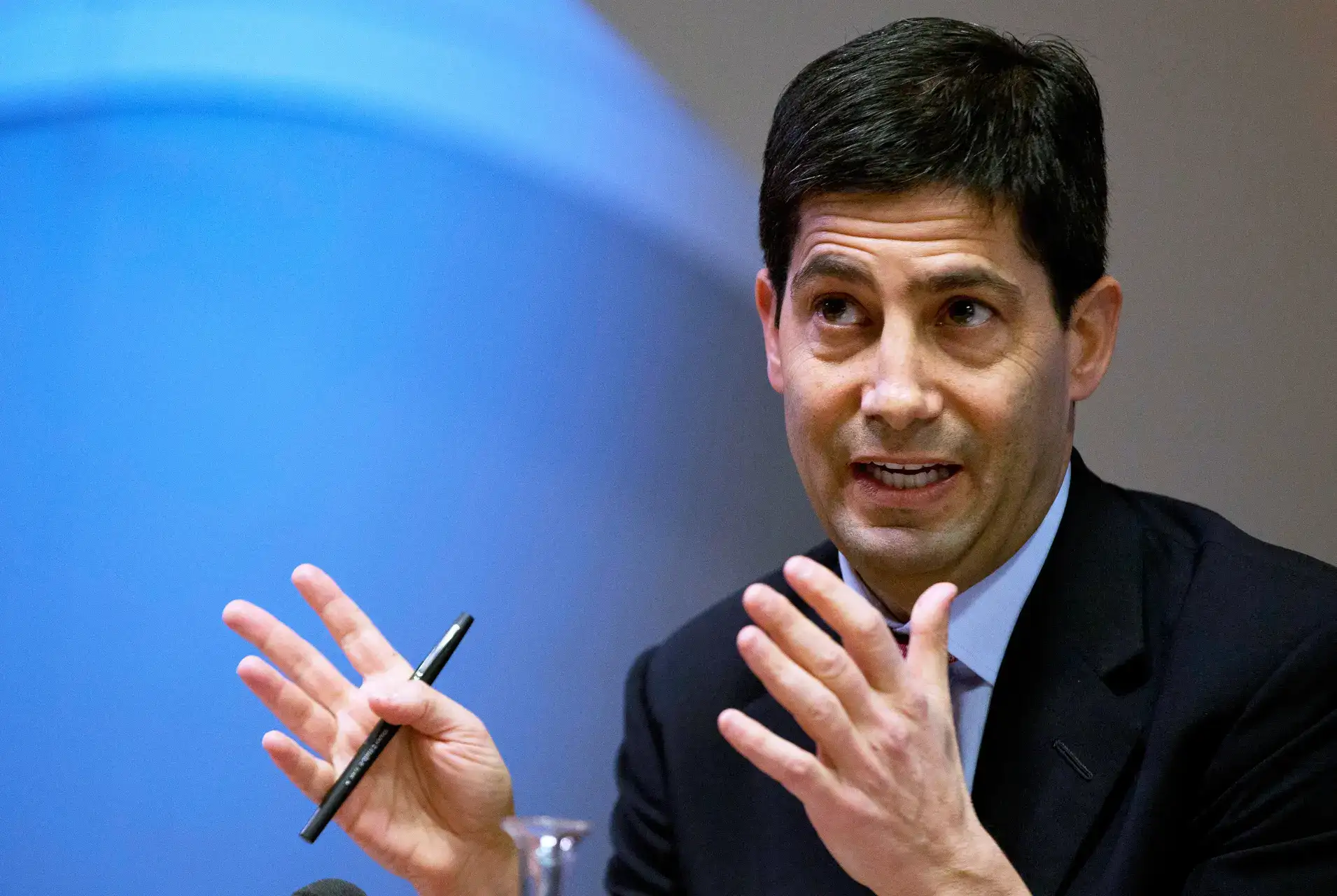
The Federal Reserve faces a difficult policy choice this week as new Chair Kevin Warsh weighs whether to raise interest rates to reinforce the central bank’s inflation-fighting credibility or keep borrowing costs unchanged amid economic uncertainty.

A rate hike would likely be needed if the Fed is determined to bring inflation back to its 2% target, but failing to act could raise questions over its commitment to price stability, according to a Reuters analysis.
The central bank has legitimate reasons to remain cautious. The labour market is showing mixed signals, with unemployment still low but job creation weakening. Meanwhile, inflation risks remain uncertain due to an energy shock linked to the ongoing U.S.-Iran conflict, which could either intensify or ease depending on how geopolitical tensions evolve.

A surprise rate increase without prior guidance could also trigger market volatility. Financial markets are currently pricing in only about a one-in-three probability of a rate hike at Wednesday’s meeting, making a so-called hawkish hold the most likely outcome.

However, Warsh faces growing pressure as inflation has remained above the Fed’s target for more than five years. His challenge is compounded by concerns over the central bank’s independence after President Donald Trump repeatedly expressed support for lower interest rates while selecting Powell’s successor.

Since taking charge two months ago, Warsh has sought to strengthen his credentials as an inflation hawk, repeatedly emphasizing that restoring price stability is the Fed’s primary objective. At his first post-meeting press conference as chair last month, he highlighted the central bank’s commitment to achieving the 2% inflation goal.

In testimony before lawmakers earlier this month, Warsh pointed to the prolonged period of above-target inflation as a burden on households and businesses, arguing that policy changes were necessary to restore price stability.

Reuters noted that if Warsh’s stated commitment is taken at face value, the case for higher interest rates remains strong given persistent inflation pressures, rising bond yields and the impact of renewed energy price risks.

The Fed chair’s decision to remove forward guidance has also increased expectations that every policy meeting could potentially result in action. Yet, despite these factors, the central bank is widely expected to keep rates unchanged this week, creating potential questions about the strength of its inflation-fighting message.

Credibility Challenge

Warsh’s relatively recent appointment gives him some room to establish his policy approach, but economists warn that credibility depends on action as much as communication.

Bank of America economists have also warned that keeping rates unchanged could lead markets to remove expectations of future tightening from their forecasts. Such a shift could effectively loosen financial conditions and raise doubts over the Fed’s policy stance.

The Fed’s own inflation projections indicate that price growth may not return sustainably to the 2% target until 2028. Achieving that goal could require tighter monetary policy than officials had anticipated earlier.

The central bank had previously expected some policy easing, partly due to expectations that energy price pressures would fade after a U.S.-Iran interim peace agreement. However, renewed tensions in the Middle East have pushed oil prices higher, complicating the inflation outlook.

Reuters reported that oil prices have climbed significantly from early July lows as geopolitical risks returned, raising concerns that inflation pressures could persist for longer.

While interest rate futures have not signaled immediate alarm, the bond market has pointed to the need for tighter policy. The gap between the two-year Treasury yield and the Fed’s policy rate has widened to its highest level since late 2022, indicating investors see greater inflation risks ahead.

Economists argue that inflation is unlikely to fall back to target without additional monetary tightening. Historical data suggests that significant declines in core inflation have typically occurred during periods when the Fed was raising rates rather than easing policy.

For Warsh, the upcoming meeting represents an early test of whether his tough inflation rhetoric will translate into policy action. A decision to hold rates could preserve short-term market stability, but it may also intensify debate over whether the Fed remains fully committed to restoring price stability.

Sign up to read this article
Read news from 100's of titles, curated specifically for you.
Already a member? Sign in here
Related Stories
Top stories on inkl right now
One subscription that gives you access to news from hundreds of sites
Already a member? Sign in here
Our Picks
Fourteen days free
Download the app
One app. One membership.
100+ trusted global sources.