The United States plans to deploy more high-tech missile systems to the Philippines to help deter aggression in the South China Sea, where the treaty allies on Tuesday condemned what they called China’s “illegal, coercive, aggressive, and deceptive activities.”
Beijing has repeatedly expressed alarm over the installation in the northern Philippines of a U.S. mid-range missile system called the Typhon in 2024 and of an anti-ship missile launcher last year. It said the U.S. weapons were aimed at containing China’s rise and warned that these were a threat to regional stability.

China has asked the Philippines to withdraw the missile launchers from its territory, but officials led by President Ferdinand Marcos Jr. have rejected the demand.
U.S. and Philippine officials held annual talks Monday in Manila on broadening security, political and economic engagements and boosting collaboration with regional security allies.
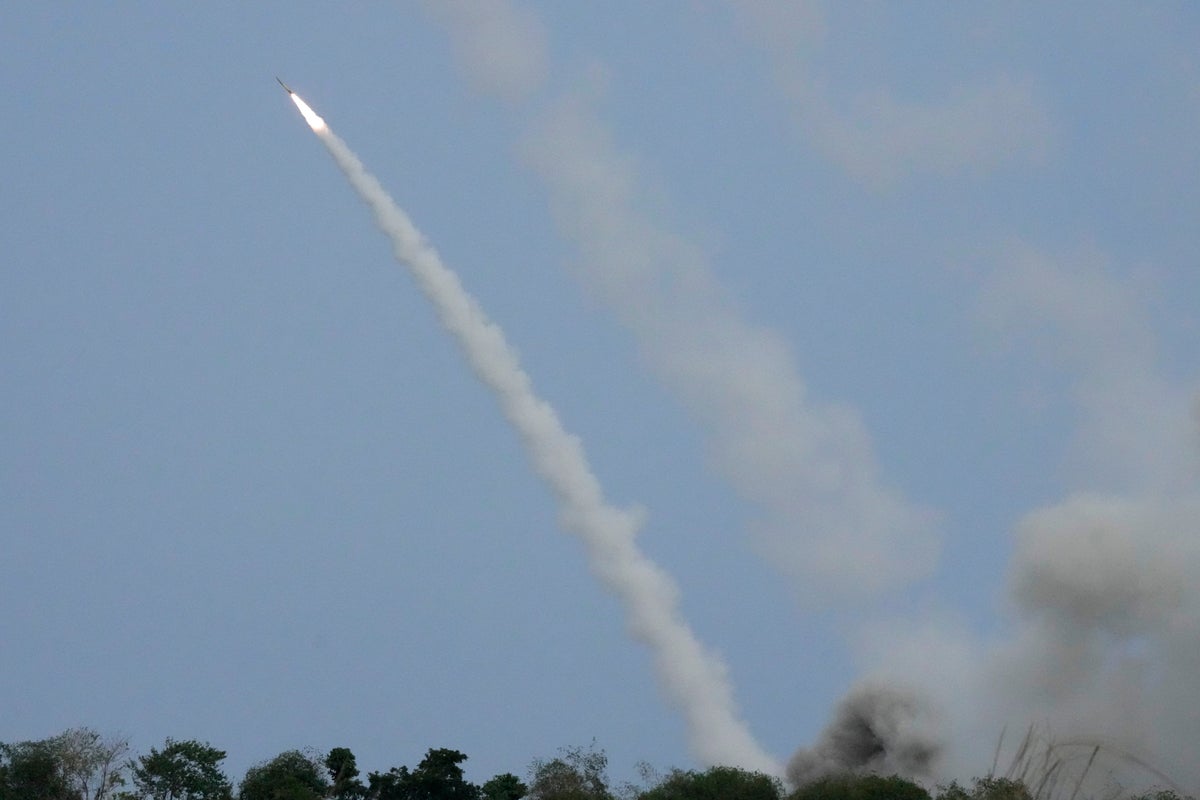
The U.S. and the Philippines outlined in a joint statement Tuesday specific defense and security plans for this year, including joint military exercises, Washington's support to help modernize the Philippine military and efforts “to increase deployments of U.S. cutting-edge missile and unmanned systems to the Philippines.”
The longtime allies "underscored their support for preserving freedom of navigation and overflight, unimpeded lawful commerce and other lawful uses of the sea for all nations,” the statement said.
“Both sides condemned China’s illegal, coercive, aggressive and deceptive activities in the South China Sea, recognizing their adverse effects on regional peace and stability and the economies of the Indo-Pacific and beyond,” it added.
Confrontations between Chinese and Philippine coast guard forces have spiked in the disputed waters in recent years. Vietnam, Malaysia, Brunei and Taiwan are also involved in the territorial standoffs.
Neither side elaborated on the planned missile deployments but Philippine ambassador to Washington, Jose Manuel Romualdez, who took part in Monday’s talks, said U.S. and Filipino defense officials discussed the possible deployment this year of “upgraded” types of U.S. missile launchers that the Philippines may eventually decide to purchase.
“It’s a kind of system that’s really very sophisticated and will be deployed here in the hope that, down the road, we will be able to get our own,” Romualdez told The Associated Press.
The Typhon missile system that the U.S. Army deployed to the main northern Philippine region of Luzon in April 2024 and an anti-missile launcher called the Navy Marine Expeditionary Ship Interdiction System that was deployed in April last year also to Luzon have remained in the Philippines, Romualdez said.
During joint drills, U.S. forces have exhibited the missile systems to batches of Filipino forces to familiarize them with the weapons’ capabilities and usage, military officials said.
Romualdez said the U.S. missile deployments to the Philippines did not aim to antagonize any country.
“It’s purely for deterrence,” he said. “Every time the Chinese show any kind of aggression, it only strengthens our resolve to have these types.”
The Typhon missile launchers, a land-based weapon, can fire the Standard Missile-6 and the Tomahawk Land Attack Missile. Tomahawk missiles can travel over 1,000 miles (1,600 kilometers), which places China within their target range, from the northern Philippine region of Luzon.
Last year, the U.S. Marines deployed the anti-ship missile launcher, the Navy Marine Expeditionary Ship Interdiction System, to Batan island in the northernmost Philippine province of Batanes, which faces the Bashi Channel just south of Taiwan.
The sea passage is a critical trade and military route that the U.S. and Chinese militaries have tried to gain strategic control of.
Cuban drivers face waiting several months wait for gasoline
Judge orders reversal of Trump decision to remove George Washington slavery exhibit
Malaysia and Japan plan major cross-border carbon capture project, despite climate benefit doubts
Ukraine war live: Kyiv’s forces make gains on battlefield ahead of peace talks
Investment in subsea cable network to create thousands of green jobs
Hillary Clinton accuses admin of Epstein ‘cover-up’ as Trump says he’s ‘exonerated’