The United States tried several times last year to extradite Venezuelan President Nicolás Maduro – including on Christmas and New Year’s Day – before successfully carrying out the strike on Saturday, according to a report.
The two earlier attempts to capture Maduro, who has ruled the country for 13 years, were hampered by weather, Trump administration officials and others familiar with the operation told the Wall Street Journal.
After the failed attempts, President Donald Trump deferred to the Pentagon on when to carry out the strike, and was given the go-ahead at 10:46 p.m. Friday, according to the report.
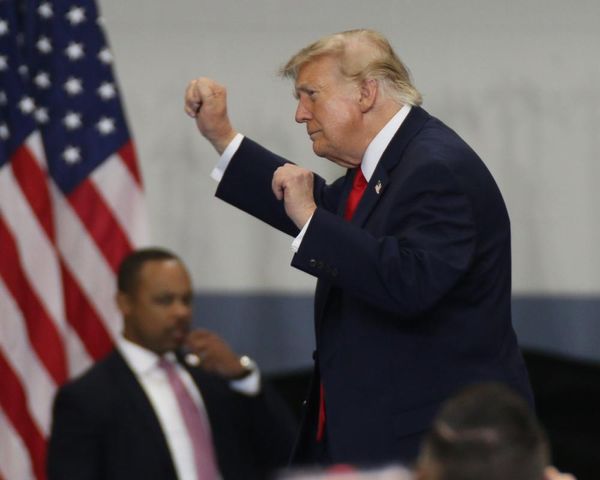
“Good luck and godspeed,” Trump told military leaders before watching the mission unfold from a makeshift secure facility at Mar-a-Lago. Surrounded by his top aides, Trump received constant updates as 150 warplanes flew to the Venezuelan capital, Caracas, and forced their way into Maduro’s bedroom.
Images released by the Trump administration also showed officials monitoring X on a large screen for any mention of the word “Venezuela.”
The Independent has contacted the Department of Justice, Defense Department and White House for comment.
The overnight operation left Venezuela reeling, with officials saying that people were killed when explosions rang out over Caracas early Saturday. It is not immediately clear how many people were killed, but Trump said no U.S. service members were among them. The country later described the strikes as an “imperialist attack” carried out by the U.S., and urged citizens to take to the streets.
After capturing Maduro and his wife, Cilia Flores, and removing them from the country, American officials said the pair would face charges, including narco-terrorism, in U.S. courts.
Maduro and Flores landed late Saturday afternoon at a small airport in New York before being flown by helicopter to Manhattan, where an armored car took Maduro to a nearby U.S. Drug Enforcement Administration office.
In the meantime, Trump said the U.S. would “run” the South American country and tap its vast oil reserves to sell to other countries.
The attack followed months of growing pressure from the Trump administration, which had built up naval forces in the waters off South America since early September to then carry out deadly strikes on alleged drug-smuggling ships in the region.
U.S. Attorney General Pam Bondi wrote on X that Maduro and Flores had both been indicted in the Southern District of New York and “will soon face the full wrath of American justice on American soil in American courts.”
She said Maduro faced charges of “Narco-Terrorism Conspiracy, Cocaine Importation Conspiracy, Possession of Machineguns and Destructive Devices, and Conspiracy to Possess Machineguns and Destructive Devices against the United States.”

Maduro was indicted in March 2020, during Trump’s first term, but the indictment against Flores was not previously made public.
While the operation has been condemned by several world leaders, as well as major U.S. politicians, many have also welcomed the end of the Maduro regime.
Experts have raised questions about the legality of the operation, which was carried out without congressional approval.
Venezuela live: Rubio refuses to say who is running country after Maduro capture
After capture and removal, Venezuela's Maduro is being held at notorious Brooklyn jail
Why a solution to deadly bleeding in childbirth isn’t reaching mothers
The Venezuelans are very clear about who their president is – and it’s not Trump
This is the moment that Donald Trump unleashed anarchy
Mamdani says he called Trump to personally object to Venezuela attack