The 2026 US midterm elections are shaping up around a familiar question: how voters feel about the economy. But the campaign is also being pulled in several other directions, from immigration and gas prices to the Iran war, transgender rights and the growing political fight over data centres.
The issues will not carry the same weight in every race. But together, they could shape the battle for control of Congress and hundreds of state-level contests.
Also Read: Trump ramps up noncitizen voting prosecutions ahead of midterms
1. Cost of living and the economy
Affordability is emerging as the biggest issue for voters heading into the midterms.
A Washington Post report said voters in the congressional districts most likely to decide control of the House are particularly focused on high prices.
The issue is especially significant for rural voters. An AP-KFF survey of more than 2,000 rural registered voters found that about half believe the economy is worse than when Donald Trump returned to office. About three-quarters rated the cost of living in their communities as only fair or poor.
Groceries, gas and healthcare are among the biggest concerns. The findings suggest that economic frustration is reaching even a constituency that has strongly backed Trump and Republicans.
But that does not necessarily mean rural voters are switching parties. Rural Republicans continue to trust their own party more on economic and healthcare issues, even as many express dissatisfaction with their own economic circumstances.
2. Trump and his record
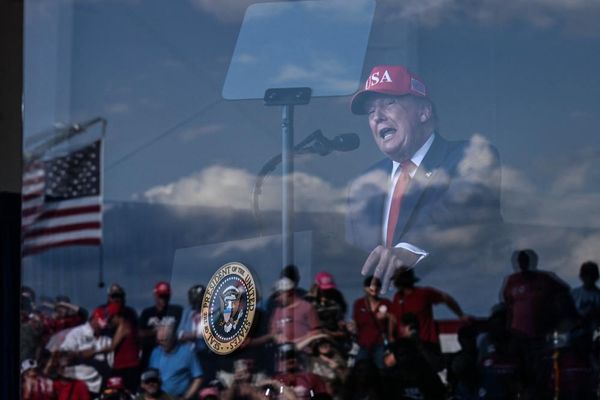
Trump is likely to be difficult for voters to avoid, even when individual races are focused on local issues.
Democrats are seeking to tie Republican candidates to the president and his record, while Republicans face the challenge of defending their congressional majorities as Trump's approval ratings come under pressure.
The Washington Post noted that Trump's unpopularity could make it harder for Republicans to hold competitive House seats.
The Week also highlighted how Democrats are trying to turn the election into a referendum on his administration.
For Republicans, however, the calculation is complicated. Trump remains a powerful force among the party's voters, but candidates in competitive races may also have to contend with voters unhappy about prices, foreign policy and other parts of his record.
3. Gas and energy prices
Gas prices could give the broader cost-of-living debate a very visible target.
The issue has already changed political sides since the 2024 election. Republicans used high gas prices to attack Democrats then and now with fuel prices rising amid the conflict with Iran, Democratic candidates and groups are now making the same argument against Republicans.
The Week reported that about two-thirds of political advertisements mentioning gas prices this year have come from Democratic candidates and groups.
4. Immigration
Immigration remains one of the most important Republican issues, but Trump's policies have made it a more complicated campaign issue.
Republicans have traditionally benefited from voter concerns about the border and illegal immigration. However, recently, aggressive deportation policies and expanded Immigration and Customs Enforcement operations could also give Democrats an opening, Politico reported.
Also Read: US midterm elections 2026: Record diesel prices hit at worst time in key battleground states
Democrats themselves are divided over how far to go. Some candidates are campaigning on reforms to ICE, while others have called for dismantling the agency, leaving both parties with a balancing act.
Republicans need to defend an issue that has historically helped them, while Democrats need to attack Trump's policies without alienating voters who still want tighter immigration enforcement.
5. Iran and the foreign-policy fallout
The war with Iran has pushed foreign policy into the midterm campaign while also feeding directly into the economic debate.
The conflict has challenged Trump's earlier promise to avoid getting the US involved in new foreign conflicts. It has also contributed to higher energy costs, giving Republicans another reason to worry about the political fallout.
The Week noted that some Republicans would prefer the White House to bring the conflict to an end, partly because of concerns about its impact on the economy and their reelection campaigns.
But Republicans have been reluctant to publicly break with Trump, whose support remains strong within the party.
The AP-KFF survey also found that rural voters rated Trump's handling of the Iran war similarly to his handling of the economy, showing that the issue is not confined to Washington's foreign-policy debate.
6. Healthcare
Healthcare could become another pocketbook issue, particularly in rural America.
The AP-KFF survey found that only 17% of rural voters said Trump's healthcare policies had a positive impact on their healthcare costs. Forty-one per cent said the policies had no impact, while another 41% said they had a negative impact.
The survey also found that more than eight in 10 rural voters had heard little or nothing about the Rural Health Transformation Program, despite the administration promoting the programme as a major investment in rural healthcare.
Republicans continue to enjoy an advantage among rural voters when it comes to which party they trust on healthcare. But the survey suggests that Republican voters themselves are not uniformly convinced that the administration's policies have improved their healthcare costs.
7. Transgender rights
Culture-war issues will continue to compete with economic concerns for voters' attention.
Republicans are increasingly using transgender athletes' participation in sports and gender-affirming care for minors in campaign advertising. The strategy mirrors an approach that featured prominently in Trump's 2024 campaign.
Democrats are debating how candidates should respond. Some strategists believe such attacks could backfire as attitudes towards transgender rights change, while others remain concerned about the political risks of allowing Republicans to define the issue.
Unlike the cost-of-living debate, transgender rights is unlikely to be a single economic question. Its importance could depend heavily on the individual race, candidate and electorate.
8. Israel and Gaza
The US relationship with Israel is becoming a more difficult issue for Democrats, particularly as the party heads into the midterms.
There are growing disagreements between Democratic voters and some elected officials over US support for Israel following Israeli military action in Gaza, Lebanon and Iran.
The divide also cuts across traditional political lines. While criticism has been strongest on the Democratic left, some populist conservatives have also questioned US support for Israel and argued against deeper involvement in foreign conflicts.
That means a position that once offered candidates a straightforward political advantage can now create complications in some races.
9. Data centres and AI
One of the less traditional issues entering the midterm campaign is the rapid expansion of data centres.
The massive facilities needed to power artificial intelligence require large amounts of land and electricity. As technology companies move into rural areas, opposition has emerged from groups that do not normally find themselves on the same side of an issue.
The Week reported that $31 million has already been spent this year on political advertising focused on data centres. In July, more than 8% of broadcast television campaign spending went to data-centre or AI-related advertisements, compared with less than 1% last year.
The issue is particularly interesting because it can bring together conservative farmers and ranchers worried about development with environmental groups concerned about land and energy use.
For candidates, it offers another way to campaign on issues that voters encounter locally rather than through national political debates.