Get all your news in one place.
100’s of premium titles.
One app.
Start reading
The Guardian - US
The Guardian - US
World
Sam Levine in Fort Worth

US antifa trial tests limits of Trump administration’s domestic terror claims

a wire mesh fence around a detention center
The Prairieland detention center on 15 September 2016, in Alvarado, Texas. Photograph: Louis DeLuca/The Dallas Morning News via AP

A little after 11 pm on the 4th of July last year, police officer Jeremiah Zapata, adrenaline pumping through his body, crawled along Tanglewood drive, a quiet residential street on the outskirts of Fort Worth.

A few minutes earlier, an urgent call had come over the radio. A lieutenant responding to a call at the Prairieland detention center, a nearby ICE facility, had been shot. Zapata was one of the first officers to respond to the scene, where another officer told him that the suspects had fled along Tanglewood. Moving slowly in his cruiser underneath a light rain, Zapata used the spotlight on his police cruiser to search for what he assumed the suspect looked like – someone dressed in all black, running with a rifle. Zapata admitted he had “tunnel vision” as he frantically searched for a suspect.
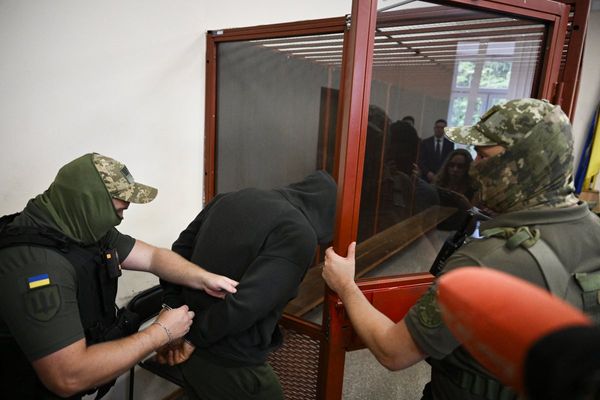
Zapata and other police officers who gathered on Tanglewood drive did eventually find five people who were at Prairieland that night, though they were not what they expected. While they were wearing dark clothing, none of them were running, or carrying a rifle – instead they were walking calmly along toward the police vehicles. Zapata thought they might actually be law enforcement.

Zapata was one of about 20 witnesses who testified in a tiny courtroom in Fort Worth, detailing how what was supposed to be a protest ended in a police officer being non-fatally shot. The case is being closely watched because it marks the first case in which the government is prosecuting left-wing demonstrators and alleging they are part of a terrorist “antifa cell”. The defendants deny being part of any such group, and that characterization has alarmed many observers who say that antifa is not an organization, but rather a constellation of left-wing groups. The Trump administration declared antifa a domestic terror group earlier this year, something it does not have the authority to do.

The defendants essentially accuse the government of having the same kind of “tunnel vision” offer Zapata conceded he had as he frantically searched for suspects on Tanglewood drive, saying prosecutors are taking what was supposed to be a peaceful protest and transforming it into a terror attack. Experts see the case as a test of whether the administration can successfully prosecute large groups of protesters who aggressively challenge ICE and other administration policies.

“Make no mistake, there was nothing peaceful about what happened on July 4th,” Shawn Smith, the lead prosecutor for the government, said during his opening statement. “They weren’t there to protest ICE. They were there to make a statement.”

Attorneys for the demonstrators say they intended to hold a peaceful noise demonstration outside the ICE facility in which they set off fireworks and used a bullhorn to let migrants detained inside they stood with them in solidarity. The defendants face a slew of charges, including material support for terrorism, rioting, attempted murder, and providing material support to terrorists. They could face decades in prison if convicted.

It is not disputed that there was only one demonstrator who fired shots on July 4 and that at least two protesters broke away from the group to vandalize a guard shack, cars in the parking lot, destroy a security camera, and slash the tires on a government van. So as they began to present their case to jurors, prosecuters sought to convince jurors that the attack was actually part of a larger conspiracy and an “ambush” on law enforcement.

Nine of the defendants are all being tried together. While all but one of them were at Prairieland on the night of July 4, they all had different roles in in planning the protest. In addition to Benjamin Song, the alleged shooter, the other defendants on trial are Zachary Evetts, Autumn Hill, Meagan Morris, Ines Soto, Elizabeth Soto, Savanna Batten, Maricela Rueda, and Daniel Sanchez-Estrada. Two of the defendants – Hill and Morris – are transgender, and Smith often used incorrect pronouns for them. That prompted a rare rebuke from the judge, Mark Pittman, a Trump appointee, who urged Smith to use the defendants preferred pronouns out of respect to them.

A handful of other defendants have taken plea deals in the case and some are expected to testify against the demonstrators this week.

Smith emphasized that the protesters had all agreed to wear black clothing, making it harder to identify them. Prosecutors also focused on a cache of rifles, full magazines, pistols, first aid kits and body armor they found in a van that many of the protesters carpooled in to Prairieland.

“What the fuck is going on? This appears to be a targeted hit on Prairieland,” a police officer who searched the van the night of the attack said on bodycamera video. Prosecutors displayed nearly a dozen gun and bulletproof vests that were seized to the jury.

A key legal question in the case is whether the defendants in the case could have reasonably foreseen that their actions would result in violence. In court filings, prosecutors have pointed to encrypted Signal messages in which the alleged shooter, Song, tells the other defendants that he intends to bring weapons because cops would be more likely to back off if they saw multiple rifles. The night before, another defendant allegedly asked Song if he would be bringing guns to the protest and he said he would because “he would not be going to jail.”

Throughout the week, defense attorneys sought to make it clear that there was no way the defendants knew there would be violence. At least some of the protesters weren’t involved in planning the protest, arrived late, and left as soon as guards asked them to leave, their lawyers said.

“In America, we don’t prosecute our citizens for their political beliefs,” Christopher Tolbert, one of the defense lawyers, said in his opening statement.

Attorneys for the five people Zapata later encountered on Tanglewood drive said they left the scene when ICE guards came out and told them to stop setting off fireworks. Some of them weren’t involved in planning the protest and arrived late. A lawyer for another defendant said that he took off running as soon as he heard gunshots. Morris has said she stayed in the car with the extra guns while the protest took place.

The government’s narrative was at times undercut by some of the evidence it offered.

Pressed by defense attorneys, several law enforcement officials conceded that the weapons seized had been purchased legally. Lawyers have said they brought the weapons for self-defense and remained in cars while the protest was taking place. While prosecutors zeroed in on the all-black clothing that they said the protesters were wearing, some appeared to be wearing blue jeans and another had a tank top on when they were arrested – a far cry from the militaristic clothing prosecutors insisted they wear. Prosecutors also displayed the face mask Song is said to have worn during the attack, which was neon green, not black. The protesters also had a wagon with them that had reflective tape on it.

Police video of the five protesters arrested on Tanglewood drive also showed the five of them walking calmly past police who were starting to scan the area. One defense attorney pointed out that if they had truly intended to ambush police, this would have been a moment to do so because the officers were exposed. Instead, the protesters complied with all of the demands of the officers. Video of Evetts, another protester, being arrested also showed he was calm and respectful when officers approached him.

While prosecutors have said the demonstrators shot explosives at the Prarieland detention center, evidence showed that they used commercial grade fireworks. The warden of the facility testified there was no damage to the facility from the fireworks. The only damage was to a broken security camera, cars and a guard shack that were spray painted, and a government van that had its tires slashed, he said.

Defense lawyers also began to suggest throughout the week that Song fired in self-defense during a chaotic few seconds after police arrived on scene.

The officer who was shot, Thomas Gross, acknowledged that he pulled his weapon first after he arrived on scene and saw people running. Song’s lawyers suggested he fired as he saw the police officer point his pistol at the back of an unarmed person who had been vandalizing property. The government filed a motion over the weekend to try and block the defendants from arguing Song acted in self-defense.

The hugely important case is taking place in a small, art-deco courthouse in Fort Worth that was designed in the 1930s. The wood-paneled and dimply lit courtroom is so small and can only fit a few dozen people. During the first few days of the trial last week, a long line of lawyers, family members, and journalists began forming in the fourth floor hallway long before the courtroom doors opened.

Friends and activists, some of whom traveled from elsewhere in Texas or out of state, were also a constant presence in the courtroom. Evetts’ wife, who declined to be interviewed, could be seen fidgeting with a Rubik’s cube during testimony, and became emotional when police played the bodycam video of her husband’s arrest. A coalition of supporters, the DFW support committee, sent an army of notetakers to the courtroom each day and is regularly posting notes summarizing what happened in court each day (federal district court proceedings in the United States are not recorded or broadcast to the public). A park across the street from the courthouse became a homebase for supporters to gather before and after court.

During the opening days of the trial, prosecutors began to drop hints of how they plan to argue to the jury that the defendants were part of a “North Texas antifa cell”.

Beginning to build their case, prosecutors focused on stickers, pamphlets, zines, and other materials seized from the defendants that underscored their left wing views. They displayed stickers to the jury that were in the backpack of one of the defendants that said “Make America Not Exist Again”. They also displayed pamphlets from the Socialist Rifle Association that included a drawing of a figure throwing a Nazi swastika in a garbage bin.

Prosecutors also zeroed in on a notepad found in the glovebox in the cars of one of the defendants. One page appears to have a list of titles written on it, including one that said “I don’t bash back I shoot first.” The title appears to be an anonymous essay that circulated in queer and anarchist circles in the north-west. Prosecutors also highlighted a zine seized from the home of two of the defendants called “The Satanic death cult is real”. The zine is an essay analyzing the films Hereditary and Midsommar.

“It sounded like a lot of government overreach. Reaching and gesturing at a case that isn’t there,” said Stephanie Shriver, whose wife, Meagan Morris, is one of the defendants in the case.

As part of their effort to link the protesters to antifa, the government is expected to offer testimony later this week from Kyle Shideler, who works at the Center for Security Policy, a thinktank the Southern Poverty Law Center describes as a conspiracy-oriented mouthpiece. Days after Charlie Kirk’s assassination last year, Shideler published an essay that sought to be a roadmap for the Trump administration to crack down on antifa.

In an unprecedented move, Pittman, the judge overseeing the trial set up a closed-circuit feed for those who couldn’t get into the courtroom in a federal courthouse in Dallas, which is around 30 miles away. That decision prompted fury from supporters who accused Pittman of trying to keep the public out of the proceedings. A giant banner saying “Pittman open the courts” was on display in the park across the street, along with a giant puppet of the judge throughout the case. Throughout the course of the week, Pittman strongly rejected the suggestion he was trying to block public access.

One of the people in the public gallery last week was Cynthia Lokey, who spent her 61st birthday on Friday watching the government make the case against her daughter, Savanna Batten, and the other protesters. Lokey, who started taking Batten to protests as a teenager, said the government’s case was “absolutely ridiculous”.

“Every single thing they’ve said about her is so disgusting and not at all who she is,” she said.

Sign up to read this article
Read news from 100’s of titles, curated specifically for you.
Already a member? Sign in here
Related Stories
Top stories on inkl right now
One subscription that gives you access to news from hundreds of sites
Already a member? Sign in here
Our Picks
Fourteen days free
Download the app
One app. One membership.
100+ trusted global sources.