
Get all your news in one place.
100's of premium titles.
One app.
Start reading
Homes & Gardens
Homes & Gardens
Drew Swainston

Unpredictable Spring Temperatures Can Cause Onions to Bolt – Do This One Quick Fix to Save Your Crop

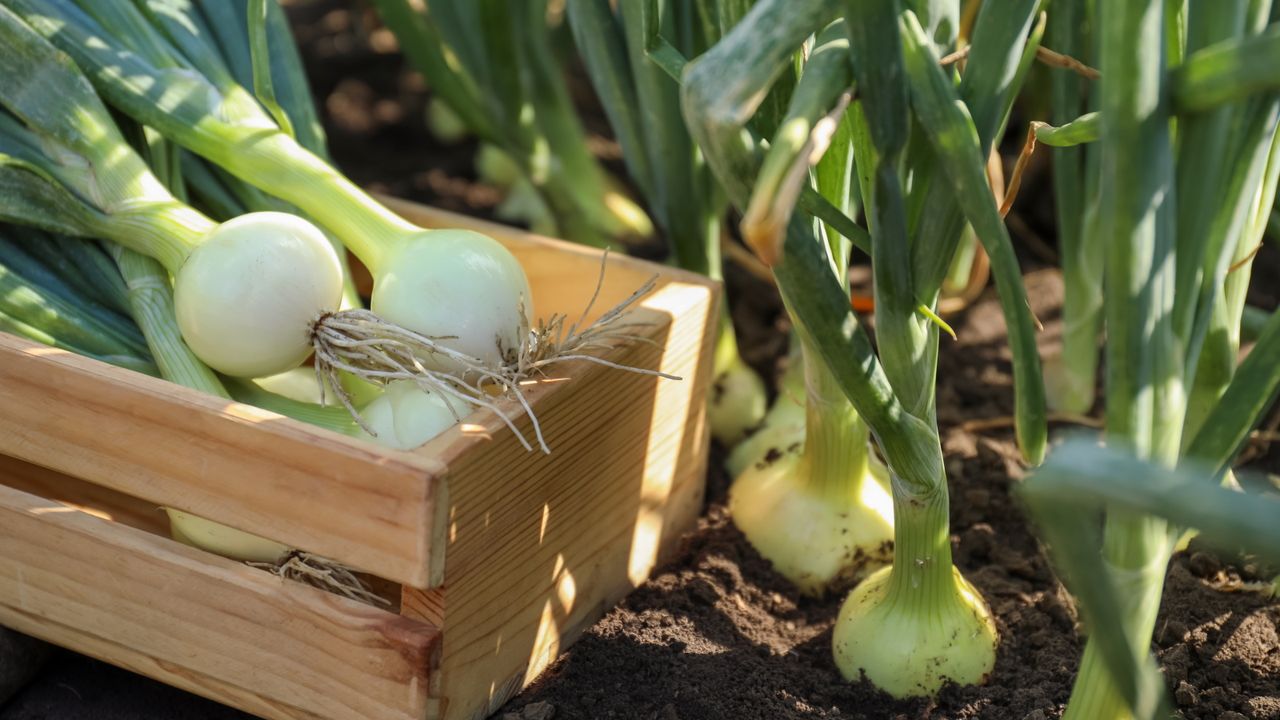
Onions growing in the soil alongside harvested onions in a wooden crate.

Changeable temperatures in spring can trick your onions, and they may start to produce a flower stalk. But what should you do with bolting onions if you see them in your vegetable garden?

It is not an unusual issue when growing onions, but it can be frustrating to see. When an onion starts to bolt, which is usually the result of a late cold snap in spring, though a lack of water and nutrients can cause it, the best course of action is to lift and use it.

Bolting onions may be annoying, but it is part and parcel of growing the crop, and any other vegetable that tends to bolt. Here we look at what causes it, how to deal with bolting onions, and how to prevent it from happening to future crops.

The Causes of Bolting Onions

(Image credit: Getty Images/Oleksandra Kharkova)

Bolting is when plants produce a flower stalk and start to go to seed prematurely. It is a natural mechanism usually triggered by stress that causes the plant to think it must complete its reproductive cycle earlier than it should.

It is a common issue with annual and biennial crops. Onions are biennial plants; they grow in one year and flower in the second. Stress, often caused by temperature shock, can kick-start bolting onions, and it can also be an issue when growing leeks. Annual vegetables, including lettuce, spinach, arugula, and radish, are also highly susceptible to bolting in hot weather.

When it comes to bolting onions, fluctuating temperatures are usually the prime cause. Warmer spring temperatures followed by a cold snap can affect plants, and they start to bolt once temperatures rise again.

Lucia Hechem, a plant expert from the plant care app PlantIn, explains that a cold snap can ‘confuse’ onions, especially if gardeners plant onions in the fall or very early winter.

‘If a hard freeze occurs after the plant has already grown six or more leaves, it tricks the onion into thinking it has survived a winter and is now in its second year, causing it to rush into seed production,’ she explains.

You can grow onions in two ways: either by onion seeds or onion sets. Choosing to plant onion seeds gives you plants less prone to bolting. Onion sets are more susceptible to bolting as they are older – they’ve already got a season under their belt before being planted.

Lucia claims that size can make a difference, too, saying ‘planting onion sets that are too large, larger than a dime, increases the risk’ of onions bolting in fluctuating spring temperatures.

Other stressors that can contribute to bolting onions include insufficient water or nutrients. A soil moisture meter, available at Amazon, is a handy tool to make sure your crop has the moisture in the soil it needs for healthy development.

However, if your onions have been in the ground since the last growing season, they will start bolting as part of their natural cycle. As biennial plants, onions will start flowering in their second spring in the ground.

What to Do With Bolting Onions

(Image credit: Getty Images/Akchamczuk)

Bolting onions start producing a thick stem from the center of the bulb. As the plant focuses its energy on flowering, the bulb stops developing.

The best thing to do any time you see one start to bolt is to harvest the onion immediately. An onion that is bolting is edible, but you can’t store the onions. So lift the onion quickly, and use it right away.

Some gardeners cut off the developing stem, but Lucia warns of this tactic. ‘Simply cutting off the flower stalk while leaving the bulb in the ground can allow water to enter the hollow tube, which often leads to bulb rot,’ she claims.

A good alternative is to let the plant complete its cycle. Onions develop globe-shaped blooms, like ornamental alliums, that are great flowers for bees, pollinators, and other beneficial insects.

By letting the plant flower and go to seed, you can harvest onion seeds to sow again next year. ‘You just need to wait until the tiny seeds inside the blossom turn black and hard, which means they are ready to harvest,’ says Lucia.

Store your onion seeds in breathable envelopes (like these seed envelopes at Amazon) so they remain in the best condition to use.

How to Stop Onions Bolting

(Image credit: Getty Images/Yola Watrucka )

Bolting onions can be avoided by taking a few simple precautions. You can choose to grow onions from seed rather than sets, but if you prefer the ease of sets, look for bolt-resistant varieties (such as Texan Legend, Sturon, Red Creole, Stuttgarter, and Patterson) and plant the right types of onions for your location.

Long-day onions need 14-16 hours of daylight to bulb and are suited for cooler, northern climates, while short-day onions need 10-12 hours and suit southern climates, and intermediate-day onions are useful for central regions. Planting an unsuitable type is an onion-growing issue that potentially leaves plants stressed and more susceptible to bolting.

When planting onion sets, use smaller ones in the pack rather than favoring only the larger sets. And plant your onions at the right time to reduce the chance of bolting.

‘Avoid planting too early in the spring; you want to ensure the plants do not reach the vulnerable “six-leaf” stage before the last cold snaps of the season,’ advises Lucia.

When you do face cold snaps in spring, protect plants from frost with fleece or frost cloth (like the frost protection covers at Amazon) to stop plummeting temperatures triggering the bolting response. Finally, keep plants well-watered in warm periods and mulch around the crop to keep the soil temperature stable.

FAQs

Can You Eat Bolted Onions?

Yes, bolted onions are edible, but the central stalk that develops is woody and needs to be removed.

Can You Cure Bolted Onions?

This can cover two topics in one. Firstly, no, bolting cannot be reversed or cured. And, secondly, you should not cure onions in the way you do with normal onions before storing them. Lucia Hechem from PlantIn says: ‘Bolted onions will not store well because they develop a hard, unusable central core; they should be eaten right away rather than being cured for the pantry.’

This liquid fertilizer is specially formulated for growing onions. Mix it with water and apply to your onions for a dose of nutrients that promotes strong foliage and large roots.

Compost can be added before planting your onions to boost the soil, or as a mulch to help retain moisture in the ground and reduce the risk of stressed, thirsty crops.

Growing onions from seed reduces the risk of bolting. These reusable seed trays are ideal for starting onions, and silicone cells ensure seedlings pop out without damaging the roots.

A lack of moisture and nutrients was cited as a possible cause of onion bolting. These symptoms can be harder to manage when you grow onions in containers. If you do have your crop in pots, regular watering is essential to stop the compost from drying out completely, as is fertilizing the onions both when planting and in late spring or early summer to keep the soil's nutrient levels replenished.

If you love inspiring garden ideas, outdoor advice, and the latest news, why not sign up for our newsletter and get the latest features delivered straight to your inbox?

Onion Fertilizer Gourmet Compost Seed Starting Tray
Sign up to read this article
Read news from 100's of titles, curated specifically for you.
Already a member? Sign in here
Related Stories
Top stories on inkl right now
One subscription that gives you access to news from hundreds of sites
Already a member? Sign in here
Our Picks
Fourteen days free
Download the app
One app. One membership.
100+ trusted global sources.