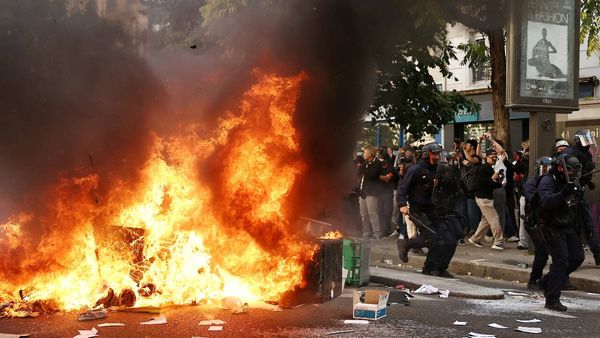

Violence is no stranger to human political existence. In fact, there is an intimate relationship between politics and violence. Refrains such as “political power grows out of the barrel of a gun” or “war is merely the continuation of politics with other means” are reminders of that intimacy. Some would even insist that violence is an inherent aspect of our political life. Sociologist Max Weber reminds us that state is precisely what it is because of its capacity to claim the monopoly to use physical force. Violence, thus, is always there as something that preserves or institutes the order of our organised life.
It is against this dark backdrop that liberal democracy presents an alternative vision; that our organised political existence can be managed without resorting to such violence. It envisages governance by deliberation as an effective means to manage differences and peaceful change of regimes. The ongoing “dance of democracy” in this country is often celebrated as an exemplar of that alluring vision. But for Manipur, this image has been blemished by a spectre of poll-related violence during this election.