
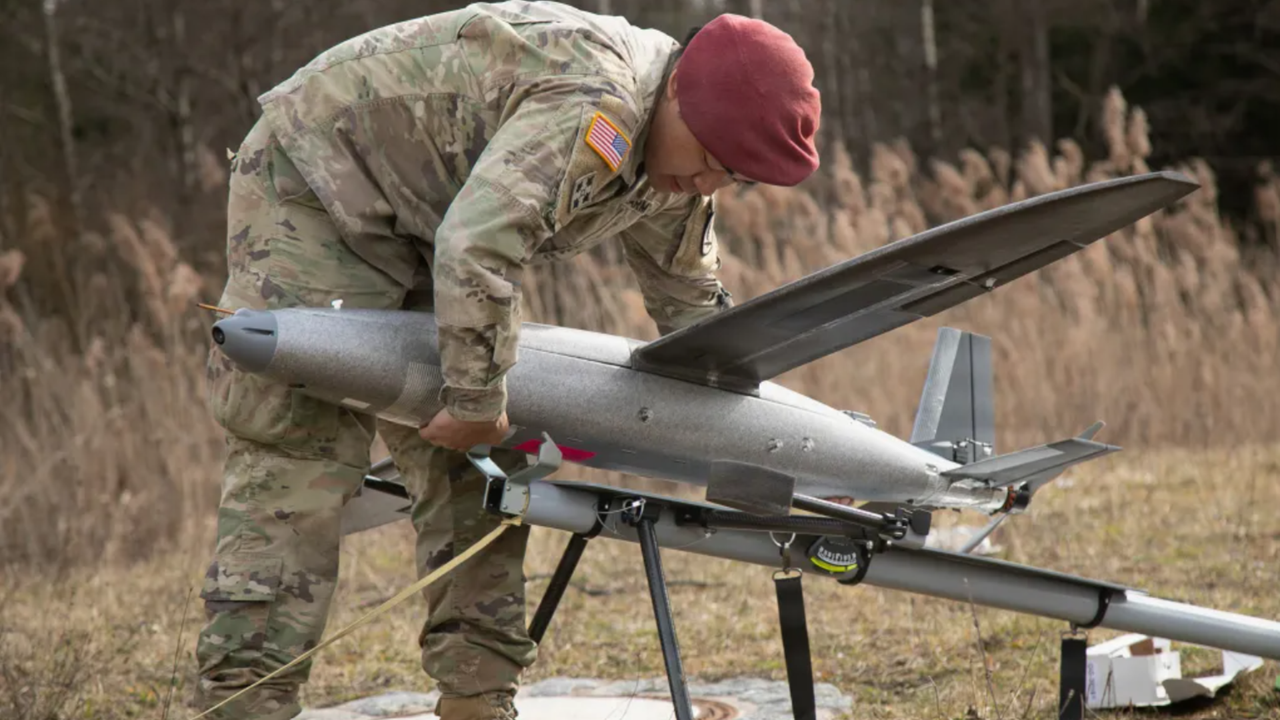
- Ukrainian drone forces have proved so successful against US troops in exercises that “destroyed” equipment had to be reintroduced into the simulated combat
- Over the course of the two-week-long exercise, US forces improved at camouflage, dispersing, and using electronic warfare against the aerial attacks
- The Combined Resolve military exercise took place in Germany earlier this year
US forces engaged in military exercises were stunned to be defeated quickly by Ukraine drone teams, so much so that the units were allowed to be re-added into the scenario.
Taking place in Germany earlier in 2026, the event was one of several exercises intended to simulate real drone warfare and develop responses and countermeasures to attacks. Ukraine's drone warfare has proved vital in its ongoing war with Russia, with its successes in the conflict defining the country as a pioneer of Unmanned Systems Forces and electronic warfare integration.
The US isn’t the only country to have engaged in wargames with Ukraine, with the UK, Estonia, and Sweden all recently outmatched
Recording a “kill”
Despite the US incorporating long-range drones into its arsenal during the War on Terror, it has had mixed results in defending against drone attacks, both in combat and in exercises. The simulated conflict with Ukraine took place in April and May 2026, and while the Fort Hood-based US forces may have come away from the event with some pride, the speed and decisiveness of the Ukraine drone forces clearly took them by surprise.
Rather than using live ammunition in these exercises, an observer is employed to determine whether a “kill” has been made. This is usually achieved by the drone controller hovering the craft above a vehicle or other combat equipment long enough for a potential kill to have been made.
In this particular incident, the Ukraine drones were recording kills so quickly that vehicles had to be sent back as new units, like a video game respawn.
However, as the exercises progressed, the US forces were able to improve their performance. Their responses to drone attacks relied on faster camouflage and concealing, effective dispersal, and employing electronic countermeasures to block the drones.
Ukrainian drones dominate
As part of the training, Ukrainian drone controllers also switched sides to assist the US troops in making effective offensive use of drones.
The Wall Street Journal reports that Air Force General Alexus Grynkewich, NATO’s top military leader, stated that “You can’t get training like this in the United States,” but observed a noted improvement in NATO forces after training: “The change is remarkable.”
It isn’t just the Americans that have struggled with Ukrainian drone warfare in simulated scenarios. Other events in 2026 have revealed shortcomings in handling drone attacks in exercises involving the UK, Estonia, some US troops, and other NATO forces. In addition, a military exercise involving Swedish-led NATO troops and Ukraine's drone warfare resulted in the NATO side being outmatched.