Get all your news in one place.
100’s of premium titles.
One app.
Start reading
The Independent UK
The Independent UK
World
Alex Croft

Ukraine war in numbers: The bleak toll of Putin’s invasion after four devastating years

Russia’s full-scale invasion of Ukraine has now been raging for four years – and despite repeated attempts at peace talks brokered by the US, there appears to be no end in sight.

As the war marks the grim anniversary milestone on Tuesday, the bloody war of attrition continues, having claimed the lives of more than 15,000 Ukrainian civilians.

In the last year, Moscow has ramped up its use of drones by 200 per cent, regularly launching hundreds of strikes from unmanned aircraft.

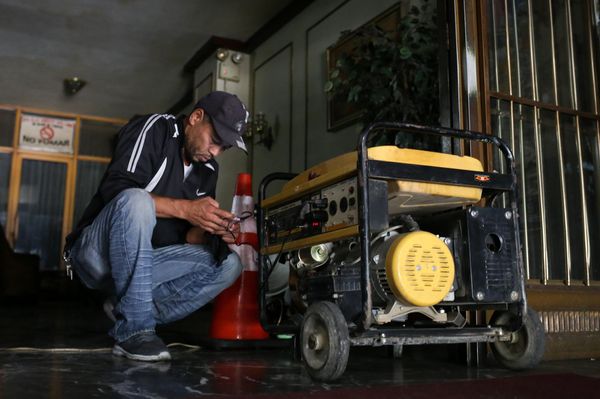
Vladimir Putin’s forces have also increasingly targeted Ukraine’s energy infrastructure, leaving millions without power or heat as they face their coldest winter in years, with temperatures as low as -26C.

On the political stage, Ukrainian president Volodymyr Zelensky has been forced to fight a battle on two fronts – trying to keep a volatile US president onside while also pushing back against Moscow’s uncompromising territorial demands during fruitless peace talks.

Funding the war has also become a growing problem for Mr Zelensky, with the US cutting its aid by 99 per cent since Mr Trump returned to office in 2025.

The Independent looks at the cost of Putin’s war four years on.

Ukraine’s civilian death toll mounts

The past year has seen Russian forces increasingly target civilians, with more killed and injured than in any year other than 2022.

In 2025, there were 14,656 civilian casualties – including injuries and deaths – marking a 31 per cent increase on the year before.

Since the war began, 15,172 Ukrainian civilians have been killed, including 739 children, according to the UN’s Office of the High Commissioner for Human Rights (OHCHR).

Russian military casualties last month hit the 1.2 million benchmark, a death toll not suffered by any major power since the Second World War, according to the Centre for Strategic and International Studies (CSIS)

Russian forces ramped up their attacks on Ukrainian civilians in 2025 (Reuters)

Putin ramps up drone and missile attacks

Moscow dramatically increased its drone production in 2025, allowing it to launch hundreds each night at targets across Ukraine to frightening effect.

“The rapid expansion of drone warfare and increasingly autonomous systems has made it easier to carry out attacks with devastating consequences for civilians,” Uliana Poltavets, Ukraine programme coordinator for rights group Physicians for Human Rights (PHR), told The Independent.

More than half of the 58,495 air and drone strikes carried out by Russian and Ukrainian forces since 2022 have been carried out in the past year, data from monitoring group Armed Conflict Location & Event Data (ACLED) shows.

Attacks on Ukraine’s civilian infrastructure also hit new heights in 2025. There were 662 attacks on healthcare facilities, the PHR says, a 48 per cent increase on 2024.

Elisabeth Haslund, spokesperson for the UN’s refugee agency (UNHCR), told The Independent that such attacks will make any attempt to rebuild in Ukraine significantly more difficult.

“Recovery will not happen overnight. Even with a ceasefire in place and a stop to the attacks and hostilities, humanitarian needs will persist for some time.”

Among the most devastating of Russia’s infrastructure attacks were those targeting Ukraine’s energy facilities.

Russia launched assaults on Ukraine’s energy infrastructure 1,077 times between February 2024 and February 2025, a 224 per cent increase on the previous year.

The past eight months make up the top eight in terms of Russian energy attacks, as Ukrainians suffered through the bitter winter.

Emil Kastehelmi, military analyst at the Black Bird Group, told The Independent that Moscow has several possible aims.

“Try to lower the fighting morale of the Ukrainian civilians, try to hinder the functionality of the Ukrainian society as a whole, or weaken the military production capabilities as much as possible,” he said.

“[Russia is] forcing Ukraine to [take] difficult decisions regarding prioritisation. Should they defend energy infrastructure, airfields, military bases, industrial areas, or what?”

Costly battles on the front line

Russian gains on Ukraine’s eastern front have remained marginal.

Since 2022, Putin’s forces have only expanded the territory they controls in Ukraine by around four per cent, bringing their control to around 20 per cent of the country.

But it has come at a heavy cost in infantry, with the CSIS warning that combined Russian and Ukrainian casualties could reach 2 million by this spring – the majority of which are Russian.

Mr Zelensky says that 55,000 Ukrainian soldiers have now been killed since the full-scale invasion began, up from 46,000 last year.

Russian casualties are believed to be far higher: the BBC has identified the names of 186,102 dead Russian soldiers, but military experts say this may only represent 45 to 65 per cent of the total.

On the ravaged eastern front line, the fiercest fighting has been around Pokrovsk, the strategic city in Donetsk, which was once a transport hub connecting the Ukrainian front line.

Although Russian forces seized much of the city in November, battles are ongoing in the areas around it.

The Independent has spent time with Ukrainian soldiers on the front line with advances, at best, incremental as the war grinds on.

The Institute for the Study of War, which tracks frontline movements, echoed this by describing Russian advances as continuing at a “footpace” in eastern Ukraine and concluding they “do not portend the collapse of the Ukrainian lines”.

Ukrainian troops carried out successful counterattacks in Dnipropetrovsk and Zaporizhzhia in February, Mr Kastehelmi said – but the counteroffensives have remained local, and Ukrainian gains have not altered the situation significantly.

Ukraine has continued to control the Black Sea.

A new world order under Trump

While the war of attrition raged on the front line, the political landscape changed dramatically in 2025.

The US, once Ukraine’s most generous ally, left Kyiv in the lurch when it withdrew almost all of its financial, humanitarian and military support, as the Trump administration looked to pressure the two countries into agreeing on a peace deal.

After the Biden administration allocated a record €46.39bn (£40.4bn) in 2024, support dropped by 99 per cent to €480m (£420m) in 2025.

Europe was forced to dramatically step up its support for Ukraine, boosting its support from €43.54bn (£38bn) in 2024 to €72.8bn (£63.6bn) in 2025, a 67 per cent increase.

Another €90bn (£78.6bn) support loan was agreed by European Union countries in December, a vital cash injection providing a lifeline for Ukraine’s flailing wartime economy.

But with peace talks not appearing to produce significant progress towards a peace deal, it remains to be seen how long Europe’s financial support will last.

Sign up to read this article
Read news from 100’s of titles, curated specifically for you.
Already a member? Sign in here
Related Stories
Top stories on inkl right now
One subscription that gives you access to news from hundreds of sites
Already a member? Sign in here
Our Picks
Fourteen days free
Download the app
One app. One membership.
100+ trusted global sources.