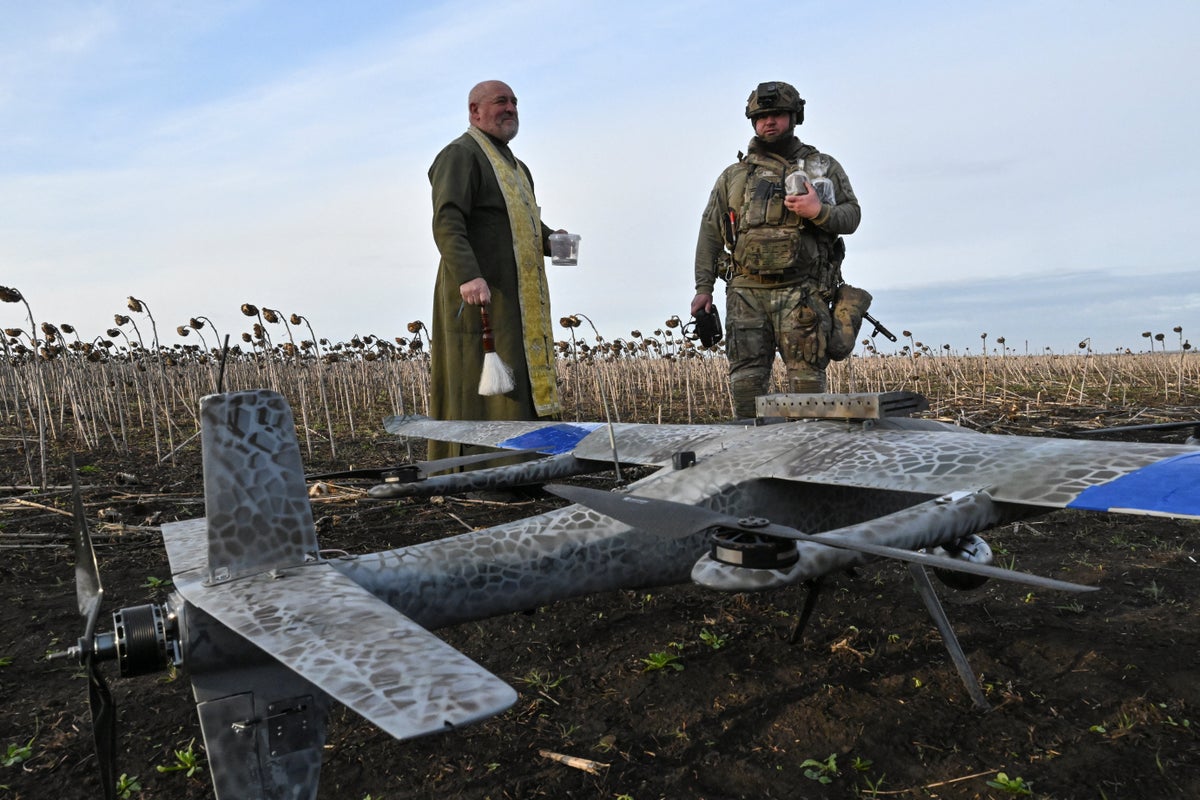
Ukraine has urged Russia to extend a ceasefire it announced for Orthodox Easter this weekend and restart talks to end the war, but civilians on the streets of Kyiv and Moscow doubt it would lead to lasting peace.
Vladimir Putin announced a 32-hour ceasefire starting on Saturday afternoon and running throughout Orthodox Easter until midnight on Sunday.
Volodymyr Zelensky, who has repeatedly proposed an Easter truce, quickly said Kyiv would abide by the measure, which Moscow had previously rejected as a “PR stunt”.
“People need an Easter without threats and a real move towards peace, and Russia has a chance not to return to attacks even after Easter,” Mr Zelensky said.
Foreign minister Andrii Sybiha said Ukraine was proposing that strikes should not resume after Easter, and he drew a parallel with the two-week ceasefire in the conflict between the United States, Israel and Iran.

“We believe that a ceasefire is the right strategy to advance diplomatic efforts – whether we are talking about the Middle East or Russian aggression against Ukraine,” he said.
The Kremlin on Friday said the Easter truce was a temporary humanitarian measure, and it wanted a permanent peace deal, not a ceasefire, a demand that Ukraine has described as a delaying tactic. Previous such truces have been beset with violations.
Kremlin spokesperson Dmitry Peskov said a visit by Putin's special investment envoy to the US was economic and did not signal the resumption of peace talks; US sanctions waivers on Russian oil expire on Saturday.
Putin has said Russia would be willing to end hostilities if Ukraine hands over the remainder of the industrialised region of Donbas – roughly 2,317 square miles – that it has been unable to conquer more than four years since its full-scale invasion. Mr Zelensky has said that would betray Ukraine's defenders and that an aggressor should not dictate such terms.
Amid light snow and wintry weather in Kyiv on Friday morning, residents were sceptical that the truce would do anything to ease their situation. Many expressed hostility toward the Russian leader.
“He can only make promises about some ceasefire. No one is going to hand over our land to him,” said Yuliia, huddled beneath a thick overcoat as the temperature in Kyiv hovered just above freezing.
Several others noted violations of previous ceasefires, such as a 30-hour ceasefire Putin ordered at Easter last year.
Moscow residents expressed cautious optimism, but said they doubted the ceasefire would lead to a lasting peace.
“So, they agreed to a ceasefire? Well, let’s put it this way: God willing, that’s how it will be,” said Irina, a sales manager in Moscow. “But so far, there’s no real sense that things will improve anytime soon.”
Meanwhile, Mr Zelensky said on Friday that Ukrainian military personnel have shot down Iranian-designed Shahed drones in multiple Middle Eastern countries during the Iran war.
In his first public acknowledgement of the operations, he said Ukrainian forces took part in active operations abroad using domestically produced, battle-tested interceptor drones.
“This was not about a training mission or exercises, but about support in building a modern air defence system that can actually work,” the Ukrainian leader said.
Mr Zelensky did not identify the countries involved but said Ukrainian personnel operated across several nations, helping strengthen their air defence systems. He previously said 228 Ukrainian experts were deployed in the region.
In exchange, Ukraine is receiving weapons to protect its energy infrastructure, along with oil, diesel and, in some cases, financial arrangements, he said.
He added that the agreements would bolster Ukraine's energy stability and described the partnerships as something that would "be marketed" as Kyiv seeks to formalise and expand its defence export role.
“We are helping strengthen their security in exchange for contributions to our country's resilience,” he said. “This is far more than simply receiving money.”
The disclosure comes amid concerns that conflict in the Middle East could divert Western military support from Ukraine, particularly air defence supplies.
But Mr Zelensky said that partners were continuing to supply missiles for Patriot systems, adding that a new batch had arrived in recent days and Ukraine was working with all partners to ensure its air defences remained in place.
Separately, Mr Zelensky said he expects Western allies to restore full sanctions on Russian oil, warning that any easing could allow Moscow to sustain its war effort and offload key energy assets.
Moscow has been profiting from a surge in global energy prices, brought on by damage to oil and gas infrastructure in the Gulf and Iran's blocking of the Strait of Hormuz, a vital sea route for global oil supplies.
Reuters and Associated Press contributed to this report
What’s next for the Iran ceasefire? Former US diplomat explains 3 possible scenarios
Mali latest to back Morocco’s plan for disputed Western Sahara amid US and EU support
Former Russian deputy defense minister is sentenced to 19 years for corruption
One dead and 27 people injured after British tourist bus crashes in Canary Islands
European airports warn of half-term holiday chaos due to jet fuel shortage
What’s behind Ireland’s fuel protests and why they’re escalating