Closing summary
UK trade minister Jonathan Reynolds has said “essential steps” are taking place “at pace” to turn Keir Starmer’s recent tariff pact with Donald Trump into an implementable deal that once entered into force will see 27.5% tariffs on cars and 25% tariffs on steel eliminated.
The UK was spared the doubling of US tariffs on steel and aluminium imports to 50%, which took effect today.
Trade talks between the European Union and the United States are going in the right directions and have been “constructive”, the top negotiators from both sides said after talks in Paris today.
However, the EU said the doubling of US steel tariffs was not helping.
The EU’s trade commissioner Maroš Šefčovič said he deeply regretted the tariff hike, saying that the EU has the same challenge of dealing with overcapacity as the US on steel, and that they should work together on this issue.
Overall, though, he struck an upbeat note, as did the US trade representative Jamieson Greer.
Šefčovič told reporters after the meeting that technical talks are ongoing in Washington, and high-level contacts will follow.
We both concluded that we are advancing in the right direction, at pace.
What makes me optimistic is I see the progress ... the discussions are now very concrete.
He added that he and Greer had agreed to restructure the focus of their trade talks, “approaching it from different angles”.
Greer said the talks had been “very constructive,” adding in a statement from his office that they demonstrated “a willingness by the EU to work with us to find a concrete way forward to achieve reciprocal trade“.
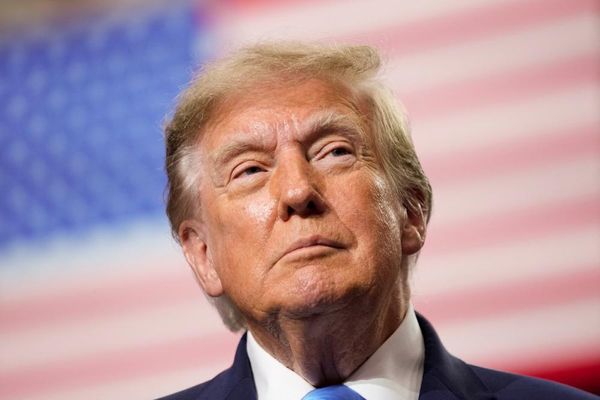
Separately, Trump said today that Chinese president Xi Jinping is tough and “extremely hard to make a deal with,” exposing frictions after the White House raised expectations for a long-awaited phone call between the two leaders this week.
Wall Street stocks pared gains after a grim services sector survey from the Institute for Supply Management. It showed the first contraction since June, with new orders falling at the sharpest rate in nearly three years, while inflationary pressures soared.
Jobs data were also much weaker than expected. Private payrolls increased by just 37,000 jobs in May, while economists had forecast an increase of 110,000.
European shares made some modest gains, while Germany’s Dax hit a fresh record high earlier, up by over 1%, after the cabinet approved a tax relief package, designed to help businesses and revive the sluggish economy.
Our other main stories:
Thank you for reading. We’ll be back tomorrow. Take care! – JK
US services sector shrinks for first time since June – ISM survey
A closely watched monthly survey of the US services sector is pretty grim.
The services index from the Institute for Supply Management fell into contraction territory, recording 49.9 in May, the lowest since last June and worse than expected. It is just below the 50 mark that separates expansion from contraction.
New orders fell in May at the fastest rate since December 2022, while inflation picked up, with prices paid rising at the fastest rate since November 2022.
A bad sign for the US economy, ISM's services sector index contracted in May for the first time since June 2024. That comes on top of ADP reporting the weakest private sector hiring in over two years. #DOW +36 #NASDAQ +14
— Jason Brooks (@brookskcbsradio) June 4, 2025
US ISM Services PMI New Orders plunges to 46.4, lowest since Dec 2022 pic.twitter.com/MVA8k5TE9u
— Mike Zaccardi, CFA, CMT 🍖 (@MikeZaccardi) June 4, 2025
US May ISM Services PMI Prices Paid soars to 68.7, highest since Nov of 2022 pic.twitter.com/wpUpbn7un1
— Mike Zaccardi, CFA, CMT 🍖 (@MikeZaccardi) June 4, 2025
Updated