Get all your news in one place.
100’s of premium titles.
One app.
Start reading
The Guardian - UK
The Guardian - UK
Politics
Denis Campbell Health policy editor

UK loses WHO status as measles-free after rise in deaths and fall in jab uptake

A child receives her second dose of the MMR vaccination
A child receives her second dose of the MMR vaccination. Experts described the WHO’s decision as a wake-up call. Photograph: David Gee/Alamy

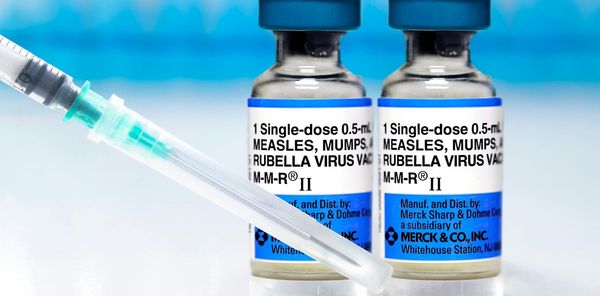
The UK has lost its status as a measles-free country after a rise in deaths from the disease and fall in the proportion of children having the MMR jab in recent years.

The World Health Organization said it no longer classified Britain as having eliminated measles because the disease had become re-established.
The UK is one of six countries in Europe and central Asia that the WHO says is no longer measles-free, the others being Spain, Austria, Armenia, Azerbaijan and Uzbekistan.

The WHO had adjudged the UK to have eliminated the disease between 2021 and 2023, but recent increases in the number of recorded cases – there were 3,681 in 2024 – and rises in the number of outbreaks and deaths has led to a rethink.

There were 20 deaths from measles in the six years between 2019 and 2025, the same number as in the 19 years between 1999 and 2018.

Doctors, public health experts and local councils said the WHO’s decision reflected the country’s diminishing uptake of the MMR vaccination, which they linked to vaccine hesitancy and parents’ difficulty in getting appointments for their child to be immunised.

Dr Simon Williams, a public health researcher at Swansea University, said: “It’s sad to see the UK losing its measles elimination status, although it’s not surprising given outbreaks in recent years. Measles is an eminently preventable disease but vaccine coverage of MMR has declined. We are seeing vaccine hesitancy growing in the UK, as in many countries, and social media-based conspiracies about MMR are a factor.”

He said the decision by the UN health body “is a wake-up call that more needs to be done” to get rates of MMR in children in the UK back up to the 95% that the organisation says is needed to eliminate measles, mumps and rubella altogether through herd immunity.

The WHO’s European regional verification commission for measles and rubella elimination said it “noted with concern the loss of measles elimination status in some member states, including some with high-performing immunisation programmes”.

It highlighted the fact that the vast majority of people across Europe who had contracted either disease were not immunised and it urged governments to revamp their vaccination efforts in order to “close all remaining immunity gaps, focusing especially on vulnerable and hard-to-reach populations”.

Dr Vanessa Saliba, a consultant epidemiologist at the UK Health Security Agency, said: “Infections can return quickly when childhood vaccine uptake falls. Measles elimination is only possible if all eligible children receive two MMRV doses before school. Older children and adults who missed vaccination must be caught up.”

Children in Britain are offered two doses of the MMR jab, at 12 and 18 months old, but coverage has declined over the last decade. The most recent annual data shows that uptake of the first MMR jab in England fell from 91.9% in 2015-16 to 88.9% in 2024-25.

Similarly, the proportion of five-year-olds who have had a second MMR vaccine, which the WHO recommends to ensure immunity, fell from a peak of 88.2% in 2015-16 to 83.7% in 2024-25.

Dr Helen Stewart, the officer for health improvement at the Royal College of Paediatrics and Child Health, said: “The UK measles resurgence is a failure of policy, not parenting. While vaccine hesitancy plays a role in low vaccine uptake, the reality is that there are many who simply need better support and easier access to appointments.

“When appointments are difficult to get and support isn’t there, the system ends up failing the very families who need it most.”

In a report last year, the college said many patients were unable to get their child vaccinated because they “simply can’t access services that work for them”. It said they faced difficulty booking appointments, transport problems and a lack of access to the same GP every time they sought help, which made them less likely to seek vaccination.

The best public interest journalism relies on first-hand accounts from people in the know.

If you have something to share on this subject, you can contact us confidentially using the following methods.

Secure Messaging in the Guardian app

The Guardian app has a tool to send tips about stories. Messages are end to end encrypted and concealed within the routine activity that every Guardian mobile app performs. This prevents an observer from knowing that you are communicating with us at all, let alone what is being said.

If you don't already have the Guardian app, download it (iOS/Android) and go to the menu. Select ‘Secure Messaging’.

SecureDrop, instant messengers, email, telephone and post

If you can safely use the Tor network without being observed or monitored, you can send messages and documents to the Guardian via our SecureDrop platform.

Finally, our guide at theguardian.com/tips lists several ways to contact us securely, and discusses the pros and cons of each. 

Sign up to read this article
Read news from 100’s of titles, curated specifically for you.
Already a member? Sign in here
Related Stories
Top stories on inkl right now
Our Picks
Fourteen days free
Download the app
One app. One membership.
100+ trusted global sources.