Closing post
Time to wrap up…
Britain’s stock markets has jumped to a new all-time high today, led by a rally in pharmaceuticals stocks.
The FTSE 100 share index has climbed by 96 points through the day to close at 9446 points, a new peak, extending its gains for this year to around 15%.
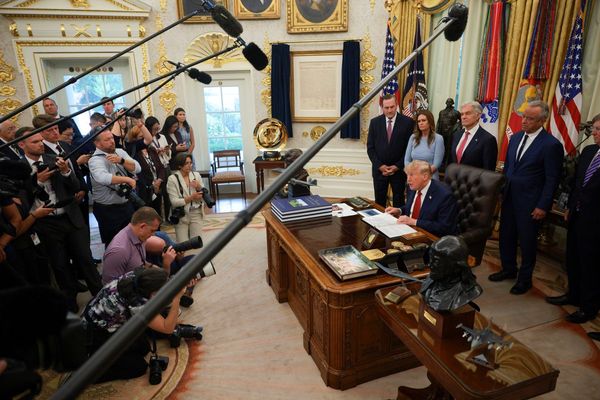
Drugs makers rallied on relief that Donald Trump’s threatened 100% tariffs on branded drugs, which were due to come in today, may not be as bad as feared.
AstraZeneca surged by over 11%, reclaiming its crown as the most valuable company listed in London, with GSK (+6.1%) and Hikma (+5.7%) close behind on the FTSE 100 leaderboard.
London investors shrugged off concerns over the US government shutdown which began this morning, and some worrying jobs data from America.
Payroll operator ADP reported that US private employers shed 32,000 jobs in September, far below economists’ expectations of 51,000 jobs added.
This surprisingly weak report rattled the US dollar, which fell against other currencies today:
Nadir Belbarka, analyst at XMArabia, explains:
”The deeply negative ADP reading of -32k signals severe labor market contraction, amplifying expectations for aggressive Fed rate cuts, potentially 50bps or more in November or December, as economic slowdown concerns intensify.
This dovish outlook significantly weakens the USD, as lower interest rate prospects reduce the appeal of USD-denominated assets, driving capital outflows.
The weaker dollar helped to push gold up to another record high today.
In other news…the UK property market returned to growth in September after a summer lull, with house prices rising 0.5% compared with the previous month.
The average amount paid for a home ticked up to £271,995, according to Nationwide Building Society, recovering from a 0.1% decline in August, while the annual rate of house price growth accelerated slightly from 2.1% to 2.2%.
David Beckham earned $23.6m (£18.6m) in dividends from his personal business empire last year as Stella Artois and SharkNinja joined the football star’s roster of brand deals.
Britain’s manufacturing sector shrank at the fastest pace in five months in September, dragged back by the shutdown at Jaguar Land Rover.
We also have data today showing that economic activity in America’s manufacturing sector contracted in September for the seventh consecutive month.
Updated
GSK's Walmsley warns UK must 'recognise the value of innovation'
GSK boss Emma Walmsley, who is stepping down at the end of 2025 after nearly nine years at the helm and will hand over to the drugmaker’s chief commercial officer Luke Miels, whom she poached from AstraZeneca, said there is “zero chance of any retirement” for her post-GSK, without saying what she will do next. (Walmsley, 56, will remain with the company until the end of September).
Speaking at the an event hosted by Bloomberg, entitled Women, Money & Power, she had a veiled warning for the UK:
“You cannot have life sciences as a leading industry for your country, whether it’s here or in Europe, if you don’t support a competitive commercial environment, if you don’t recognise the value of innovation, and you know that is critical.”
Drugs companies are in an acrimonious row with the UK government over drug pricing after prolonged negotiations broke down in August, while being pressured by Donald Trump to lower their US prices.
Walmsley reiterated GSK’s commitment to the UK, but also said the group is “betting big on the US” with a $30bn investment over five years. The UK makes up 2% of sales and the US 52%, she noted.
The drugmaker is in negotiations with the US government over pricing and access. Some of its peers have announced price cuts in recent days to stave off looming US tariffs on branded drugs. “I’m optimistic that the industry and government can navigate through this together,” she said.
Updated