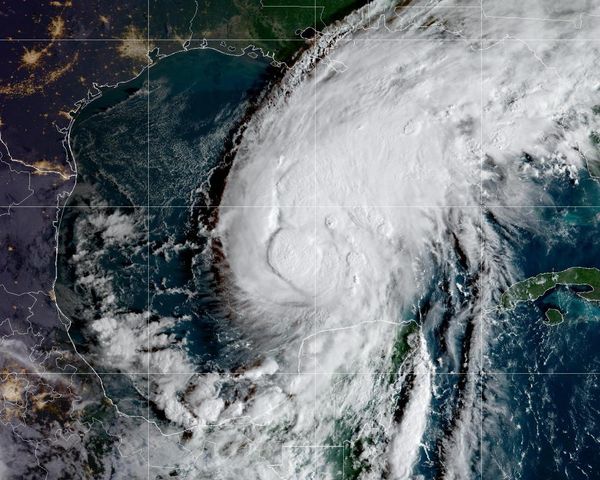
Donald Trump's war on Iran could cause UK food prices to surge due to the soaring cost of fuel and fertiliser as the Strait of Hormuz – the narrow sea passage south of Iran – remains effectively impassable.
The blockade on fossil fuels through the strait is driving a spike in the cost of nitrogen and phosphate fertilisers – used for growing cereals and vegetables – and means farms now face a twin threat of higher fuel prices for machinery as well as for fertiliser as the conflict in Iran disrupts global supply chains.
Over the past month, the price of urea – a nitrogen fertiliser – has risen by 33.7 per cent, and is up 54.9 per cent compared to the same time last year.
Meanwhile, a number of fertiliser plants in the Middle East have closed because of their inability to obtain the substances required to manufacture it. Natural gas accounts for between 60-80 per cent of the costs associated with the production of nitrogen fertilisers, according to the NFU.
As prices go up, so must what farmers charge. Richard Heady, who farms 700 acres in Buckinghamshire, told The Telegraph: “prices for fertiliser have shot up, but the fact is we need it." He said he will have to increase the price of a ton of grain from £170 to £220 (a 30 per cent increase) after harvest, in order to cover his costs.
Without fertilisers, farmers will face soil nutrient shortages that threaten lower-yield harvests.
Around 30–35 per cent of the world’s nitrogen fertiliser supply passes through the strait, along with roughly 40–45 per cent of sulphur exports from the Gulf, highlighting just how exposed the market is to regional turmoil.
Key producers such as Qatar Fertiliser Company, Saudi Arabia’s Sabic and the UAE’s Fertiglobe usually play a major role in keeping global supplies moving, making the sudden disruption in the area rapidly felt on agricultural operations far beyond the Middle East.

NFU president Tom Bradshaw said this week he had met with Defra Secretary of State Emma Reynolds to outline how "volatility in the global energy market has a huge impact on our food supply chains here", and he said the government is "watching this very closely".
"It’s clear that transparency and fairness over fuel and fertiliser prices is critical, and we’ve been asking for this for a long time, regardless of market volatility. It’s particularly urgent as farmers and growers are busy getting crops in the ground and boosting grass growth ahead of spring grazing," he added.
Oxford Economics warned last week that rising oil prices are set to push up farmers’ transport costs, feeding directly into the price of staples such as rice and wheat, with higher oil and fertiliser costs translating into more expensive food globally.

The firm now expects world food prices to rise by about 2 per cent this year, a jump from its February forecast of less than 1 per cent.
“As a result of higher natural gas prices and the importance of the strait for fertiliser trade, we have raised our fertiliser price forecast by around 20 per cent for the second quarter of 2026,” Oxford Economics said. “Risks are skewed to the upside due to the real risk of disruption to production in the region and trade through the strait.”
A UK government spokesperson told The Independent: "We understand and are taking seriously the possible impacts of the Iran war on the food and farming sector.
"We have met with the NFU and are convening wider farming stakeholders to continue to gather information on the affects of the conflict on the industry."
They added: “At present, we do not expect any impact on food availability for consumers and continue to monitor increases in fertiliser and oil prices, standing reading to take action to protect rural communities.”
On Friday, US Secretary of Defense Pete Hegseth was subjected to ridicule after saying the Strait of Hormuz was "open", and that there was "no need to worry" about attacks, despite numerous vessels having been attacked in recent days.
"The only thing prohibiting transit in the straits right now is Iran shooting at shipping. It is open for transit should Iran not do that," he said during a press conference.
In his first statement as Iran's new supreme leader, Mojtaba Khamenei this week vowed to keep the strait closed in retaliation for ongoing US-Israeli strikes on his country.
For its part, the US is showing no signs of halting action against Iran. “The US is decimating the radical Iranian regime’s military in a way the world has never seen before,” Hegseth boasted at the Friday morning press briefing. “We said it would not be a fair fight, and it has not been.”
The Independent has contacted Defra for comment.
Trump admits that Putin could be helping Iran despite what his envoy claimed
What to know about the Strait of Hormuz and why Iran can close it off so easily
US eases some Russian oil sanctions but crude prices stay high
FTSE 100 falls as Strait of Hormuz uncertainty continues
First known picture of Andrew, Epstein, and Mandelson uncovered
‘Breathing in cold air will kill my husband - but we can’t afford heating oil’