Get all your news in one place.
100's of premium titles.
One app.
Start reading
Euronews
Euronews
Aleksandar Brezar

UAE denies Netanyahu office's claim of secret wartime visit as Iran dubs it 'unforgivable'

The United Arab Emirates has denied "reports circulating" on Wednesday that Prime Minister Benjamin Netanyahu quietly visited the Gulf country during the Iran war.

Netanyahu's office released a brief statement on Wednesday night, claiming that the Israeli premier "secretly" visited the Emirates "in the midst of Operation Roaring Lion ... where he met with UAE President Sheikh Mohamed bin Zayed."
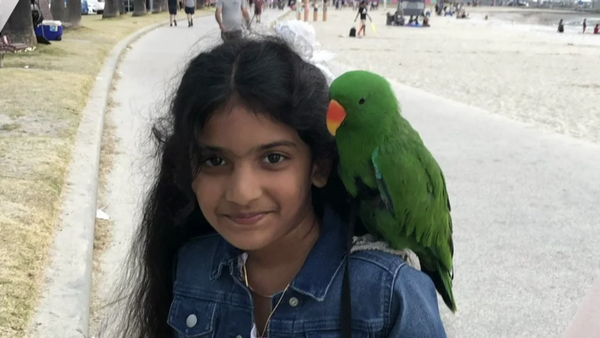
"This visit has led to a historic breakthrough in relations between Israel and the UAE," according to Netanyahu's office.

The Emirati Ministry of Foreign Affairs responded with a statement saying that "allegations of undisclosed visits are 'entirely unfounded unless officially announced by the relevant authorities in the UAE."

"The UAE reaffirms that its relations with Israel are public and conducted within the framework of the well-known and officially declared Abraham Accords, and are not based on non-transparent or unofficial arrangements," the statement said.

The ministry also denied that any Israeli military delegation had been received.

The Gulf nation normalised relations with Israel through the Abraham Accords in 2020.

Iran has criticised the accords and has repeatedly suggested over the years that Israel maintained a military and intelligence presence in the Emirates.

Tehran blasts 'foolish gamble'

Following Israel's statement, Iranian Foreign Minister Abbas Araghchi issued a threat on Wednesday night, stating in a post on X that "enmity with the great people of Iran is a foolish gamble," without directly naming the UAE.

"Collusion with Israel in doing so: unforgivable," he added.

"Netanyahu has now publicly revealed what Iran's security services long ago conveyed to our leadership," Araghchi said. "Those colluding with Israel to sow division will be held to account."

Araghchi followed up his warning with a statement at the BRICS summit in New Delhi, saying that the UAE was “directly involved in the act of aggression against Iran.”

“When the war of aggression began against Iran, they refused to even condemn it,” he said.

“Even though they are our neighbours and we consider them brothers and friendly neighbours, unfortunately they decided to side with the Israelis and Americans in this aggression,” he added.

Iranian foreign minister further denied Tehran attacked the Emirates in its daily missile and drone salvos against neighbouring countries prior to the ceasefire.

Official statements, witness accounts and evidence seen by Euronews’ journalists on the ground have shown that Iran had fired at civilian and business targets, including residential areas, hotels, and energy infrastructure in the Emirates and the region.

The UAE has borne the brunt of Iranian missile and drone bombardment even after the ceasefire was reached last month. According to Emirati officials, the Gulf country remains open for business and safe.

Israel's announcement came a day after US Ambassador to Israel Mike Huckabee made a separate claim that Israel had sent Iron Dome air-defence weapons and personnel to the Emirates.

Last week, Emirati news agency WAM reported that Netanyahu was among the leaders who called the Emirati president to condemn Iranian attacks and express their solidarity with the Gulf federation, in a rare public acknowledgement of direct talks between the countries.

Israeli leaders have made occasional visits to the UAE in recent years.

Euronews' team in Dubai has remarked that the UAE's quick reaction to Netanyahu's statement was less about the substance of any Israeli contact — which Abu Dhabi has openly maintained since 2020 — than about the timing and manner of its disclosure amid an active regional conflict.

An undisclosed wartime meeting with Israel, announced unilaterally by Netanyahu's office, placed Abu Dhabi in an uncomfortable position, as most Gulf states engage in private diplomacy during periods of regional tension.

Regional rifts widen

On Tuesday, Kuwait said four men were detained and two escaped while trying to infiltrate the island of Bubiyan in the Persian Gulf's northwest on 1 May.

Iran's foreign minister accused Kuwait of attempting to "sow discord" by detaining four Iranians that the Gulf country accuses of being IRGC operatives.

In a post Wednesday on X, Araghchi demanded the Iranians' immediate release and said Tehran reserved the right to respond.

"This illegal act took place near an island used by the US to attack Iran," Araghchi wrote.

Bubiyan Island is home to Mubarak Al Kabeer Port, which also came under Iranian attack during the war.

Sign up to read this article
Read news from 100's of titles, curated specifically for you.
Already a member? Sign in here
Related Stories
Top stories on inkl right now
One subscription that gives you access to news from hundreds of sites
Already a member? Sign in here
Our Picks
Fourteen days free
Download the app
One app. One membership.
100+ trusted global sources.