President Trump's envoys Steve Witkoff and Jared Kushner have held more than three hours of negotiations with Iranian Foreign Minister Abbas Araghchi in Geneva on Thursday to try and reach a breakthrough towards a nuclear deal.
- The Omani foreign minister said the talks would resume later on Thursday, after a break.
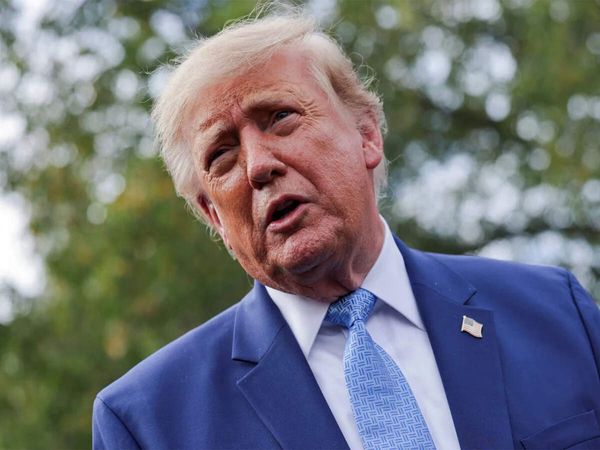
Why it matters: The talks in Geneva could be the last chance for a diplomatic solution before Trump opts for war. The message Kushner and Witkoff give Trump after the meeting will have significant influence on the president's decision.
- Trump said in the State of the Union on Tuesday that he prefers a diplomatic solution. But he also laid out a case for war.
Behind the scenes: The third round of nuclear talks have been held in two formats: indirectly, with Omani Foreign Minister Badr al-Busaidi relaying messages between the sides, and directly between the U.S. and Iranian negotiators, according to a source with knowledge.
- The Iranians presented their much-anticipated draft proposal for a nuclear deal.
- Al-Busaidi and the director general of the International Atomic Energy Agency, Raphael Grossi, both participated in the negotiations.
- Al-Busaidi said during a break in the talks that "we've been exchanging creative and positive ideas" and "hope to make more progress."
Driving the news: The U.S. came into the talks with a demand that Iran agree any future nuclear deal will remain in effect indefinitely.
- Another key U.S. demands were that Iran give up on its stockpile of 10,000kg of enriched uranium.
- The U.S. was willing to show a degree of flexibility on Iran's demand that it retain the right to enrich uranium, but only if Tehran could prove there was no path to a bomb.
Between the lines: Trump said in his State of the Union address that Iran needs to clearly say it doesn't want a nuclear weapon. Iran has long claimed to have no such ambitions.
- Ali Shamkhani, a senior adviser to Iran's supreme leader Ali Khamenei wrote on X on Thursday as the talks were ongoing in Geneva that if this is the main issue for the U.S. it "aligns" with Khamenei's Fatwa and Iran's defensive doctrine, "and an immediate agreement is within reach."
- "Araghchi has sufficient support and authority for this deal," Shamkhani wrote.