We like rare things. Like finding an unusual-looking pebble at the beach or owning a limited edition Beatles album. The same goes for events. Strange and rare experiences make for a good story. But what makes them rare and unusual? Their mathematical improbability, usually. Something that happens so rarely that it makes even the biggest skeptic say, "Wow."
One Redditor was curious to know whether people had such experiences. So they went on to ask people, "What is the lowest probability event you have personally witnessed?" The thread got almost 4k answers, and people had plenty of experiences to share. From witnessing lottery wins to the unlikely coincidences of meeting people you're somehow connected to, people shared all sorts of things.
We here at Bored Panda wanted to know more about why statistically improbable things fascinate us so much. So we reached out to Christopher T. Franck, an associate professor in the Department of Statistics at Virginia Tech. He was kind enough to explain what qualifies as a statistically improbable event and why they surprise us so much.

#1

Image credits: blueova23
The easiest definition of a low-probability event would be an experience that is not likely to happen. Getting hit by lightning or winning the lottery are unlikely to happen, so the majority of reasonable people would agree that it's highly improbable.
But how do we know which things are probable and which are not? "As humans, it is often extremely difficult for us to know how probable events are," Associate Professor of Statistics Chris Franck says.
"How likely is it that my favorite sports team will win the championship next season? What is the chance that someone I care about will recover from a serious disease? Do I have a large enough investment portfolio to comfortably retire in the next five years? Is it going to rain this weekend? We yearn to know how probable these events are."
#2

Image credits: mourninglark
#3

Image credits: dandroid_design
Franck says that statisticians define the probability of events based on the existing data for similar events. "When your doctor tells you there is a 90% chance that your tumor is benign, this has been established in the medical literature because doctors and biostatisticians have studied many cases that are similar to yours, and in those cases, 90% of the tumors were benign. There is quite a bit more subtlety that goes into it, but that is the basic idea."
So, for us to determine whether a thing has low probability or high probability, there have to be two conditions, Franck says. The first is a carefully analyzed set of data about similar events. The second is that the event has to be uncommon or nonexistent in the collected data.
"Executing a large-scale data analysis is not quite as simple as I make it sound in the above explanation," Franck adds. "We typically require a team of statistical data analysts and also relevant domain experts, such as medical doctors, meteorologists, etc. Conducting research is expensive, and it frequently takes years to finish projects."
#4

Image credits: Remiangel1989
#5

Image credits: Wu-Kang
#6

Image credits: sheepheadslayer
There is also the element of our reactions to such events. Why do we get so surprised, shocked even, when we see a lady in a casino win two cars in a row? Franck thinks two elements make us so surprised.
One of them is purely the fact that something rare just happened, something we 'didn't think should happen.' "But rarity alone doesn't really capture the imagination," Franck observes. I do not think it would make headlines if I played a one-in-a-billion game of solitaire."
#7

Image credits: hameater
#8

Image credits: whistlerite
#9

Image credits: ImNotA_IThink
It's also the gravity of the event itself. "Actually getting struck by lightning is impossible to comprehend for most of us. We imagine that winning the lottery would permanently and positively change our [lives]. The idea of a chance encounter with an old friend abroad might invoke daydreams about missed opportunities or hint at a desire to correct old regrets."
"So what we are really reacting to is the combined effects of a rare event that is also incredible. We simply ignore extremely rare events that are uninteresting, such as my game of solitaire," Franck explains.
#10

Image credits: StarChaser_Tyger
#11

Image credits: CatboyInAMaidOutfit
#12

Image credits: Ocelot2727
"We should remember that many things happen every day," the Associate Professor of Statistics tells Bored Panda. "Tons of people are admitted to hospitals under dire circumstances. A rare weather event could conceptually occur somewhere at any time."
"If you think of a rare event as a coin flip with an incredibly small chance of flipping heads, then remember that millions or billions of these coins are being flipped in any given domain every day. A certain number of rare events should happen by chance alone."
#13
#14
#15
We also tend to explain low-probability events as something mystical. We say that it was "fate" that brought us together again with an old friend. 'The stars aligned' for that person who just won the lottery, and so on. Franck says that it has to do with explaining improbable events.
"Attaching meaning to the things that happen in our lives is generally a spiritual rather than statistical activity. In their professional role, statisticians might be content to determine how improbable an event is relative to existing data."
"The bigger questions in life, such as the meaning behind why things happen the way they do, are of general interest to all humans but also beyond the scope of what statistics alone can provide," the professor notes.
#16

Image credits: Blackfell0518
#17

Image credits: cheesesteak_genocide
#18
#19
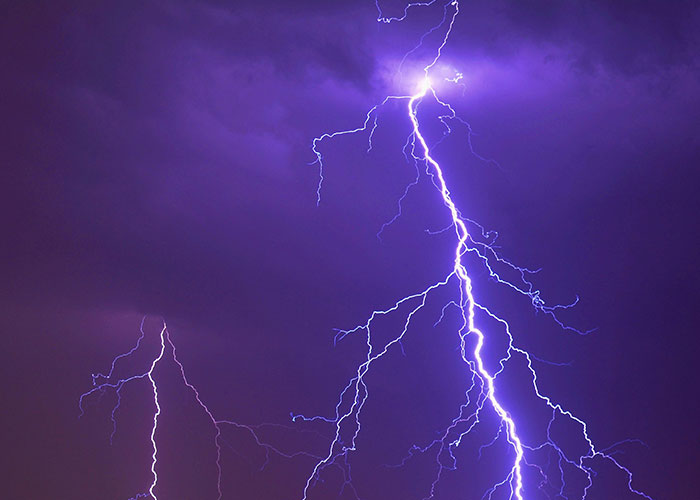
Image credits: Bruenor80
#20

Image credits: Aggressive-Ad5292
#21

Image credits: sushitrain_
#22

Image credits: rodrigo_i
#23

Image credits: cardew-vascular
#24
#25
#26

Image credits: Clear-Penalty339
#27

Image credits: LupeHikari
#28

Image credits: SnooWalruses6440
#29
#30

Image credits: anon