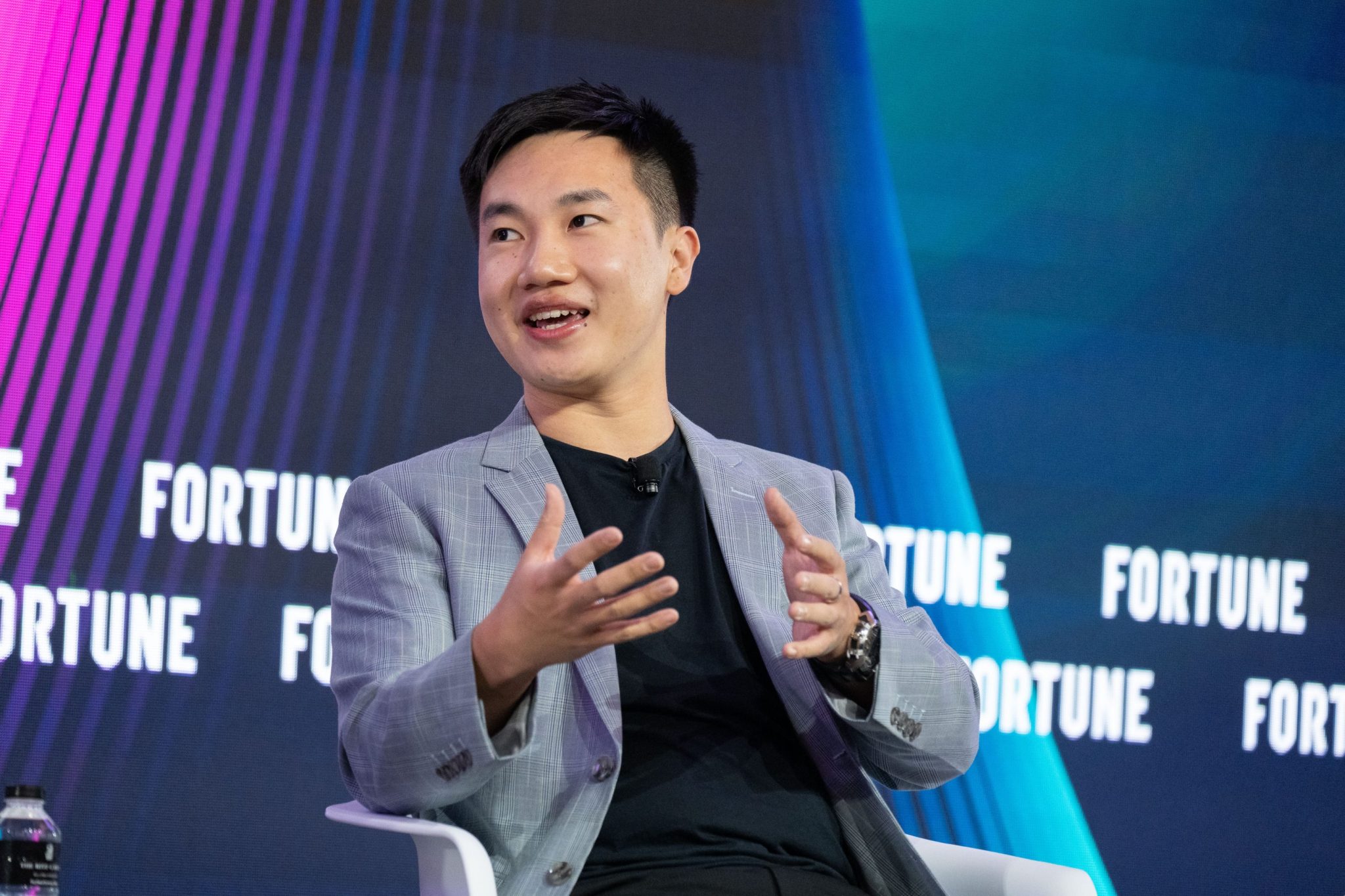
Two years ago, a pair of 22-year-old friends who met in high school in Michigan found themselves sitting inside Tsinghua University’s brain lab in Beijing, staring down a multimillion-dollar offer from Elon Musk.
The two had just done something unusual for the moment: they built a small large-language model (LLM) trained not on massive internet data dumps, but on a tiny, carefully chosen set of high-quality conversations. And they taught it to improve itself using reinforcement learning (RL), a technique where a model learns the way a person or animal does: by making decisions, receiving feedback, and then refining behavior through rewards and penalties.