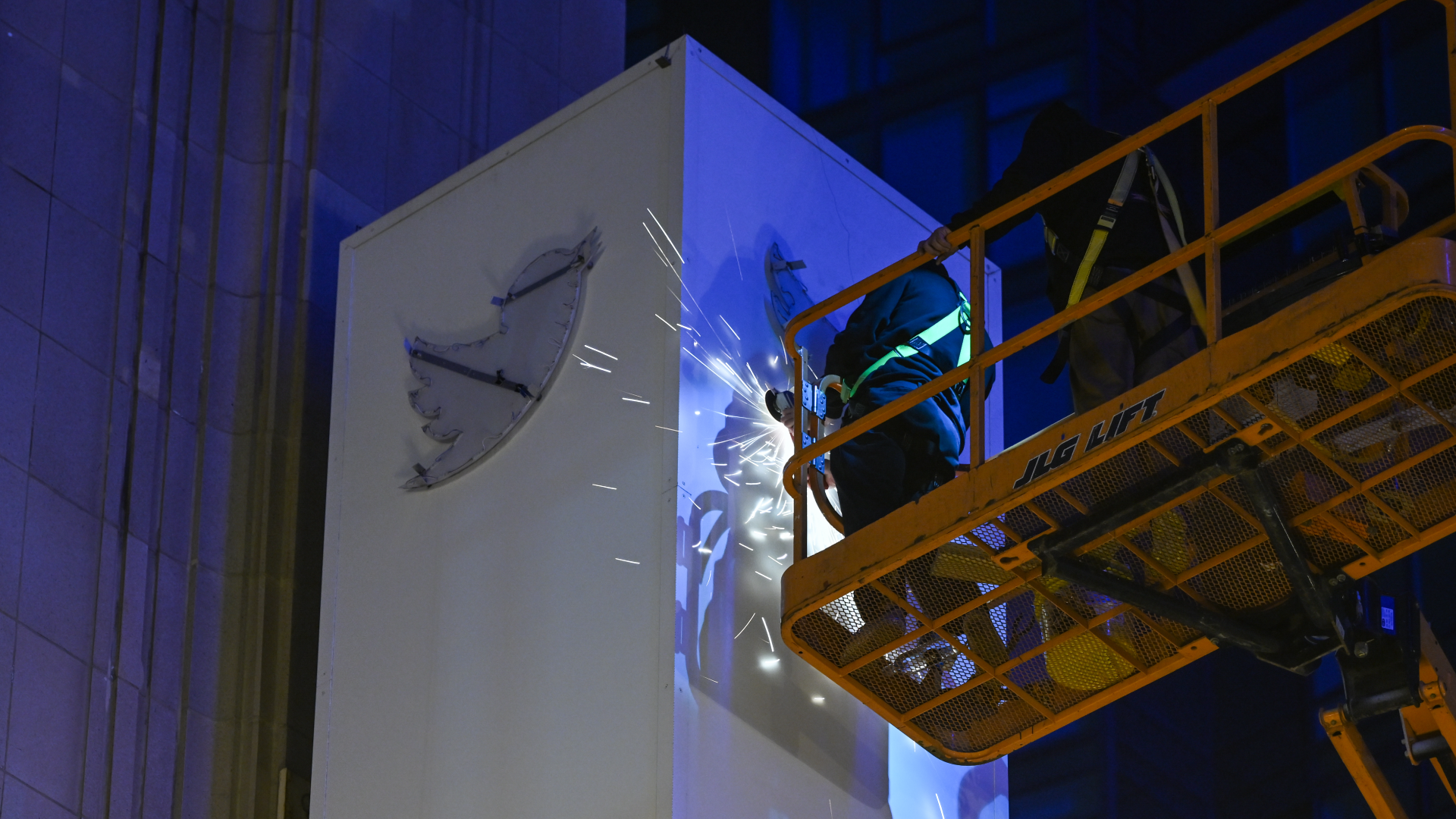
We all spent 2023 huddled round a deathbed, waiting for its raving occupant to finally gasp their last so we could get on with the business of finding a suitable heir. But in spite of it all, Twitter staggers on. Barely.
That is, it must be said, quite remarkable. Twitter has had what business experts generally refer to as a suboptimal year, what with its owner's regular tête-à-têtes with the far-right and that time he took to the stage to tell fleeing advertisers like Apple and Disney to "go fuck [themselves]" (advertising is responsible for about 90% of Twitter's revenue). The fact that the site is billions of dollars in debt and regularly collapses under its own weight is also, as I understand it, not great.
When Elon Musk bought Twitter in 2022—after trying very hard to not buy Twitter in 2022—he chatted a great deal of lofty blather about his goals. As the world's "de facto town square," the platform would become a free speech wild west, a place for the unfettered exchange of ideas where moderation was light and no cow was sacred. Plus, he was going to beat back the armies of bots that, so it was said, hammered the site's servers day after day.
Now bots are worse than ever, and Twitter was reported to have approved 83% of censorship requests by authoritarian governments under Musk's rule back in May. Meanwhile, every moderately popular tweet is undergirded by usually dull-witted replies from the platform's pool of bluechecks: those users who fork out $8 a month to get a tick next to their name and their replies artificially boosted to the top of threads, while beneath them lurks an army of spammers flogging print-on-demand T-shirts, crypto scams, and OnlyFans subscriptions.
Plus, the advertisers who have stepped into the void left by Apple, Disney, Ubisoft and the like seem to consist largely of bots inscrutably tweeting their own name, which is the best part of the entire site right now.