Get all your news in one place.
100's of premium titles.
One app.
Start reading
The Times of India
The Times of India
World
TOI World Desk

Twenty-four years before American women could vote, two Boston cousins used afternoon teas to fight the feather trade; about 900 women joined their boycott

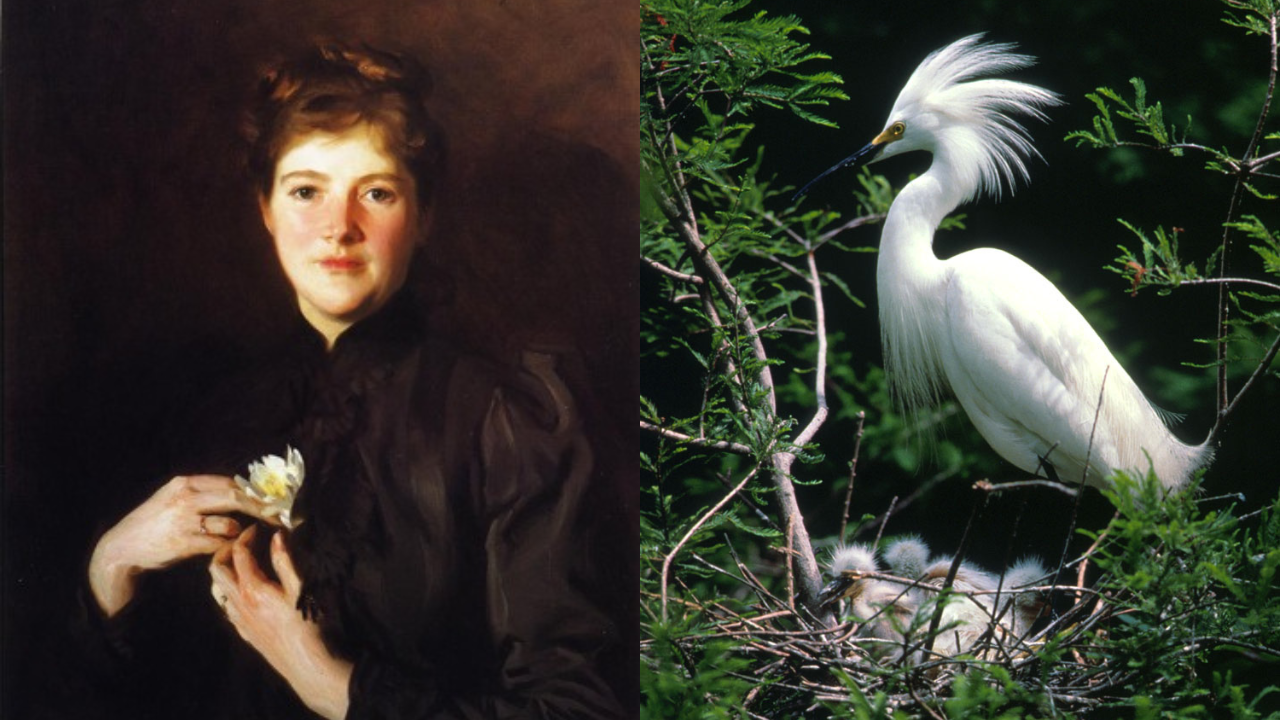
Long before American women won the right to vote, two Boston cousins proved they could still change national policy. In 1896, Harriet Hemenway and Minna Hall began inviting society women to afternoon teas, not to discuss fashion or politics, but to persuade them to stop wearing hats decorated with bird feathers. What started as a series of conversations in Boston drawing rooms quickly became one of the earliest consumer boycotts for wildlife conservation. Within months, about 900 women had joined their campaign, laying the foundation for what would become the Massachusetts Audubon Society and eventually the National Audubon Society. Their quiet protest helped turn public opinion against the lucrative feather trade and paved the way for landmark bird-protection laws decades before women gained the right to vote in 1920, according to Smithsonian Magazine .

Get breaking news anytime, anywhere. Download the TOI app now!

Fashion had pushed America’s most beautiful birds toward disaster

By the late 19th century, feathered hats had become a symbol of high fashion in Europe and the United States. Milliners decorated women’s hats with feathers, wings and sometimes entire stuffed birds. Among the most sought-after species were the snowy egret and the great egret, prized for the delicate breeding plumes they developed during nesting season. Hunters often shot adult birds while they guarded their nests, leaving chicks to die from starvation or predation. Conservationist William Hornaday estimated that London’s feather market alone consumed plumes from nearly 130,000 egrets during a single nine-month period, while an estimated 50 North American bird species were being killed for the millinery trade by the 1880s, according to Smithsonian Magazine.

The destruction alarmed Harriet Hemenway after she read about the plume trade in 1896. Rather than organize public demonstrations, she and her cousin Minna Hall chose an approach that matched their social influence. Using Boston’s Blue Book, the city’s social register, they invited prominent women to elegant tea gatherings and asked them to pledge never to wear feathers from wild birds. Their campaign relied on changing consumer behaviour rather than confronting hunters directly. Some women declined to participate, unwilling to give up fashionable hats, but hundreds embraced the cause. That same year, Hemenway and Hall established the Massachusetts Audubon Society, inspiring similar organizations across more than a dozen states.

Their boycott reached Congress long before women had the ballot

The movement gained momentum as public awareness of bird slaughter grew. Congress passed the Lacey Act in 1900 to prohibit interstate transport of wildlife taken illegally under state law, but enforcement remained weak and the feather trade continued. Protecting birds could also be dangerous. In 1905, Florida game warden Guy M. Bradley was shot and killed while trying to arrest a plume hunter, an incident that drew national attention to the violence surrounding the industry.

The real breakthrough came in 1913, when Congress passed the Weeks-McLean Law, sponsored by Representative John Weeks of Massachusetts and Senator George McLean of Connecticut. The law effectively prohibited market hunting of migratory birds and banned their interstate transport for commercial purposes, dealing a major blow to the plume trade. It marked one of the earliest federal wildlife protection measures in the United States and reflected years of pressure from conservation advocates, including the Audubon movement launched by Hemenway and Hall. According to the U.S. Fish & Wildlife Service’s history of the Migratory Bird Treaty Act , the Weeks-McLean Law became an important precursor to stronger federal protections that followed.

A legacy that helped reshape American conservation

Legal challenges eventually weakened the Weeks-McLean Law, but Congress reinforced federal bird protection through the Migratory Bird Treaty Act of 1918, implementing an international treaty between the United States and Great Britain (on behalf of Canada). In 1920, the U.S. Supreme Court upheld the law’s constitutionality in Missouri v. Holland , with Justice Oliver Wendell Holmes Jr. writing that protecting migratory birds served the national interest. That decision cemented the federal government’s authority to safeguard wildlife and remains one of the cornerstones of American conservation law.

Today, snowy egrets are once again a common sight across much of the United States, a recovery made possible by the collapse of the feather trade and stronger wildlife protections. Their survival traces back, in part, to a campaign that began not in the halls of Congress but around Boston tea tables, where two women with no vote and little formal political power discovered that changing public behaviour could eventually change the law. According to the National Audubon Society , Hemenway and Hall’s campaign is widely recognised as the spark that led to the formation of the Audubon movement, which continues to advocate for bird conservation more than a century later.

Sign up to read this article
Read news from 100's of titles, curated specifically for you.
Already a member? Sign in here
Related Stories
Top stories on inkl right now
One subscription that gives you access to news from hundreds of sites
Already a member? Sign in here
Our Picks
Fourteen days free
Download the app
One app. One membership.
100+ trusted global sources.