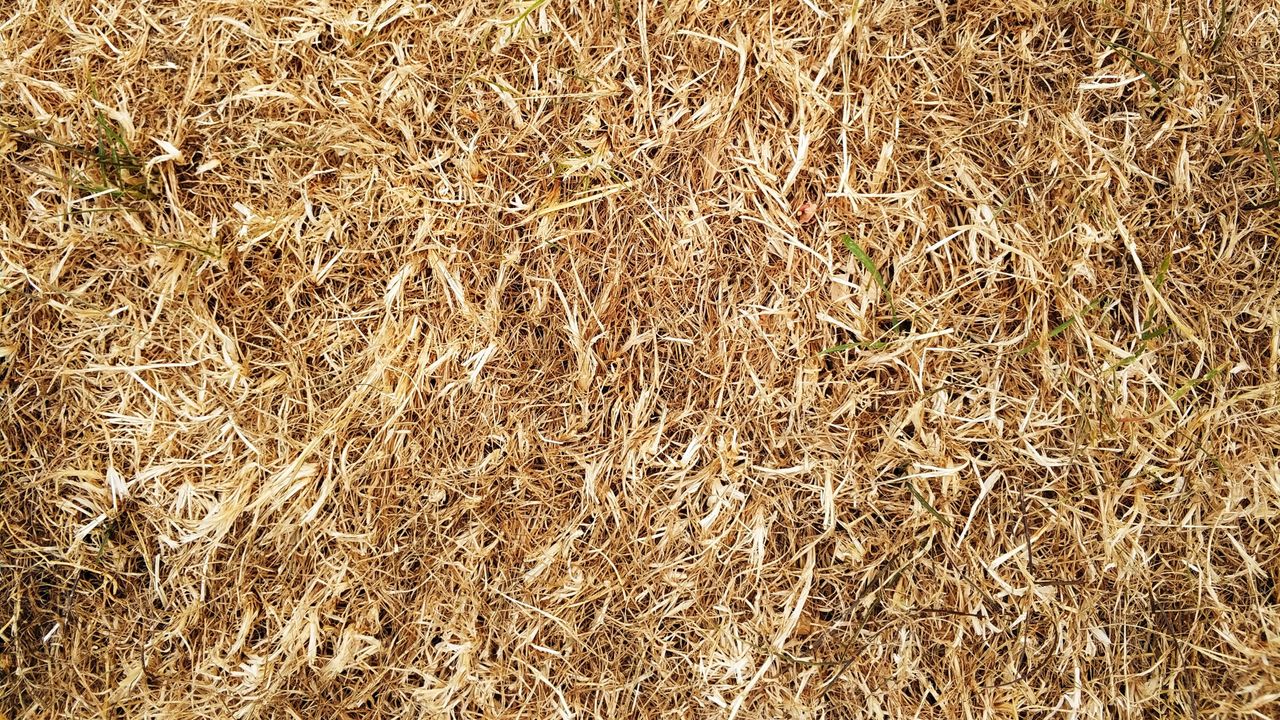
With a hot summer and low rainfall, even the hardiest lawns have struggled to stay green. Right now, my own fried patch resembles more of a sandy beach than a luscious cascade of green.
Although I’m considering digging up some of my lawn and replacing it with a dry gravel garden, all is not lost. If you take this one action in August, you could be enjoying a green lawn in time for fall.

Don't give up — your lawn will survive
When I walk on my lawn right now, I feel sand between my toes and hear a crackle as the brittle blades snap. I’ve never known a year when my lawn has suffered so much.
However, by following this one lawncare step, you’ll be surprised how quickly your lawn can be transformed from an unattractive patch to a lush expanse of green.
But right now, you may also be questioning whether your brown, yellowing lawn will bounce back when it seems there’s no chance of survival. Jonathan Davis, grass expert at Lawnsmith, says don’t give up hope. “Most brown lawns are in fact dormant, and haven’t completely died back yet.
“When moisture is low, grass focuses its energy on protecting its root system, the beating heart of the lawn, so this is why color drains from the visible sward above the soil.”
And he explains that the lawn will begin to flourish once it receives adequate hydration. However, because the soil is parched, intervention helps to ensure water reaches the roots. If not, water will pool on your lawn and won’t be absorbed into the soil.
That’s where this lawn hack comes in; it helps your lawn absorb the essentials to bring it back to full health
Start by aerating your lawn
So the one task you can do this month to help your lawn absorb moisture is to aerate your lawn, and all you need is a garden fork. During the drier months, your soil has become compacted and needs to be broken up to improve airflow, water absorption and nutrient access.
Inserting a garden fork or lawn aerator into your soil creates many small holes that act as channels, allowing water, oxygen and nutrients to reach the soil and strengthening the root system.
Aerating your lawn with a garden fork
If aerating your lawn manually with a garden fork, Luke Taylor and Marc Kerr, in their book ‘Lawns: An uncomplicated guide’, $15 at Amazon, recommend following these three steps:
1. Insert your garden fork roughly 6 inches deep into the soil.
2. Push forwards as you remove the fork from the soil. They explain that this will help make the holes slightly larger, create additional cracks for aeration, and allow you to remove the fork easily.
3. Continue this process, spacing the holes around 5-6 inches, until you cover the whole surface of your lawn.
In addition to a garden fork, you can also use a lawn aerator, designed specifically for the job.
Test your lawn for compaction: Try the screwdriver test
If you want to ensure your lawn is compacted before you insert a garden fork across it, Laura Bradbury, head of e-commerce at Vonhaus, suggests trying a hack using a screwdriver.
She says, “Push a long screwdriver gently into a few different sections of the lawn. If it goes into some areas easily but meets much more resistance in others, particularly where furniture, paddling pools or heavy footfall have been over summer, the soil may have become compacted.”
And Bradbury adds that the screwdriver test gives homeowners a quick way to compare different parts of the lawn before committing to a larger job.