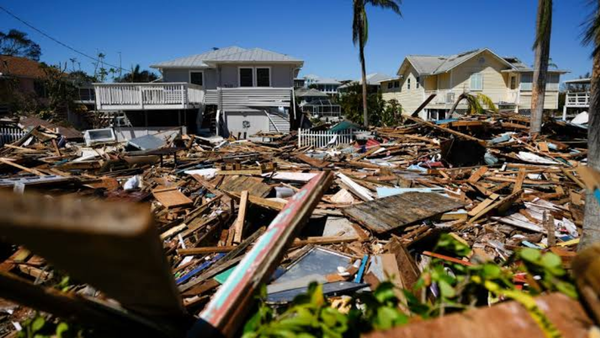
The earthquakes that struck in Turkey and Syria in the early hours of February 6 have led to terrible destruction on a scale not seen in Europe for many decades. At the time of writing, the death toll has risen beyond 11,000 people and will continue to rise over the coming days and weeks. Hundreds of thousands more have lost their homes.
There are many reasons why the death and devastation have been so terrible. First and foremost, the sheer magnitude of the two main events and their associated aftershocks. These earthquakes, which measured 7.8 and 7.5 on the moment magnitude scale, each released roughly as much energy as the largest-ever atomic bomb test carried out during the Cold War – around 50 megatons, in 1961 by the former Soviet Union. And there were two of these events in the same region, separated by a matter of hours.
To this we have to add the clusters of aftershocks which follow on from the main events. These are smaller (mostly lower than magnitude 5) but will continue for several days, gradually decreasing in intensity and regularity. They are nevertheless dangerous, as buildings already seriously weakened by earlier events may be caused to collapse. This inevitably further hampers rescue attempts in the region.