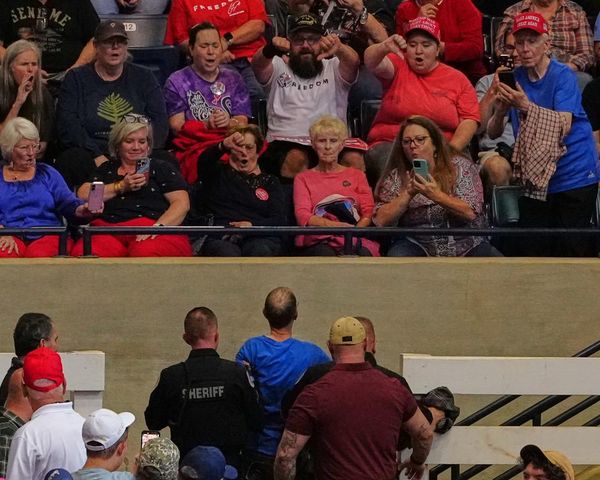
Protestors run away as they are sprayed with crowd control chemical agents as they clash with Federal agents and police outside the Edward R. Roybal Federal Building and Metropolitan Detention Center during a "National Shutdown" protest against US Immigration and Customs Enforcement in Los Angeles, California on January 30, 2026. Donald Trump's border chief said January 29, 2026 that some federal agents could be withdrawn from Minneapolis, the northern US city that has become the flashpoint for the president's immigration crackdown. The Trump administration, facing a public backlash over the shooting deaths of two Americans by federal agents in Minneapolis, also eased immigration operations in the northeastern state of Maine. (Credit: Photo by Patrick T. Fallon / AFP via Getty Images)
The Trump administration's expansion of immigration detention is reviving a model in which rural communities generate revenue by housing prisoners for the federal government, echoing practices dating back more than a century, according to an editorial by sociologist Ella Siegrist for The Conversation. Siegrist specializes in law and punishment.
The researcher points to West Virginia, where federal and District of Columbia prisoners were sent to state facilities beginning in 1876. The arrangement helped fuel a sevenfold increase in the state's prison population through 1908, while federal payments provided an important source of revenue.
Sign up to read this article
Read news from 100's of titles, curated specifically for you.