President Donald Trump has threatened to bomb Oman, a longtime US ally, if it interferes in efforts to reopen the Strait of Hormuz, a warning that could push already high American fuel prices higher as the narrow waterway stays gridlocked.
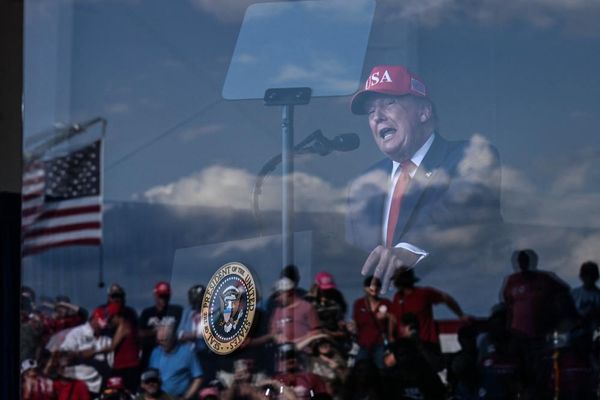
The comment came on Monday, as Iran said it had reached an understanding with Oman on managing traffic through the strait and a 60-day US-Iran deadline expired. Trump told Fox News that 'if Oman gets in the way, we'll bomb the s--- out of them', according to correspondent Trey Yingst, who said no audio of the remark was provided.
A Choke-Point Most Americans Cannot Place
The Strait of Hormuz is a narrow sea passage between the Gulf of Oman and the Persian Gulf, and it carries a share of global energy that few US drivers ever think about. The International Energy Agency (IEA) says 34% of the world's crude oil passed through it in 2025.
That influence is now on full display. Shipping has nearly stopped. Just 13 vessels crossed the strait over the weekend, three of them on Sunday, according to tracking service MarineTraffic. Crude moving through the waterway had already fallen to less than a quarter of pre-war levels, US Energy Information Administration (EIA) figures show. When a passage that narrow slows down, the effect ripples across oil markets within hours.
Why the Threat Lands on US Pump Prices
Oman and Iran control the waters around the strait, so any threat to one of them raises the odds of a wider disruption. As Trump spoke, Brent crude broke above $90 (£67) a barrel, rising 2.7% to its high of the day.
Higher crude feeds straight into what Americans pay at the pump. The American Automobile Association (AAA) reported a national average for regular petrol of about $4.06 (£3) a gallon (3.785 litres) this week, with many states still under $4 (£2.96). That figure sits well above where it stood a year ago, and pump prices have climbed by double digits in every state over the past 12 months. What happens in a waterway thousands of miles away can reprice fuel, freight, and groceries at home.
A 60-Day Deadline and a Blockade
The standoff traces back to the US-Iran war that began on 28 February 2026. The two sides signed a 60-day memorandum of understanding in June, and that window closed on Monday without a full deal.
Trump said the US now has 'total control over the strait' and pointed to a US-imposed naval blockade he called very effective. He has also floated declaring the strait US territory. His special envoy, Jared Kushner, said the president has stayed focused on economic pressure against Tehran.
Congress Pushes Back
The threat drew a sharp response at home. Senator Tim Kaine, a Virginia Democrat, said he will file a War Powers Resolution barring military action against Oman when the Senate returns from its August recess, noting the US and Oman share a free trade agreement and decades of military cooperation.
Kaine called the president 'power-drunk' and warned that striking a partner would please rivals such as China and Russia. Without Republican support, the measure is likely to stay symbolic. Still, the bigger risk is not political. One miscalculation in that thin stretch of water could lift the price of nearly everything US households buy.