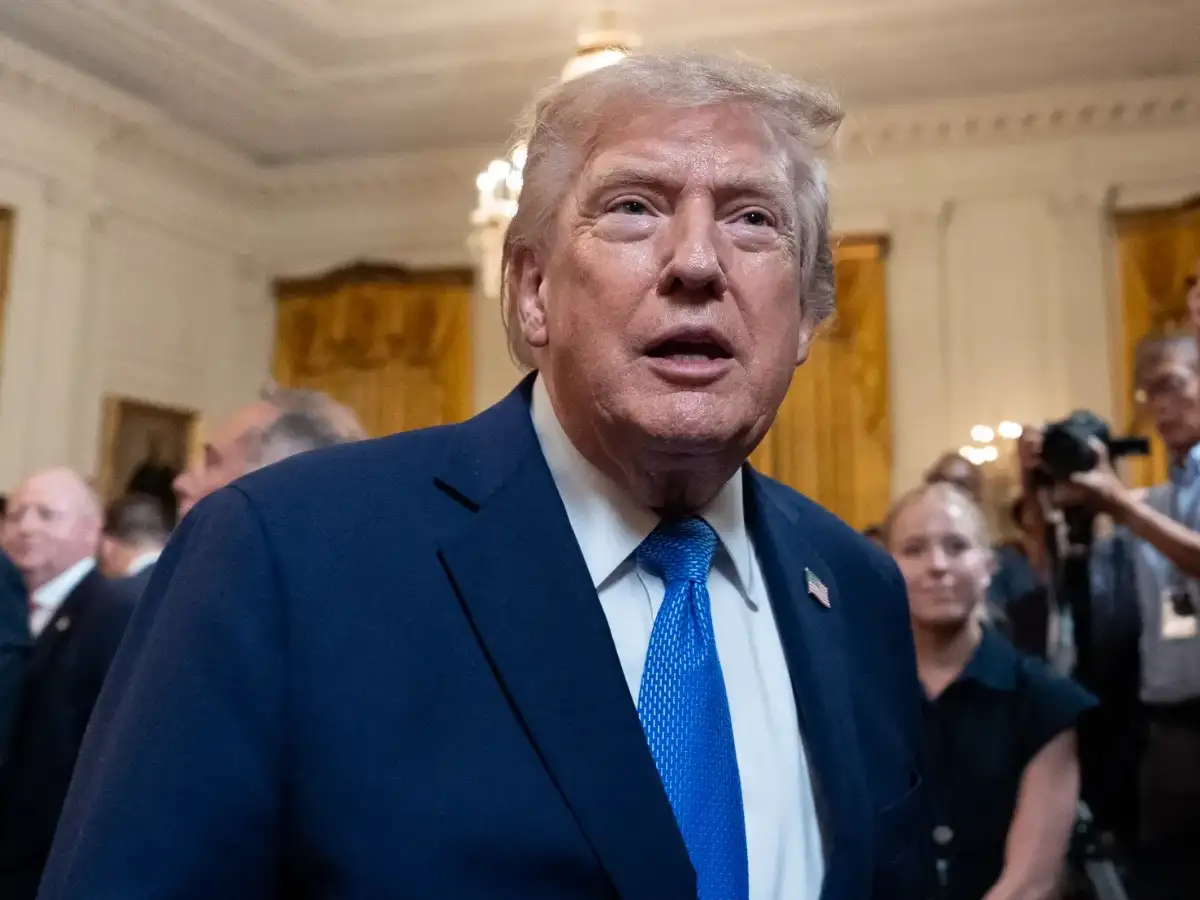
U.S. President Donald Trump signed two executive orders on Thursday in a new but narrower attempt to curtail birthright citizenship, after the U.S. Supreme Court upheld the provision established in the 14th Amendment of the U.S. Constitution.
Read more: US student visas for Indians plunge 62% as America tightens F-1 approvals

Limiting birthright citizenship has been one of the top priorities in the Republican president's crackdown on immigration, with the White House taking particular aim at what it calls "birth tourism," in which pregnant foreigners travel to the U.S. to give birth.
After his June 30 setback in the Supreme Court, Trump called on Congress to act, but on Thursday he opted for executive orders, which set policy but are not legally binding. The court said Trump's earlier effort to restrict birthright citizenship was unconstitutional.
Also Read| US-bound students face more paperwork, shorter deadlines under Trump's new immigration rule
The administration argues the new directive does not fall within the limits of the Supreme Court ruling, allowing it to expand who would be considered ineligible for birthright citizenship, including those who would arrive for "birth tourism" purposes. The categories, Trump's order said, "do not fall within the rule of birthright citizenship as announced by the Supreme Court."
"That practice of birth tourism is, as of the signing of this order, hereby banned. What that means is that no one in the world is anymore allowed to obtain a visa for this fraudulent purpose," White House aide Stephen Miller said at the Thursday signing ceremony in the Oval Office.
The Center for Immigration Studies, which supports lower levels of immigration, estimated in an analysis in 2020 that between 20,000-25,000 mothers came to the U.S. for birth tourism in a year-long period between 2016-2017.
There were 3.6 million births in the U.S. in 2025.
The executive orders also limit the rights of children born to foreign government employees in the U.S. and children of people who are classified as alien enemies.
The orders could also affect people born in U.S. territories, should Congress enact a proposed law to end automatic citizenship there.
Trump’s new orders are likely to be challenged in court.