Get all your news in one place.
100’s of premium titles.
One app.
Start reading
International Business Times UK
World
Jay Gotera

Trump Secures Deal for 30-50 Million Barrels of Venezuelan Oil at Market Prices

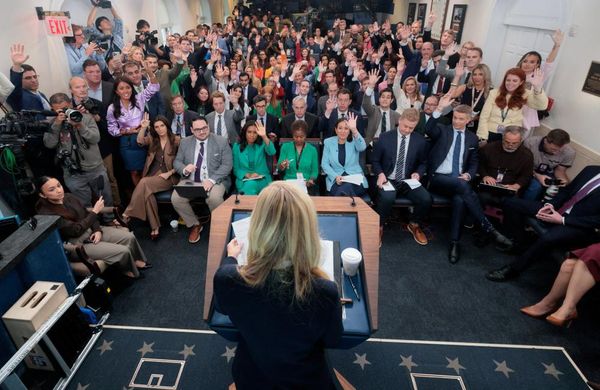
US President Donald Trump speaks during a press conference on the Venezuela oil agreement on 7 January 2026. (Credit: Getty Images)

US President Donald Trump has brokered an agreement to acquire between 30 and 50 million barrels of Venezuelan oil.

This development occurs amid a backdrop of escalating tensions, following a recent US-led operation that resulted in the capture of President Nicolás Maduro on charges of narcoterrorism.
The substantial volume of oil, valued in the billions of dollars, is slated for delivery to the United States under US control, with the transaction taking place during an existing blockade that has reportedly stranded numerous tankers.

This agreement, unfolding as oil prices decline and international rivals express discontent, has the potential to redefine global energy dynamics, though questions linger about its impact on regional stability.

Trump announced the accord via his Truth Social platform on Wednesday. 'I am pleased to announce that the Interim Authorities in Venezuela will be turning over between 30 and 50 MILLION Barrels of High Quality, Sanctioned Oil, to the United States of America,' he stated in his post. The oil will be priced at prevailing market rates, with the proceeds to be administered by Trump to support the Venezuelan populace and advance US strategic interests.

This announcement follows closely on the heels of a US military operation in Caracas, which led to the capture of Maduro, who is now facing trial in New York, leaving Venezuela's interim leadership to manage Trump's demands. The blockade, initiated in mid-December, has resulted in millions of barrels of oil being held in storage facilities and at sea.

Oil as a Tool in Regime Change Dynamics

Trump has characterised the deal as mutually beneficial, asserting that US corporations are prepared to invest substantial capital to revitalise Venezuela's deteriorating infrastructure.

In an interview with the New York Post, he remarked, 'We should run the country where we can take advantage of the economics of what they have, which is valuable oil and valuable other things.' A meeting is scheduled for Friday in the Oval Office with executives from major oil companies, including Exxon, Chevron, and ConocoPhillips, to discuss reconstruction efforts.

However, the path forward appears fraught with challenges. Venezuela's oil production has experienced a significant downturn, dropping from 3.2 million barrels per day in 2000 to approximately 1 million barrels per day currently, a decline attributed to sanctions and a lack of investment.

US Energy Secretary Chris Wright has been assigned the responsibility for the swift implementation of this agreement. The Venezuelan oil, identified as heavy crude suitable for US refineries, will be transported directly to American ports, thereby redirecting supplies that were previously destined for China and potentially intensifying geopolitical rivalries.

Global Reactions and Economic Repercussions

The announcement has generated considerable turbulence in global markets. Oil prices have declined, with West Texas Intermediate (WTI) crude futures extending their downward trend amid rising supply. Reports from Reuters indicate further drops in benchmark prices, with the potential to cap prices below $50 per barrel, a development that could negatively impact major oil-producing nations such as Russia.

Russian billionaire Oleg Deripaska voiced concerns via Telegram, stating, 'If our American 'partners' reach [Venezuela's] oil fields... they'll control more than half of the world's oil reserves.' He expressed apprehension regarding US efforts to suppress oil prices, which could strain Russia's state-capitalist economic model, particularly in the context of its ongoing conflict in Ukraine.

China, a significant consumer of Venezuelan crude, has strongly disapproved of the deal, with officials condemning it as an act of interference. State media outlets have highlighted the potential disruption to China's energy supplies. ABC News reported that Trump issued an ultimatum to Venezuela, demanding the expulsion of Chinese and Russian advisors and the establishment of an exclusive partnership with the US for oil-related matters.

Challenges in Reconstruction and Future Risks

Chatham House described President Trump's objectives as "challenging," highlighting the muted reaction from major US oil companies.

PBS Newshour has highlighted obstacles such as ageing oil extraction equipment and a shortage of skilled labour. The restoration of Venezuela's oil fields is expected to take years and cost billions of dollars, contradicting claims of an immediate, taxpayer-free economic windfall. Samantha Gross of the Brookings Institution informed reporters that 'Oil revenues will not fund operations' in the short term, given the current oversupply in the market.

Venezuela's interim leadership is proceeding with caution. Delcy Rodríguez, serving as interim president, has declared a period of mourning but has cooperated with the handover of oil to avert a military invasion. Protests are reportedly ongoing in Caracas, with armed militias patrolling the streets amid fears of a wider civil conflict.

Broader Geopolitical Implications

This acquisition of Venezuelan oil is being viewed as a component of Trump's 'Donroe Doctrine,' a policy aimed at asserting US dominance throughout the hemisphere. Concerns have been raised regarding potential implications for Cuba, Mexico, and even Greenland, where discussions of potential acquisition have reportedly resurfaced. CNN has covered these dual developments, noting a prevailing sense of unease across the Americas.

United Nations officials have urged restraint, citing potential violations of national sovereignty. The BBC reported the deal's estimated value at $2.8 billion, though allied nations such as France have expressed apprehension regarding the escalation of tensions. Russia and Iran, both supporters of the Maduro government, may resort to retaliatory measures through proxy forces.

Trump's strategic approach bears resemblance to historical interventions, albeit in the context of a multipolar global order. The Guardian commented on the potential for $3 billion in sales while also acknowledging the risks of humanitarian consequences if the funds are mismanaged.

As tankers prepare to embark on their journey, the agreement serves as a test of existing alliances. The central question remains whether this development will lead to stabilisation in Venezuela or precipitate a broader conflict, with energy security now prominently positioned on the international agenda.

Sign up to read this article
Read news from 100’s of titles, curated specifically for you.
Already a member? Sign in here
Related Stories
Top stories on inkl right now
One subscription that gives you access to news from hundreds of sites
Already a member? Sign in here
Our Picks
Fourteen days free
Download the app
One app. One membership.
100+ trusted global sources.