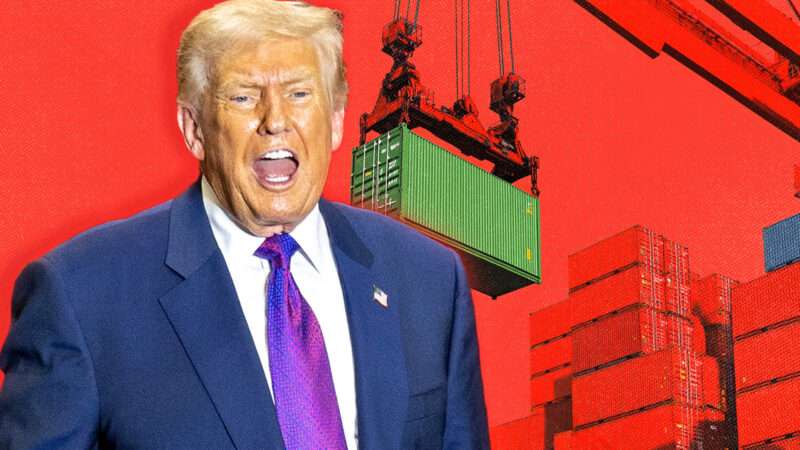
Shortly after the Supreme Court ruled that the International Emergency Economic Powers Act (IEEPA) does not empower the president to impose tariffs, the Trump administration invoked one of several statutes that do explicitly authorize import taxes: Section 122 of the Trade Act of 1974. In a proclamation issued on Friday, President Donald Trump relied on that provision to impose "a temporary import surcharge of 10 percent." In a Truth Social post the next day, he raised that "surcharge" to 15 percent, the maximum rate allowed by Section 122.
The official rationale for this use of Section 122 contradicts the position that the government's lawyers took while defending Trump's interpretation of IEEPA. Before the Supreme Court rejected his reading of that law in Learning Resources v. Trump, the administration argued that Section 122 was an inadequate substitute because it addressed just one aspect of the concerns that led Trump to declare a "national emergency" involving the supposedly "unusual and extraordinary threat" posed by the longstanding U.S. trade deficit in goods. Now the White House has recharacterized those concerns to justify Trump's invocation of Section 122.