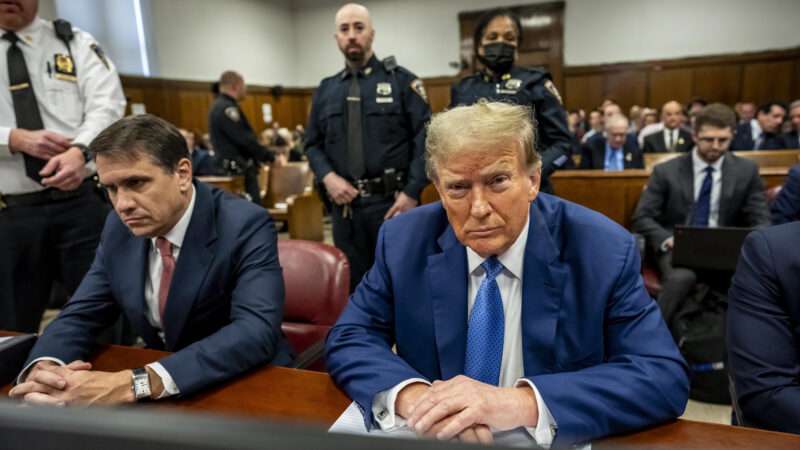
After deliberating for a little more than a day, a Manhattan jury on Thursday found Donald Trump guilty of falsifying 34 business records to aid or conceal "another crime," an intent that turns what would otherwise be misdemeanors into felonies. If you assumed that the jury's conclusions would be driven by political animus, this first-ever criminal conviction of a former president is the result you probably expected in a jurisdiction where Democrats outnumber Republicans by 9 to 1. But in legal terms, the quick verdict is hard to fathom.
That's not because there were so many counts to consider, each related to a specific invoice, check, or ledger entry allegedly aimed at disguising a hush-money reimbursement as payment for legal services. Once jurors accepted the prosecution's theory of the case, it was pretty much inevitable that they would find Trump guilty on all 34 counts. But that theory was complicated, confusing, and in some versions highly implausible, if not nonsensical. Given the puzzles posed by the charges, you would expect conscientious jurors to spend more than an afternoon, a morning, and part of another afternoon teasing them out.