
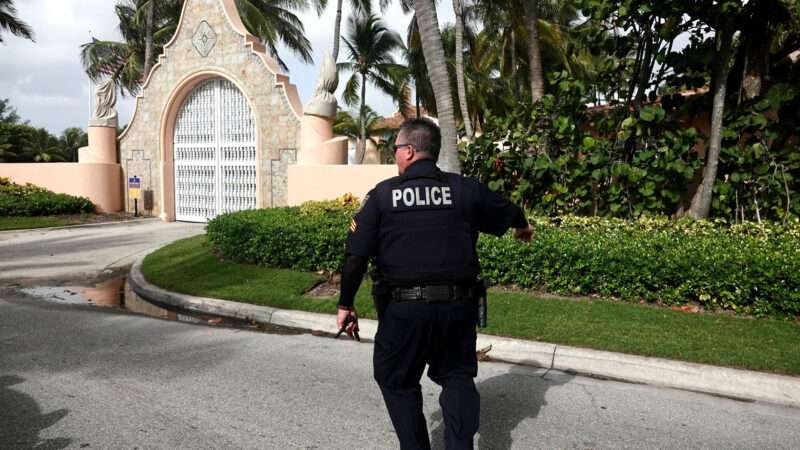
This week a reporter asked Attorney General Merrick Garland why the FBI decided it was necessary to search former President Donald Trump's residence at Mar-a-Lago, his Palm Beach resort. "I could tell you why," Garland replied, "but then I'd have to kill you."
Although that exchange is entirely imaginary, it encapsulates the puzzle that Americans face as they try to assess the justification for the unprecedented and politically explosive decision to search the home of a former president who is the leading contender to oppose the current president in the next election. That justification, which was based largely on a threat to national security that supposedly required immediate and drastic action, depends on the contents of purloined government documents that we are not allowed to see. While we still know almost nothing about that, we now have a better idea of how many documents in Trump's trove were marked as classified.













