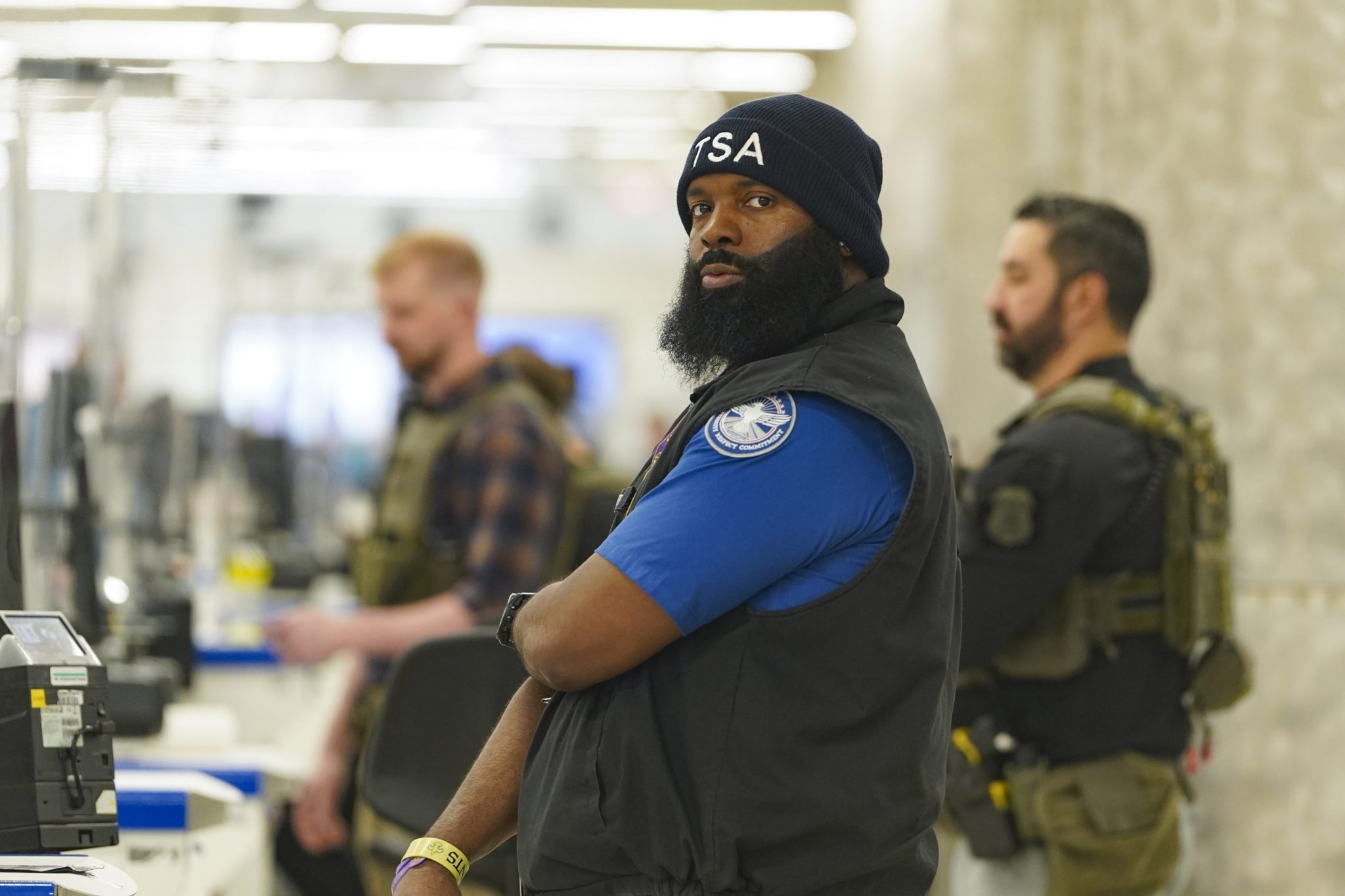
Transportation Security Administration (TSA) agents checking passports and IDs in airport lines will no longer be able to sit down on the job.
American Federation of Government Employees (AFGE) TSA Council 100, the union representing TSA agents, said in a statement released this week that TSA is removing all chairs from the travel document checker station at checkpoint entrances in airports around the country. TSA confirmed the change to Fortune.

“TSA officers performing the travel document checker role are the first to interact with the traveling public,” a TSA spokesperson said in a statement. “This welcome change reinforces both our security posture and our commitment to hospitality by having these officers on their feet and alert. All officers must meet fitness for duty requirements to be capable of performing their vital national security function while simultaneously creating a welcoming and professional environment for travelers.”
TSA Administrator David Cummins took the helm of the agency in August and brought with him a swatch of changes outlined in the “Horizon 25 Strategy,” a series of initiatives to improve travel efficiency linked with TSA’s 25th anniversary.
The Trump administration has put an emphasis on fitness for federal workers. President Donald Trump signed an executive order last March broadening the power of Office of Personnel Management (OPM) to evaluate federal workers, including, in a final rule made effective in July 2026, on the grounds of “suitability and fitness.” In addition to agencies determining prospective employment based on a candidate’s fitness, they can also use fitness as a grounds for disciplining or firing an employee.
AFGE TSA Council 100 called the recent move to remove chairs a “disregard for workers rights and safety,” saying it had no role in the change of working conditions.
“These chairs serve as basic ergonomic and safety support for officers that stand and walk on hard surfaces all day,” the union said. “TSA is treating this matter like it is a privilege—it is not; it is basic safety and common decency for the workforce.”
Implications of the Trump administration’s fitness push
Discord among federal workers over fitness requirements have extended beyond the TSA, and workers have argued these changes are part of the Trump administration’s broader efforts to reduce the federal workforce.
A coalition of unions representing government employees—including the AFGE and National Federation of Federal Employees (NFFE), which represents more than 110,000 workers—filed a lawsuit in August claiming OPM exceeded its statutory authority through the suitability and fitness regulations applied to the federal workforce’s performance management system.
The lawsuit is an attempt to reverse OPM’s changes, including the final rule applying suitability standards to both job applicants and current employees, as well as one permitted expedited firings if workers don’t meet suitability and fitness standards. Unions are also protesting OPM’s revamped performance management system, which reversed a decades-long ban on a forced distribution system, which requires an employer to place workers in categories of top, average, and low performers.
“This is yet another blatant effort by the Trump administration to make it easier to unjustly discipline and fire dedicated federal workers and diminish the critical public services they provide every day,” NFFE National President Randy Erwin said in a statement.