A team of Trump administration officials called in to shut down the U.S. Agency for International Development last year told employees they had assumed it “just did abortions,” according to a whistleblower.
When President Donald Trump returned to power in January 2025, he unleashed Elon Musk’s quasi-governmental organization DOGE on USAID, considering it a prime target for his mission to eliminate excess federal spending.
Musk had baselessly called USAID a “criminal organization” and a “radical-left political psy op” while influential podcaster Joe Rogan branded it a “money-laundering operation” with “no oversight, no receipts.”
However, Musk and Rogan were not alone in their ignorance of USAID’s vital contribution, according to the new book Into the Wood Chipper by Nicholas Enrich, who was the body’s acting assistant administrator for global health when the hatchet men were sent in.
An extract from Enrich’s book excerpted in The Handbasket recounts a shocking meeting that took place at USAID’s headquarters on February 5, 2025, during which he and two colleagues met with newly-installed Trump officials in the hope of explaining their agency’s functions and why they remained crucial.
Entering an “eerily empty” conference room in the Reagan Building in Washington, D.C, the trio sat down with an official named Joe Borkert and his leadership team, who, Enrich writes, “looked tired and bored,” with Borkert himself picking at a microwaved Indian meal.
“In full transparency, we’re drawing down USAID,” he quickly told the trio. “We’d like you to walk us through your mission-critical functions so that we can close things out smoothly.”
When Enrich began to speak, he was soon interrupted and told to “just stick to the lifesaving stuff.”
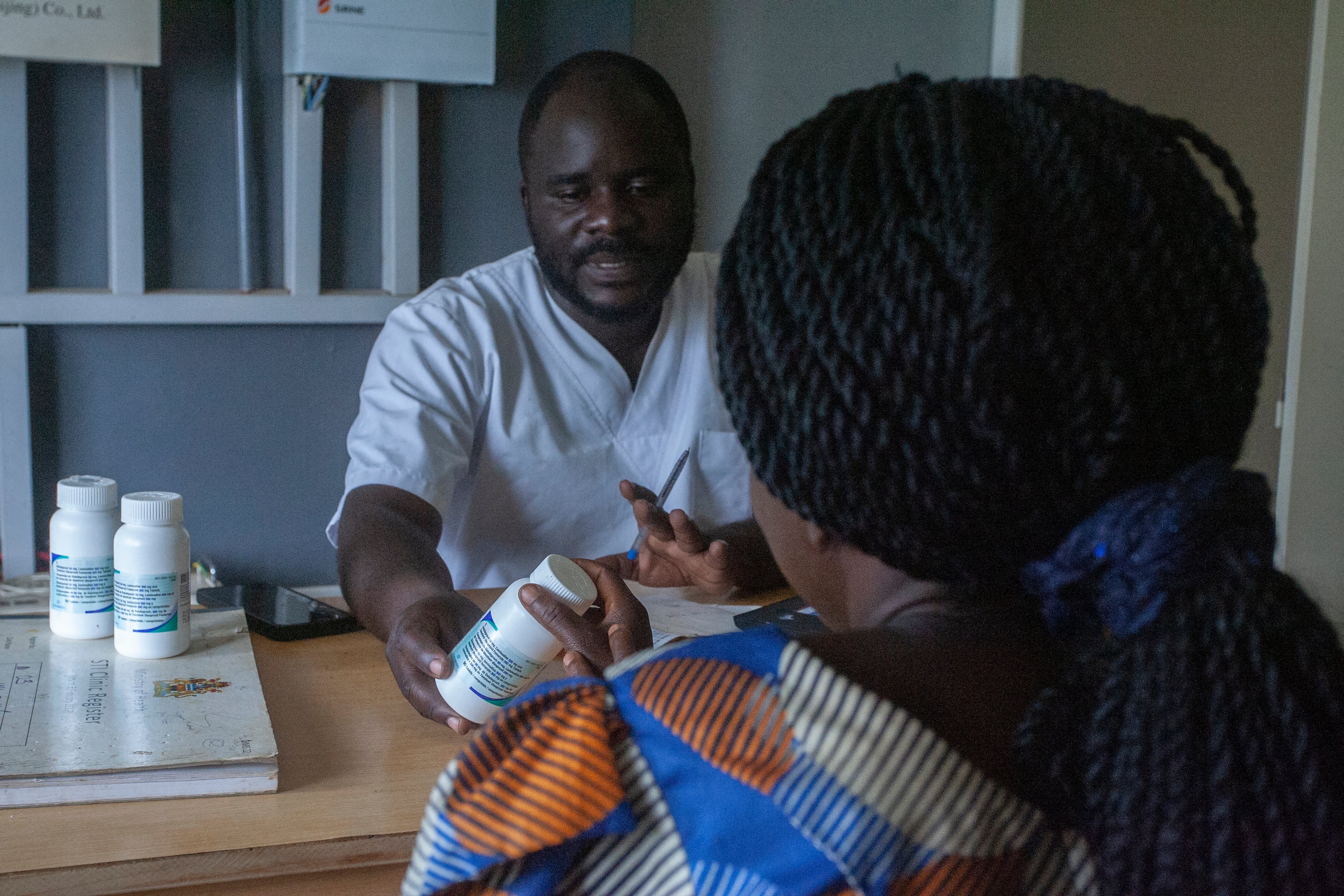
Recalibrating, he described the agency’s role in tackling emerging pandemics, diagnosing and treating tuberculosis, malaria and HIV, while also immunizing millions of children against deadly ailments.
His comments caused a stunned silence, after which Borkert remarked: “I had no idea you did all this. As a Republican, when I think of what USAID does in global health, I assumed it was just, you know, abortions.”
Enrich says he did not know whether to laugh or cry at finding the leadership so “unapologetically ignorant.”
Another member of the Trump team, a White House liaison, said that Enrich’s explanation of drug-resistant tuberculosis was too complex for non-health sector professionals to understand and suggested that a “Barney-style” set of slides might help, alluding to the popular children’s dinosaur character, and proposed referring to the disease as “Super TB” instead for ease of comprehension.
He later asked if they could “make one of those maps like they have in Outbreak [the 1995 blockbuster movie], where it shows the red growing over time as the disease spreads? You know, like the zombie apocalypse?”
When Enrich did manage to press upon the cost-cutters the importance of the group’s malaria response effort, which had just been shut down by DOGE at the cost of thousands of jobs, even Borkert expressed frustration, exclaiming: “See, this is why, just because it might work at Twitter does not mean you can do it here!”
Nevertheless, he subsequently reiterated to the USAID experts: “You’re going to have to cut things, it’s going to have to be draconian. You’re only going to get things that are priority number one; that is all we’re going to be able to do, so don’t even send up the things that are priorities number two, three, or four.”
When a colleague mentioned lifesaving interventions for mothers to prevent pregnancy-related deaths, she was arbitrarily told that work would only be considered a second-tier priority.
After leaving the meeting, the trio was shocked and dismayed, feeling that the officials chosen to make crucial decisions with real-world ramifications “were not real policymakers, but impostors, sitting in big chairs and pretending to grapple with complex issues that required teams of experts, who they had just off-loaded.”
“They’re asking us to dig our own grave,” one of Enrich’s colleagues observed bitterly.
Trump demands Starmer ‘drill, baby, drill’ in the North Sea
USPS union launches ad campaign encouraging mail-in voting amid feud with Trump
Kristi Noem’s first DHS town hall was like a ‘South Park’ moment, said staffers
Trump’s Iran war could trigger global recession, IMF warns
JD Vance weighs in after Trump removes ‘Jesus’ Truth Social post
MAGA pundit says Obama aide and the Pope are conspiring to hurt Trump