-
Trump and Delcy Rodríguez held a private, informal meeting Tuesday night during a UN reception in New York. No agreement was announced, and the White House shared only the list of attendees.
- The day before, Rodríguez met back-to-back with the heads of the IDB, the IMF and the World Bank as Caracas seeks financing and prepares to restructure debt that analysts put at $150 billion to $200 billion.
-
For Venezuelans in the U.S., nothing made public in New York addresses the Oct. 2 expiration of the last remaining TPS work permits.
NEW YORK — Donald Trump sat down with Venezuela's acting president, Delcy Rodríguez, late Tuesday at a reception he hosted during the United Nations General Assembly. It was the pair's first face-to-face encounter since U.S. forces captured Nicolás Maduro in January, and neither government disclosed any deal on sanctions, oil or migration.
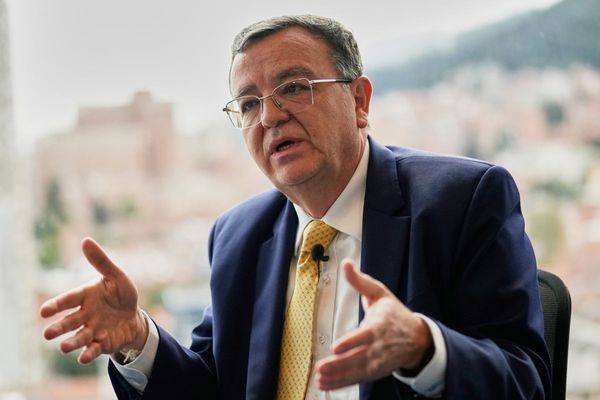
The part of Rodríguez's trip most likely to shape Venezuela's economy, however, unfolded a day earlier and far from Trump's party: a string of meetings with the officials who control access to multilateral credit.
A brief meeting in a crowded room
Reuters described the encounter as a pull-aside, the least formal kind of leader-level meeting. A White House official told the agency that Secretary of State Marco Rubio, Treasury Secretary Scott Bessent, chief of staff Susie Wiles and deputy chief of staff Stephen Miller were in the room with Trump.
The session took place at the Lotte New York Palace hotel with no press access, according to EFE. The last in-person talks between sitting leaders of the two countries date to 2015, when Barack Obama and Maduro spoke briefly at the Summit of the Americas in Panama.
Rodríguez later labeled the meeting "historic" in a post on X. She said the conversation covered cooperation in energy, mining and security, and she credited Trump with backing Venezuela's return to multilateral forums and with sending help after the June 24 earthquakes. That expression of thanks links the photo op to the rest of her week. Washington, for its part, confirmed the meeting and who attended but released no agenda or results.
Only hours before, Trump had used his Assembly speech to brand Maduro an outlaw dictator and to claim that hundreds of political prisoners had walked free since the January raid. Outside UN headquarters, more than 50 Venezuelans rallied to demand that he push for free elections. Critics argue the administration has pushed María Corina Machado's opposition aside in favor of oil and investment deals.
Three lenders in one afternoon
Rodríguez landed in New York early Monday. At Venezuela's UN mission, she received IDB president Ilan Goldfajn first, then IMF managing director Kristalina Georgieva and finally World Bank Group president Ajay Banga, EFE reported. Economy vice president Calixto Ortega, hydrocarbons minister Paula Henao and Foreign Minister Félix Plasencia joined her. She also met UN Secretary-General António Guterres and wrote online that she was seeking a new stage in Venezuela's relationship with the global financial system.
The lenders offered a few specifics of their own. Georgieva welcomed the renewed dialogue and said the Fund stood ready to help with capacity building and policy advice, without announcing any loan. Goldfajn called Venezuela a founding member of the IDB and told Reuters the bank is drafting a two-year engagement plan built partly around electricity and social protection. State broadcaster VTV cast the sessions as evidence of a gradual normalization with multilateral bodies.
Where re-engagement stands
Formal ties returned on April 16, when the IMF and the World Bank announced they were once again dealing with the Rodríguez government. The Fund had frozen contact in March 2019 over questions of recognition, and the Bank's most recent loan to Caracas goes back to 2005. The move opens the way for the IMF's first full review of Venezuela's economy in about two decades and, eventually, for the release of billions of dollars in frozen special drawing rights.
The IDB may act sooner. Goldfajn is trying to secure board approval for a $2.5 billion loan to Venezuela, though some directors are resisting, Reuters reported.
The debt problem behind the diplomacy
Debt is what gives these relationships their urgency. In May, Caracas announced it would restructure the obligations of both the state and oil company PDVSA, which most analysts estimate at between $150 billion and $200 billion. One person familiar with the trip said debt restructuring, funds and payments would dominate the agenda.
Two people close to the delegation told Reuters its goal was to make Venezuela look "investable." That sales pitch follows the late-August energy pact in which, according to the White House, the U.S. gained majority control of more than 65 billion barrels of proven Venezuelan reserves through a joint venture with a private company.
A walk across the Assembly hall
Rodríguez's outreach also reached Europe. Before Trump's speech on Tuesday, she left her seat, crossed the chamber and greeted Spanish Prime Minister Pedro Sánchez, asking him to keep the conversation on Venezuela going. Madrid said Sánchez agreed and restated Spain's commitment to the region, though no formal bilateral meeting is planned in New York. It was their first in-person exchange after two phone calls this year.
Spain has also said it would invite Rodríguez to the Ibero-American Summit in Madrid on Nov. 4 and 5, even though EU sanctions imposed during her years as Maduro's vice president remain in force.
What it means for Venezuelan families in the U.S.
For the diaspora, the stakes are practical. The Migration Policy Institute counted roughly 770,000 Venezuelan immigrants in the country in 2023. A broader measure from the Pew Research Center found about 1.2 million people of Venezuelan origin in 2024, a figure that includes those born in the U.S. More than 40% of them live in Florida.
Their legal footing keeps shrinking. On Oct. 3, 2025, the Supreme Court allowed the end of Venezuela's 2023 TPS designation to take effect, and the 2021 designation lapsed that November. Under current USCIS guidance, only beneficiaries who received TPS-related work documents on or before Feb. 5, 2025, with an Oct. 2, 2026, expiration date keep their authorization — and that date is nine days away. Nothing disclosed in New York dealt with it.
If multilateral money starts flowing again, it will help determine what kind of economy awaits Venezuelans who return, voluntarily or otherwise, and the jobs and remittances that families in both countries rely on.
Rodríguez is due to address the General Assembly on Wednesday afternoon, the first Venezuelan head of state to do so since Maduro in 2018.