
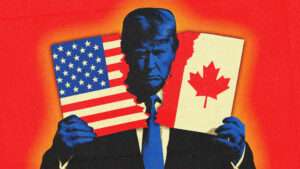
Yesterday, Donald Trump further expanded his illegal Section 338 tariffs against Canadian imports and banned importation of some Canadian products entirely. The pretext for the move is Canada's predictable imposition of counter-tariffs in response to Trump's initial Section 338 moves. Georgetown University trade policy expert Peter Harrell has a helpful summary of the new restrictions Twitter/X:
1. Trump signed a variety of proclamations this evening retaliating against Canada's retaliation against Trump's initial Section 338 tariffs, now that the Canadian retaliatory tariffs have come into force. Trump's action includes outright bans on a handful for products as well as modifications of the 50% tariff list to reduce the impact on certain U.S. industries while adding new products to the tariff list to avoid an overall reduction in U.S. tariffs.
2. The bans: In a spate of bad news for American aficionados of Canadian booze, Trump has banned import of Canadian beer, wine, and distilled spirits, effective Sept. 29. He also banned whey and molasses, and motorcycles. (This last item presumably includes the three wheel "Can-Am" made by a subsidiary of Bombardier, the airplane manufacturer Trump has been targeting on social media).
3. Section 338 authorizes the President to ban imports if, following the imposition of Section 338 tariffs, the President finds as "a fact that any foreign country has not only discriminated against the commerce of the United States….but has, after the issuance of a [tariff action], maintained or increased its said discriminations against the commerce of the United States…" While Trump appears to be the first President to impose tariffs under Section 338 (since Congress passed it in 1930), the language of 338 does seem to authorize the import bans *if/assuming the underlying Section 338 tariff actions are lawful.* (As I have written elsewhere, I think there are good legal arguments against the underlying Section 338 tariff actions, but so far, no one has brought a suit).
4. Trump also modified the products impacted by the original 50% Section 338 tariffs to remove certain products where the tariffs had proved economically painful to the U.S., such as salt, cement, toilet paper, and fishing rod parts, while adding other products, such as various paper products, metals, motorboats, and cheeses. (This highlights that while the Administration does seem committed to the trade war with Canada, it is monitoring potential adverse economic consequences). The tariff modifications are effective Sept. 15.














