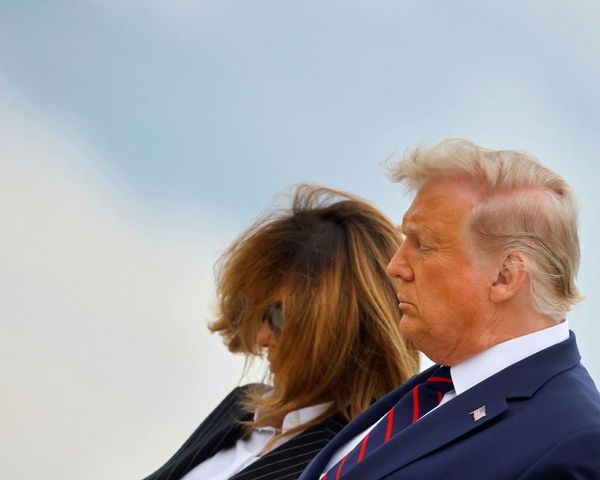
President Donald Trump backed off his threat to have U.S. warplanes strike Iranian power plants, citing what he described as “productive conversations” with Tehran even as Iranian government officials denied that any such talks had taken place.
Speaking to reporters before he boarded Air Force One for a visit to Memphis before returning to Washington, Trump claimed there had been “major points of agreement” between the U.S. and Iran and said the “very strong talks” were being led on the American side by his roving envoy, Steve Witkoff, and his son-in-law Jared Kushner.
“They want to make a deal, and we are very willing to make a deal. It's gonna be a good deal, and it's gotta be no more wars, no more nuclear weapons. They're not going to have nuclear weapons anymore,” he said.
The president also claimed Iran had already agreed to give up its’ nuclear weapons program as part of the talks and warned that the US “will just keep bombing our little hearts out” if an agreement cannot be reached.
He added that he did not recognise the leadership of Mojtaba Khamenei and said his envoys have been communicating with ”a top person” inside the country who he refused to identify when pressed by reporters.
Iranian officials have responded to Trump’s assertions by denying that they’ve had any contact with Washington since the start of the war.
In a post on X, Iranian Parliament Speaker Mohammad Bagher Ghalibaf said there had been “no negotiations ... held with the US” and called Trump’s statements “fake news ... to manipulate the financial and oil markets and escape the quagmire in which the US and Israel are trapped.”
The president’s description of the purported talks came just hours after he took to Truth Social with a post stating that he was “please [sic] to report” that the U.S. and Iran had “very good and productive conversations” about a “complete and total resolution of our hostilities in the Middle East” over the last two days.
“Based on the tenor and tone of these in depth, detailed, and constructive conversations, witch [sic] will continue throughout the week, I have instructed the Department of War to postpone any and all military strikes against Iranian power plants and energy infrastructure for a five day period,” he said.
Trump added that the five-day pause on the planned airstrikes was “subject to the success of the ongoing meetings and discussions.”
Following Trump’s announcement, Iranian state television showed a graphic that said, “U.S. president backs down following Iran's firm warning.”
The president had suggested last week that Tehran had been ready to participate in negotiations with the U.S., but Iranian Foreign Minister Abbas Araghchi denied any interest in negotiations in an interview with Time magazine, where he said Tehran was “not seeking a cease-fire because we do not want this scenario to be repeated again after some time.”
He also said at the time that the U.S. “must be held accountable” for having started the war, with Washington bearing responsibility for “all the consequences of this war, human and financial, whether for Iran, for the region, or for the entire world.”
Trump’s announcement — and Iran’s denial — came with less than a day remaining on a 48-hour deadline he’d set for Tehran to “fully open” the Strait of Hormuz to commercial shipping “without threat.”
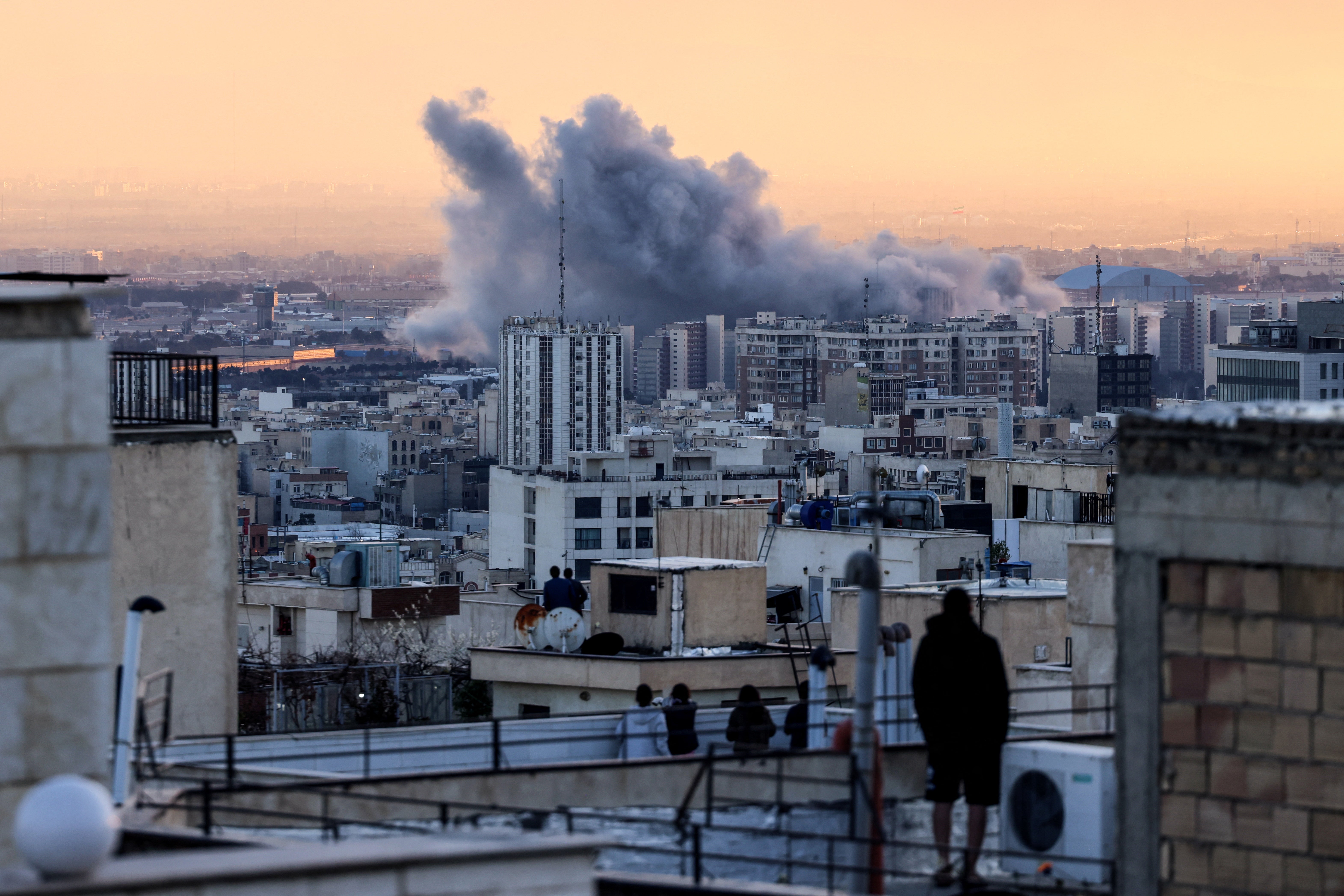
In a Saturday Truth Social post after he’d enjoyed a round of golf during a weekend visit to his Palm Beach, Florida, home, Trump threatened to “hit and obliterate” Iranian power plants, “starting with the biggest one first” if Tehran did not stand down from threats against commercial shipping.
The president has been increasingly irate in recent days over Iran’s effective closure of the strait, a key choke point through which approximately one-fifth of the world's oil passes each year.
Oil prices have surged since the start of the U.S.-Israeli war due to the ongoing bottleneck, though Iran has said it would permit ships not affiliated with the U.S. or Israel to pass. After his Monday declaration, oil prices fell sharply and sat around $90 a barrel for crude oil.
Americans have been hit hard as they’ve seen gas prices spike by nearly a dollar per gallon in less than a month.
Over the weekend, Trump’s Treasury Secretary Scott Bessent denied that Americans would foot the bill as the Pentagon prepares to push Congress for hundreds of billions of dollars to continue the war, now in its fourth week.
Bessent appeared on NBC’s Meet the Press Sunday and claimed that the administration would not seek a tax increase to pay for the Pentagon’s reported $200 billion funding request.
Oil prices tumble and markets rebound after Trump announces Iran strike pause
Iran live: Iran accuses Trump of ‘fake news’ over claims Tehran in talks to end war
Trump backs down on masked ICE agents as he deploys them to US airports
ICE agents seen at multiple airports on Monday morning after Trump threat
Trump justifies ICE airport deployment with bizarre paperclip analogy
State Department warns Americans across globe to ‘exercise increased caution’